Buy Minted Gold Bars online from Africa
Buy minted gold bars with confidence by choosing investment-grade bullion from reputable refiners and licensed dealers. Minted gold bars are among the most popular choices for both experienced investors and first-time buyers because of their high purity, precise dimensions, attractive finish, and global recognition.
Manufactured under strict quality control standards, minted bars are produced from rolled gold blanks that are cut, stamped, and individually inspected to ensure consistent weight, size, and purity. They feature smooth, polished surfaces, sharp edges, and clear refinery markings, and many are sealed in tamper-evident assay cards for easier authentication and resale.
Their exceptional quality, strong liquidity, and widespread acceptance make minted gold bars a preferred investment for wealth preservation, portfolio diversification, and long-term value.

Minted gold bars are typically produced from 99.99% pure (999.9 fine) gold and are available in a range of investment-friendly sizes. The most common denominations include 1 g, 2.5 g, 5 g, 10 g, 20 g, 50 g, and 100 g. While some refiners manufacture larger minted bars, bars weighing 250 g, 500 g, and 1 kg are more commonly produced as cast bars because they are more economical to manufacture.
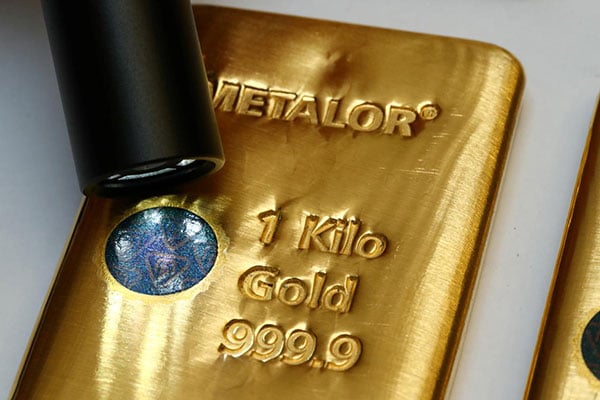
Each minted gold bar is stamped with key identifying information, including its purity (typically 999.9 fine), weight, refinery or mint logo, and, in most cases, a unique serial number. These markings help buyers verify the bar’s authenticity and trace its origin.
Most minted gold bars are supplied in tamper-evident assay packaging that protects the bar from scratches and damage during storage and transport. The packaging typically includes an assay certificate confirming the bar’s weight, purity, and manufacturer, making authentication and resale easier through bullion dealers and financial institutions.
Advantages Of Buying Minted Gold Bars
Minted bars are featured with a high liquidity level because of their standardized purity, weight, size, fine finishing, and recognizable branding therefore they are easy to trade with reputable gold dealers offering immediate transactions.
Some minted bars from renowned mints like PAMP Suisse, Valcambi, Perth Mint, and the Royal Canadian Mint are globally recognized hence trusted by potential investors and more thought of by gold dealers and collectors making them easier to resell and improving their market liquidity.
The detailed designs, well-defined edges, and fine finishing makes minted bars visually appealing and hence preferred by most gold investors and collectors alike.
Minted Bars vs Cast Bars
Minted and cast gold bars are both widely traded investment products, but they differ in how they are manufactured, their appearance, and their cost. Minted bars generally carry a higher premium because of their precision manufacturing and attractive finish, while cast bars are typically more economical for investors purchasing larger quantities of gold.
| Feature | Minted Bars | Cast Bars |
| How they are made | Cut from rolled gold blanks, then stamped with the refinery’s design and serial number | Molten gold is poured directly into a mould and allowed to cool naturally |
| Finish | Smooth, polished surface with sharp, clean edges | Rougher appearance with natural cooling marks and a more industrial finish |
| Common sizes | 1 g, 5 g, 10 g, 20 g, 50 g, and 100 g | 100 g, 250 g, 500 g, 1 kg, and larger bars |
| Premium over the spot price | Higher due to additional manufacturing and packaging costs | Lower because production is simpler and less labor-intensive |
| Packaging | Usually sealed in a tamper-evident assay card with the refinery’s certificate | Often supplied with a separate assay certificate or accompanying documentation |
| Authentication | Easy to verify using the assay card, serial number, and refinery markings | Verified through serial numbers, assay reports, weight, and purity testing |
| Best for | First-time investors, collectors, gifts, and buyers who value easy resale in smaller denominations | Investors purchasing larger amounts of gold at the lowest possible premium per gram |
| Cost per gram | Higher | Lower |
| Liquidity | Excellent, especially in smaller sizes | Excellent, particularly for institutional and high-value investors |
For most retail investors, minted bars are preferred because they are easy to store, verify, and resell. Investors purchasing 250 g, 500 g, or 1 kg bars often choose cast bars because they typically offer a lower premium over the international spot price, reducing the overall cost of acquisition.
Leading Gold Mints and Refiners
When purchasing investment-grade gold bars, choosing products from a reputable refinery is just as important as comparing prices. Gold bars produced by refiners on the London Bullion Market Association (LBMA) Good Delivery List are widely recognized by bullion dealers, banks, and institutional investors worldwide. These refiners meet internationally accepted standards for gold purity, quality, and responsible sourcing, making their bars easier to authenticate and resell.
The following refiners are among the world’s most recognized producers of investment-grade gold bars.
| Refiner | Country | Known For |
| PAMP Suisse | Switzerland | Famous for the Lady Fortuna design, Veriscan authentication technology, and premium minted gold bars. |
| Valcambi | Switzerland | Produces high-quality investment bars, including the popular CombiBar, which can be separated into individual 1 g pieces. |
| Perth Mint | Australia | Government-owned refinery renowned for high-purity bullion, advanced security features, and globally recognized investment bars. |
| Royal Canadian Mint | Canada | Manufactures 99.99% and 99.999% pure gold bars with innovative anti-counterfeiting technology and precision craftsmanship. |
| Rand Refinery | South Africa | One of Africa’s largest and most established gold refineries, supplying investment-grade bullion to international markets for over a century. |
Why LBMA Accreditation Matters
Buying gold from an LBMA Good Delivery refiner helps ensure that the bullion meets internationally accepted standards for weight, purity, and manufacturing quality. These bars are generally easier to trade, export, and resell through banks, bullion dealers, and precious metals exchanges around the world.
Because the LBMA Good Delivery List is reviewed periodically, refiners may be added, suspended, or removed. Before purchasing gold, verify that the manufacturer appears on the latest list published by the London Bullion Market Association (LBMA) and ensure the bar includes the appropriate refinery markings, serial number, weight, and purity stamp.
Ways to Buy Minted Gold Bars Online from Africa
1. Buy Directly from a Licensed African Gold Exporter
Purchasing directly from a licensed gold exporter is one of the most reliable ways to source minted gold bars from Africa. Before making a purchase, verify the company’s business registration, mining or trading licenses, export authorization, and physical office address. Reputable suppliers should also provide an independent assay report, certificate of origin, commercial invoice, and other required export documents before shipment.
2. Work with a Reputable Gold Dealer or Bullion Company
Established bullion dealers with experience in international gold trade can help buyers source investment-grade minted gold bars from reputable refiners. Compare quotations from several dealers, confirm the bar’s purity and refinery, and ensure the supplier offers transparent pricing based on the live international spot price plus clearly disclosed premiums and fees.
3. Use a Secure Purchase and Payment Process
Always use a written sales contract and secure payment methods such as a bank wire transfer, letter of credit (LC), documentary letter of credit (DLC), or a trusted escrow arrangement where appropriate. Avoid sellers who request payment through untraceable methods or demand large upfront fees without providing verifiable documentation.
4. Verify the Gold Before Shipment and Delivery
Before the gold is exported, confirm that each minted bar has the correct refinery markings, weight, purity (typically 999.9 fine), and serial number. Request copies of the assay certificate, export permit, certificate of origin, packing list, commercial invoice, insurance documents, and air waybill (AWB) once the shipment is dispatched. If possible, arrange independent verification before final acceptance of the shipment.
Buying minted gold bars online from Africa can be a secure and efficient process when you work with licensed suppliers, verify all documentation, and ensure the gold is independently assayed before export. Taking these precautions helps reduce risk and supports a transparent international gold transaction.
How to Verify a Minted Gold Bar
Verifying a minted gold bar before completing a purchase is one of the most important steps in protecting yourself from counterfeit bullion. Reputable investment-grade bars include multiple security features and should be supported by independent documentation.
Check the Serial Number
Most minted gold bars from leading refiners are engraved with a unique serial number. Verify that the serial number on the gold bar exactly matches the number printed on the accompanying assay card or certificate. Any mismatch or signs of tampering should be treated as a warning.
Confirm the Refiner’s LBMA Status
Look for the refinery or mint name on the bar and confirm that it appears on the London Bullion Market Association (LBMA) Good Delivery List. Gold bars from LBMA-accredited refiners are widely recognized by bullion dealers, banks, and precious metals exchanges worldwide.
Verify Security Features
Many leading refiners incorporate advanced anti-counterfeiting technology into their bullion products. For example, PAMP Suisse offers Veriscan, a digital authentication system that uses the unique microscopic surface characteristics of each gold bar to verify its authenticity. Other refiners may include holograms, tamper-evident assay cards, QR codes, or additional security markings.
Review the Assay Certificate
Ensure the assay card or certificate confirms the bar’s:
- Weight
- Purity (typically 9 fine or 99.99%)
- Refiner or mint
- Unique serial number
The details on the certificate should match the markings stamped on the gold bar.
Arrange Independent Assay Testing
For high-value purchases, consider having the gold tested by an independent accredited assay laboratory before final acceptance. Common non-destructive verification methods include X-ray fluorescence (XRF) analysis, precision weight and dimensional measurements, density testing, and, where appropriate, ultrasonic testing. These tests help confirm the bar’s purity without damaging it.
By checking the serial number, confirming the refiner’s LBMA accreditation, reviewing the assay documentation, verifying the manufacturer’s security features, and obtaining independent testing when appropriate, buyers can significantly reduce the risk of purchasing counterfeit or misrepresented gold bars.
Disadvantages of Minted Gold Bars
Although minted gold bars offer excellent quality, security, and global recognition, they may not be the best choice for every investor. Understanding their drawbacks can help you choose the right type of bullion for your investment goals.
Higher Premiums Over the Spot Price
The main disadvantage of minted gold bars is that they typically carry higher premiums than cast gold bars. Their precision manufacturing, polished finish, tamper-evident assay packaging, and advanced security features increase production costs, which are reflected in the purchase price.
The premium is often most noticeable on smaller bars, such as 1 g, 5 g, and 10 g, because manufacturing and packaging costs represent a larger percentage of the bar’s value.
Less Cost-Effective for Large Investments
If your primary objective is to acquire the maximum amount of gold for your budget, cast bars may offer better value. Large cast bars—such as 250 g, 500 g, and 1 kg, generally have lower premiums per gram, making them a more economical choice for high-value investments.
Packaging Can Affect Resale Value
Many minted gold bars are sold in sealed assay cards. While the gold itself does not lose its purity if removed, damaged, or missing original packaging, it may make resale less convenient, as some dealers may request additional authentication before purchasing the bar.
Which Type Is Right for You?
- Choose minted gold bars if you value attractive presentation, easier authentication, and convenient resale in smaller denominations.
- Choose cast gold bars if your priority is minimizing premiums and purchasing larger quantities of investment-grade gold at the lowest possible cost per gram.
Both minted and cast gold bars can be excellent investments when purchased from reputable refiners and licensed dealers. The best choice depends on your investment budget, storage preferences, and long-term objectives.
Sizes and How Gold Bar Pricing Works
The price of a minted gold bar is based on the current gold spot price for its weight, plus a dealer premium. Because the global spot price changes continuously during trading hours, any fixed price published in an article can become outdated quickly. For the most accurate pricing, buyers should always refer to a live gold price chart before making a purchase.
Minted gold bars are available in a wide range of sizes to suit different budgets and investment goals. Common weights include 1 g, 2.5 g, 5 g, 10 g, 20 g, 1 oz (31.1035 g), 50 g, and 100 g. Among these, the 1 oz minted gold bar is the most widely traded investment size worldwide due to its strong liquidity and broad recognition.
The premium added to the spot price covers the costs of refining, minting, assay certification, tamper-evident packaging, secure shipping, insurance, and the dealer’s operating margin. The amount of this premium varies depending on several factors:
- Bar size: Smaller bars generally carry a higher premium per gram because manufacturing and packaging costs are spread over less gold.
- Refiner or brand: Gold bars produced by internationally recognized refiners are often priced slightly higher because they are widely trusted and typically easier to resell in global bullion markets.
- Payment method: Bank wire transfers usually offer the lowest purchase cost, while credit cards and cryptocurrency payments may include additional processing fees that increase the final price.
Popular gold mints producing minted gold bars
PAMP Suisse: This is known for its unique design and production of high quality minted bars which are well polished and featured with detailed designs which are aesthetically pleasing.
- Valcambi: Offers minted gold bars in a variety of sizes and innovative products inclusive of the CombiBar, which can be broken into smaller units.
- Perth Mint: Renowned for production of minted bars with intricate visual appealing designs and of a high purity standard.
Royal Canadian Mint: known for Producing highly recognized minted gold bars with advanced security features.
Buying Minted Gold Bars Online from Africa
When in the online gold market to purchase minted gold bars, choose to buy from established gold dealers’ buygoldinafrica who are featured with a good reputation and verified customer reviews.
Before deciding on which gold dealer to buy from, first compare prices with different gold dealers inclusive of additional costs like insurance and shipping so that you get out of the market with the best deal.
Ensure that the minted gold bars you are purchasing are in tamper-evident packaging and are issued with assay cards.
Storage and Resale of Minted Gold Bars
Proper storage protects your investment and helps preserve the condition and resale value of your gold bars. The right storage option depends on the value of your holdings, your security requirements, and how quickly you may need access to your bullion.
| Storage or Resale Option | Advantages | Considerations | Best For |
| Home Safe | Immediate access, no ongoing storage fees, complete personal control. | Use a high-quality, securely anchored safe. Keep the gold discreet, maintain insurance where available, and avoid frequent handling. | Small holdings and investors who want quick access. |
| Bank Safe Deposit Box | High level of physical security and protection from theft. | Access is limited to bank operating hours, and insurance may not be included. Check local regulations and bank policies. | Medium-value investments requiring secure off-site storage. |
| Professional Bullion Vault | Institutional-grade security, insurance options, regular audits, and suitable for large holdings. | Annual storage fees apply, and access may require advance notice. | High-value investors, institutions, and long-term storage. |
| Allocated Vault Storage | Specific gold bars are held in your name, reducing ownership risk and improving traceability. | Usually costs more than pooled storage but provides greater ownership certainty. | Investors seeking maximum security and clear legal ownership. |
| Selling Back to a Bullion Dealer | Fast resale process with pricing based on the current spot market and dealer premium. | Compare offers from multiple dealers and have the original assay card or certificate available if possible. | Investors seeking liquidity. |
| Selling to a Bank or Precious Metals Broker | Convenient where banks or licensed brokers purchase investment bullion. | Buy-back policies vary, and not all institutions purchase bars from every refinery. | Owners of LBMA-recognized gold bars. |
| Private Sale | May achieve a higher selling price than some dealer buy-back offers. | Verify the buyer’s identity, meet securely, and consider using an escrow service for high-value transactions. | Experienced sellers comfortable managing private transactions. |
Tips for Maximizing Resale Value
- Store gold bars in their original tamper-evident assay packaging whenever possible.
- Retain the assay certificate, purchase invoice, and any export documentation.
- Choose bars from LBMA Good Delivery refiners, as they are generally easier to sell worldwide.
- Compare buy-back prices from several licensed bullion dealers before accepting an offer.
- Monitor the live gold spot price, as resale values fluctuate with the global bullion market.
How Much Does a 1 oz Minted Gold Bar Cost?
The price of a Minted gold bar 1 Oz gram varies depending on the gold dealer (seller) and any applicable premium over the gold spot price. buygoldinafrica offers a competitive price around Africa.
2026 Gold Market Update & Pricing
Gold prices continue to trade near record highs in 2026, with the international spot price fluctuating throughout each trading day. As a result, the final price of a 1 oz minted gold bar includes the live spot price plus the dealer’s premium, fabrication costs, shipping, insurance, and payment method.
Below is an example of current pricing from a reputable international bullion dealer:
- Kitco: 1 oz Britannia Minted Gold Bar – approximately $4,351 USD when paid by bank wire or check. Prices are typically higher for credit card or cryptocurrency payments due to additional processing fees.
Because bullion prices change continuously, investors should always compare the live spot price with the dealer’s premium before making a purchase.
For current pricing on 1 oz minted gold bars and other investment-grade bullion, visit Buy Gold in Africa at https://buygoldinafrica.com. We provide transparent quotations, independent assay documentation, and guidance throughout the sourcing and export process for qualified international buyers.
Note.All prices are indicative and subject to change without notice based on movements in the global gold spot market, dealer premiums, availability, and shipping costs.
Frequently Asked Questions
Are minted gold bars a good investment?
Yes. Minted gold bars are a popular choice for investors because they are produced to high purity standards (typically 99.99% pure gold), are easy to authenticate, and are widely accepted by bullion dealers worldwide. They are particularly suitable for investors purchasing smaller denominations.
What is the difference between minted and cast gold bars?
Minted gold bars are cut from rolled gold blanks and feature a polished finish, sharp edges, and sealed assay packaging. Cast gold bars are made by pouring molten gold into moulds, giving them a rougher appearance and generally a lower premium over the spot price. Cast bars are often preferred for larger investments.
How can I verify a minted gold bar is authentic?
Check that the serial number matches the assay card, confirm the refiner is recognized by the LBMA Good Delivery List, inspect the refinery markings, and request an independent assay if you are purchasing a high-value bar. Some refiners, such as PAMP Suisse, also offer digital authentication technologies like Veriscan.
Can international buyers legally purchase gold from Africa?
Yes, provided the transaction complies with the laws of the exporting country and the import requirements of the destination country. Buyers should ensure the supplier provides all required documentation, including export permits, an assay certificate, a certificate of origin, a commercial invoice, and shipping documents where applicable.
What sizes of minted gold bars are available?
Minted gold bars are commonly available in 1 g, 2.5 g, 5 g, 10 g, 20 g, 50 g, and 100 g sizes. Larger investment bars are generally produced as cast bars because they have lower manufacturing costs.
How is the price of a minted gold bar determined?
The price is based on the live international gold spot price, plus the refiner’s premium, fabrication costs, dealer margin, shipping, insurance, and any applicable taxes or import duties. Prices fluctuate throughout the trading day as the spot market changes.
Request a Gold Quote
If you’re looking to purchase investment-grade minted gold bars from Africa, work with a licensed supplier that provides transparent pricing and complete documentation.
Before placing an order, request a quotation that includes:
- Current price based on the live gold spot market
- Gold bar weight, purity, and refinery
- Assay certificate and serial number details
- Export documentation and certificate of origin
- Shipping, insurance, and estimated delivery time
- Payment terms and available transaction methods