How African Gold Prices Work | Complete Buyer’s Guide (2026)
By Eric Kats, Content Writer · Reviewed by Eric Kats, Gold Trade Researcher · Last updated: October 26, 2026
This guide is for general information only. It is not financial, legal, or tax advice. Regulations and market conditions change, so confirm current requirements with qualified advisers and the relevant authorities before you buy.
Contents
- Quick answer
- What moves the gold price?
- What gets added on top of spot
- Gold bars, dore, nuggets, and dust
- How to calculate a gold price (with worked examples)
- Why African gold can cost less than retail, and why it is never far below spot
- How to check whether a quotation is fair
- Safe payment and verification
- Compliance and responsible sourcing
- Common mistakes
- How Buy Gold in Africa Limited prices gold
- Frequently asked questions
Quick answer
No government, central bank, or mining company sets the price of gold. Global trading sets it continuously, and the benchmark is the spot price: the price of one troy ounce (31.1035 grams) of pure gold for immediate settlement. Everything else a buyer pays is built on that number.
The price you actually pay has two parts:
- The spot value of the gold you receive, which is weight × purity × the live spot price.
- Costs added on top, which are the dealer premium, refining, assay, export compliance, secure shipping, insurance, and any taxes.
A legitimate quote is anchored to spot, sits at or modestly above it for refined bullion, and shows each added cost separately. An offer far below spot is a warning sign, not a bargain.
What moves the gold price?
These factors change the spot price itself. They affect every buyer worldwide equally, whether the gold was mined in Uganda, Ghana, Tanzania, or the DRC.
Global trading and benchmarks
Gold trades almost around the clock across London, New York, Shanghai, Dubai, Singapore, Hong Kong, Zurich, Mumbai, and Tokyo. Two venues matter most:
- The London OTC market is the largest hub for physical gold. Banks and institutions trade directly with each other, and it produces the twice-daily LBMA Gold Price, widely used as a reference benchmark.
- COMEX futures (part of CME Group) trade contracts for future delivery. Few contracts end in physical delivery, but COMEX heavily influences short-term moves because it reflects expectations.
A quoted “spot” price is usually derived from these markets. Futures prices differ slightly from spot because they include the cost of carrying gold until delivery, so always check which one a quote refers to.
Supply and demand
Supply comes from mine production and recycled gold. Demand comes from investment (bars, coins, and ETFs), jewelry (led by India and China), technology and industry, and central banks. When demand outpaces supply, prices tend to rise, and when investment demand surges, prices can rise even if mine output is steady.
The US dollar
Gold is priced mainly in US dollars. A weaker dollar usually makes gold cheaper for holders of other currencies and tends to support prices, while a stronger dollar often has the opposite effect. The relationship is common but not constant.
Interest rates and real yields
Gold pays no interest, so it competes with bonds and savings. What matters most is the real yield (interest rates minus inflation), not the headline rate. When real yields fall, holding gold costs less in forgone income, and demand tends to rise. Gold has also risen at times of high nominal rates, particularly when other buyers (see below) were active, so rates are a strong influence but never the whole story.
Inflation
Investors often buy gold as a store of value when they worry about inflation eroding the value of money. Inflation expectations matter as much as the actual inflation figures.
Central bank buying
Central banks hold large gold reserves and have been significant net buyers in recent years, diversifying away from single currencies. The World Gold Council publishes regular data on official-sector purchases, so check its latest figures instead of relying on older statistics. Large, sustained buying adds to demand and has been a notable support for prices.
Geopolitical risk and economic uncertainty
Wars, banking stress, trade disputes, and political instability often push investors toward gold as a perceived haven. This does not guarantee prices rise, but it frequently raises demand.
ETF flows and speculative positioning
Gold-backed exchange-traded funds and futures positioning by large traders can move prices in the short term. Heavy inflows tend to support the price, and heavy outflows tend to weigh on it.
Mine production and recycling
Mine output changes slowly, and recycling rises when prices are high. Disruptions such as strikes, regulation changes, or political instability can tighten supply, but they move the global price only gradually. A single African country’s output rarely sets the price on its own.
What gets added on top of spot
These are not market forces acting on the spot price. They are costs added to the gold you buy. This distinction is the key to reading any quotation.
| Added cost | What it covers |
| Dealer premium | Sourcing, handling, risk, and operating margin. Usually quoted as a percentage over spot. |
| Refining | Turning dore or raw gold into investment-grade bullion. |
| Assay and certification | Laboratory testing of weight and fineness, with stamped bars and certificates. |
| Export permits and compliance | Government fees, documentation, and AML/KYC checks. |
| Secure transport | Packaging, secure air cargo, and customs clearance. |
| Insurance | Cover for loss, theft, or damage in transit. |
| Taxes and levies | Royalties, export duties, or destination import taxes, which vary by country. |
Premiums depend on product type, bar size, order size, destination, and market conditions. Smaller bars generally carry a higher percentage premium than kilo bars, because fixed costs are spread over less gold. Ask any seller to state the premium as a percentage over spot so you can compare offers like for like.
Gold bars, dore, nuggets, and dust
All forms of gold are priced from the same spot price. They differ in how much of the weight is actually gold and how much processing is still needed.
| Product | Typical purity | Processing still needed | How it is priced |
| Refined bars | 99.5% to 99.99% | None | Spot × weight × purity, plus premium and logistics |
| Dore bars | Varies widely by mine | Refining | Priced on assayed gold content, with refining charges and a payable percentage |
| Nuggets | Varies by source | Assay, often refining | Based on assay results and refining cost |
| Gold dust | Varies widely | Assay and refining | Based on recoverable gold content after refining |
Refined bars
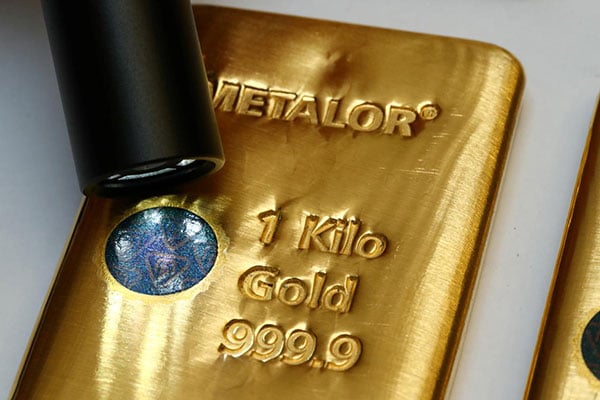
Most investment-grade bars are 99.5% fine (the standard for large 400 oz bars) or 99.99% fine (common for kilo bars and smaller bars). Look for bars stamped with weight, fineness, serial number, and the refiner’s mark. Bars from refiners on the LBMA Good Delivery list are accepted with the greatest confidence in international markets.
Dore bars
Dore is a semi-pure gold-and-silver alloy poured at the mine, and it is the most common form of African gold export. It is not investment-grade, because it must be refined first. Its value depends on:
- Assayed gold content, since a dore bar might be 70% gold and another 90%.
- Payable percentage, meaning the share of the gold content the refiner pays for after allowing for recovery.
- Refining and handling charges, which are deducted from the value.
That is why two dore bars with the same weight can have very different values. Never compare a dore quote with a 99.99% bar quote without adjusting for all three.
Nuggets and dust
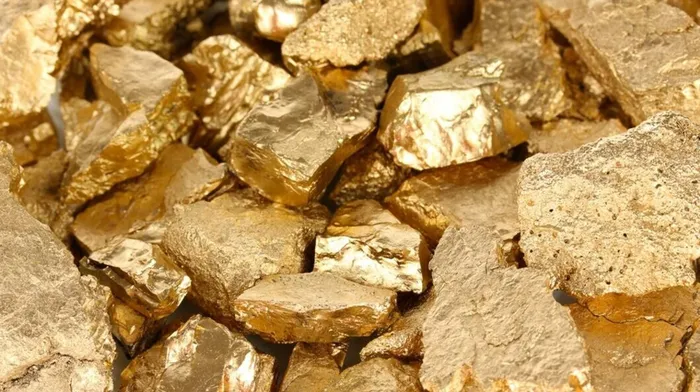
Both vary in purity from one batch to the next, so neither can be valued by weight or appearance. Rely on a laboratory assay and agree in advance how refining losses and charges are treated.
How African Gold Prices Work: Step-by-Step
Step 1: Global Gold Price Is Established
Everything starts with the international gold market. The benchmark gold price is determined through continuous trading on major markets such as the London Bullion Market (LBMA) and COMEX. This global spot price becomes the reference point for gold transactions worldwide, including in Africa.
Step 2: Gold Price Is Quoted Per Troy Ounce
The international spot price is quoted per troy ounce (31.1035 grams). Before a buyer receives a quotation, dealers convert this price into the required unit, such as grams, kilograms, or metric tons.
Example
- Spot Price: US$4,150 per troy ounce
- Equivalent price per gram
- Equivalent price per kilogram
Step 3: The Gold’s Purity Is Tested
Not all gold contains the same amount of pure gold. Before pricing, the gold is tested using methods such as X-ray fluorescence (XRF) and fire assay to determine its fineness.
Typical purity levels include:
| Gold Type | Typical Purity |
| Gold Dust | 80–95% |
| Gold Nuggets | 85–98% |
| Doré Bars | 80–98% |
| Refined Gold Bars | 99.5–99.99% |
Higher purity generally results in a higher value.
Step 4: The Gold Is Weighed
After purity is confirmed, the shipment is accurately weighed using certified scales. Gold is commonly traded in grams or kilograms.
Formula
Gold Value = Weight × Spot Price × Purity
Step 5: A Premium Is Added
The spot price reflects only the value of the gold itself. Buyers should also expect additional costs such as:
- Refining
- Assaying
- Packaging
- Insurance
- Secure transportation
- Export documentation
- Dealer’s margin
These costs create the final quoted price.
Step 6: Country-Specific Export Costs Are Included
Export costs vary from one African country to another depending on national regulations and required documentation.
These may include:
- Export permits
- Mineral dealer licensing requirements
- Assay certificates
- Certificate of origin (where applicable)
- Export levies or government fees
- Customs documentation
Buyers should always request a full breakdown of these charges.
Step 7: Currency Exchange Rates Are Considered
Although gold is generally traded in US dollars, sellers often incur costs in local currencies. Changes in exchange rates can slightly affect the final quotation.
Step 8: The Buyer Receives the Final Quotation
A professional quotation typically includes:
- Gold type
- Purity (fineness)
- Weight
- Spot price reference
- Premium
- Export costs
- Shipping costs
- Insurance
- Total amount payable
- Validity period of the quotation
Step 9: Independent Verification Takes Place
Before payment, experienced buyers usually verify:
- Seller’s license
- Assay report
- Export documents
- Gold weight
- Purity
- Serial numbers (for refined bars)
Independent verification helps reduce the risk of fraud.
Step 10: Price Is Confirmed Before Payment
Because the international gold market moves throughout the trading day, reputable dealers normally lock in the price at an agreed time before payment. This protects both the buyer and the seller from market fluctuations.
Quick Summary
Global Spot Price
↓
Convert to Grams/Kilograms
↓
Test Gold Purity
↓
Weigh the Gold
↓
Calculate Gold Value
↓
Add Dealer Premium
↓
Add Export Costs
↓
Add Shipping & Insurance
↓
Issue Final Quotation
↓
Verify Documents
↓
Confirm Price
↓
Complete Payment & Export
How to calculate a gold price
Use one formula consistently:
Spot value = spot price per gram × weight in grams × purity
Final price = spot value + dealer premium + refining (if needed) + assay and compliance + shipping and insurance + taxes
To convert a quoted spot price per troy ounce to a price per gram, divide by 31.1035. A kilogram is about 32.15 troy ounces.
Important: The figures below are illustrative only, using an assumed spot price of USD 3,000 per troy ounce and invented premiums and fees. They are not a quotation. Always use the live spot price and the seller’s written quote on the day you buy.
Example 1: 1 kg refined bar (99.99%)
| Step | Calculation | Amount (USD) |
| Spot per gram | 3,000 ÷ 31.1035 | about 96.45 |
| Spot value | 96.45 × 1,000 g × 0.9999 | about 96,440 |
| Dealer premium (assumed 1.5%) | 96,440 × 0.015 | about 1,450 |
| Secure shipping and insurance (assumed) | Per shipment | about 600 |
| Assay, export permits, compliance (assumed) | Per shipment | about 400 |
| Illustrative total | about 98,890 |
In this example, the buyer pays about 2.5% above the spot value of the gold. The actual figure depends on the destination, the insurer, and the seller’s terms.
Example 2: why size matters (100 g bar vs 1 kg bar)
A 100 g bar has the same spot value logic, but fixed costs such as assay, paperwork, and shipping are spread across much less gold. So the percentage premium is usually higher than for a kilo bar, even though the total payment is smaller.
Example 3: 1 kg dore bar assayed at 85% gold
| Step | Calculation | Amount (USD) |
| Fine gold content | 1,000 g × 0.85 | 850 g |
| Spot value of fine gold | 850 × 96.45 | about 81,980 |
| Payable percentage (assumed 95%) | 81,980 × 0.95 | about 77,880 |
| Less refining and handling (assumed) | Per batch | deducted |
A seller who quotes dore at spot per gram of total weight is overstating its value. Dore must be valued on assayed fine gold content.
Currency note
International gold quotes are in US dollars. If you pay in, or the seller’s costs are in, UGX, GHS, TZS, or another currency, exchange-rate movements between quote and payment will change your final cost. Agree the rate or the currency of settlement in writing.
Why African gold can cost less than retail, and why it is never far below spot
Buyers are sometimes surprised that wholesale gold from African suppliers can be cheaper than what they see in retail bullion shops. This can be legitimate, but the savings come from a lower premium, not from a price below spot.
The usual reasons:
- Fewer intermediaries. Buying from a licensed exporter or refiner can remove distributor and retailer markups.
- Wholesale quantities. Kilo-scale orders carry smaller premiums per gram than a single small bar.
- Closer to the source. Less handling and distribution between mine and buyer.
What this does not mean: that gold can be bought 20% to 50% below spot. Gold is transparently priced worldwide, and a licensed miner or refiner has no reason to sell it at a steep discount. Such offers are the classic hallmark of advance-fee fraud. A lower premium is realistic, but a price below spot generally is not.
| Typical retail chain | Typical direct chain |
| Mine → Refiner → Wholesaler → Distributor → Retailer → Buyer | Licensed mine → Refiner (if needed) → Licensed exporter → Buyer |
Fewer steps can reduce markups. They do not remove real costs such as refining, assay, permits, secure shipping, and insurance.
How to check whether a quotation is fair
Work through this checklist before accepting any quote.
| Check | What to confirm |
| Spot basis | The quote states the spot reference and the time it was taken, and the live price is within a plausible range of it. |
| Premium | The premium is stated as a percentage over spot and explained. |
| Purity | The fineness is stated, and for dore, the assay-based gold content and payable percentage. |
| Weight | Exact weight and unit (grams, troy oz, kg) are stated. |
| Assay | An assay report is provided by a laboratory or refiner you accept. |
| License | The seller’s mining, trading, or export license can be verified with the issuing authority. |
| Costs | Shipping, insurance, permits, and taxes are itemized, with Incoterms stated (for example, CIF or DAP). |
| Documents | You know which documents you will receive and when. |
| Currency | Currency and exchange rate are agreed. |
Questions worth asking any seller:
- Is the quote based on the current spot price, and at what time?
- Who performed the assay, and can I use a laboratory I choose?
- What exactly does the premium cover?
- Which license do you hold, and under which authority?
- Who bears the risk of loss during transport, and when does title pass?
A fair quotation is transparent, traceable, and explained. A seller who will not disclose how the price was built is not giving you useful information.
Safe payment and verification
“Verify before you pay” is only useful if you know how. Common structures include:
- Independent assay at an agreed facility. The gold is tested by a laboratory or refinery agreed by both sides, and payment is released against the result.
- Documentary letter of credit. A bank pays the seller only when the agreed documents are presented.
- Escrow. A neutral third party holds funds until conditions are met.
- Payment against delivery or inspection. Funds are released on confirmed receipt or inspection at a secure location.
Whichever you use, put the terms in a written contract that sets out specification, price basis, payment trigger, delivery terms, insurance, and what happens if the assay differs from the declared purity. Be cautious about any request for upfront “release fees”, “insurance fees”, or “clearance fees” before the gold has been verified.
Compliance and responsible sourcing
Gold is a regulated commodity. Both seller and buyer have obligations.
- Licensing and export rules vary by country. Uganda, Ghana, Tanzania, and the DRC each have their own licensing, royalty, and export-permit systems, and they change. For example, Ghana has been reorganizing how gold is sold and exported. Check the current rules with the relevant mining or minerals authority and, where needed, a local lawyer. [Add current, sourced summaries per country before publishing.]
- Responsible sourcing. Reputable buyers apply the OECD Due Diligence Guidance for Responsible Supply Chains of Minerals from Conflict-Affected and High-Risk Areas and, for refiners, standards such as the LBMA Responsible Gold Guidance. Artisanal and conflict-affected sources, notably in parts of the eastern DRC, require particular care.
- AML and KYC. Expect identity, source-of-funds, and source-of-gold checks. These protect you as well as the seller.
- Import and customs duties. The buyer is responsible for import declarations, duties, and taxes in the destination country.
Common mistakes
| Mistake | Risk | Better practice |
| Chasing gold far below spot | Fraud, fake gold, hidden fees | Treat steep discounts as red flags and compare against live spot |
| Ignoring purity | Paying bullion prices for lower-grade gold | Require an assay, and compare like for like |
| Comparing dore with refined bars | Misleading price comparison | Compare on fine gold content and processing needed |
| Ignoring export and shipping costs | Surprise charges after agreement | Get an itemized, all-in quote with Incoterms |
| Paying before verification | Loss of funds | Use assay, escrow, or letter-of-credit structures |
| Skipping compliance checks | Seizure, delays, or legal exposure | Confirm license, permits, and import rules first |
How Buy Gold in Africa Limited prices gold
We aim to make every quotation easy to follow and check. The process below describes how we work. And name assay or refining partners here, and link to supporting documents.
- Spot-based starting point. Each quotation begins with the current international spot price, recorded with the time it was taken.
- Assay and purity. Weight and purity are verified by assay before pricing, and we can discuss using a laboratory that you nominate.
- Itemized quotation. The quote separates the spot value, premium, refining (where applicable), compliance, shipping, and insurance.
- Export documentation. Required documents, which may include export permits, assay certificates, invoices, packing lists, and certificates of origin, are identified up front.
- Secure shipping and insurance. Shipments are arranged with secure logistics and insurance appropriate to the value.
- Costs disclosed before you commit. We aim to set out premiums and fees before a transaction proceeds, so there are no surprises.
Frequently Asked Questions
Who sets the price of gold?
No single company, government, or organization sets the global price of gold. Instead, the price is determined by continuous buying and selling in major international financial markets, including the London Bullion Market and COMEX futures exchange. The LBMA Gold Price serves as one of the world’s most widely recognized pricing benchmarks and is used by banks, refiners, bullion dealers, and investors as a reference when buying and selling physical gold.
What is the spot price of gold?
The spot price is the current international market price for one troy ounce (31.1035 grams) of pure gold available for immediate settlement. It reflects the underlying value of the metal only and does not include additional costs such as refining, fabrication, dealer premiums, shipping, insurance, customs duties, taxes, or other transaction fees that may apply to a physical gold purchase.
How do I convert the spot price into a price per gram?
To calculate the spot price per gram, divide the current price per troy ounce by 31.1035, which is the number of grams in one troy ounce. For example, if the spot price is US$4,200 per troy ounce, the approximate spot price per gram is US$135.03 before any premiums or other charges are added.
Is gold cheaper to buy in Africa?
Gold purchased directly from licensed suppliers in African producing countries may have lower wholesale premiums because the supply chain is often shorter. However, genuine investment-grade gold is not legitimately sold far below the international spot price. Any savings usually come from lower dealer premiums rather than discounted gold prices, so offers significantly below spot should be treated with caution.
How much premium over the spot price is considered normal?
The premium depends on several factors, including the type of gold product, its weight, purity, refinery brand, quantity purchased, and destination country. Larger products, such as 1-kilogram bars, generally carry lower percentage premiums than smaller bars or coins. Before purchasing, request written quotations showing both the current spot price and the premium so you can compare offers from different licensed suppliers.
What is dore gold, and how is it valued?
Dore is a semi-refined gold alloy produced by mines before final refining. It usually contains gold mixed with silver and other metals, so it is not yet investment-grade bullion. Its value is determined after an independent assay confirms the gold content. The final purchase price is based on the assayed purity, the agreed payable percentage, refining costs, and any applicable processing or export charges.
Why is my supplier’s quotation different from the live spot price I see online?
The live spot price represents only the international value of pure gold at a specific moment. A supplier’s quotation normally includes additional costs such as dealer premiums, refining, assaying, secure packaging, insured transportation, export documentation, and logistics. Since the spot price changes continuously throughout the trading day, quotations are usually valid only for a limited period before they must be updated.
What are the warning signs of a gold scam?
Common warning signs include offers priced 20% to 50% below the international spot price, sellers who cannot provide verifiable licenses or company registration details, refusal to allow an independent assay, requests for advance “clearance” or “release” fees, fake export documents, and pressure to send payment before completing proper verification. Legitimate gold transactions are transparent, documented, and allow buyers to verify both the seller and the gold before funds are transferred.
Do I need to pay import duties or taxes when buying gold internationally?
In many countries, imported gold may be subject to customs duties, VAT, GST, sales taxes, or other regulatory charges, depending on the form of the gold and your country’s import laws. These requirements vary widely between jurisdictions. Before completing an international purchase, confirm the applicable duties, taxes, and import procedures with your customs authority or a qualified legal or tax adviser.
Note: This article is provided for general informational purposes only and should not be considered financial, legal, investment, customs, or tax advice. Always verify current regulations and seek professional advice before purchasing or importing gold.