How to Spot Fake Gold in Africa |7 Tests to Spot It 2026 Guide
You can spot fake gold in Africa by checking the hallmark (999, 916, or 750), verifying the assay certificate, measuring the weight and dimensions, testing with an electronic gold tester or X-ray fluorescence (XRF) analysis, inspecting the serial number, confirming the seller’s licensing, and comparing the price with the current market value. For high-value purchases, always have the gold independently tested before completing the transaction.
Buying gold in Africa can be a profitable investment when you purchase from a reputable supplier and verify the gold’s authenticity before payment. However, counterfeit gold bars, gold-plated metals, tungsten-filled bars, forged assay certificates, and fake refinery packaging remain risks that buyers should be aware of. Learning how to identify genuine gold can help you avoid costly mistakes and make informed purchasing decisions.
This comprehensive 2026 guide explains seven proven ways to spot fake gold in Africa, including how to inspect hallmarks, verify assay certificates, identify counterfeit packaging, check weight and dimensions, use professional testing methods such as XRF analysis, and recognize common warning signs used by fraudsters. You’ll also learn what documentation reputable suppliers typically provide and the steps you should take before purchasing investment-grade gold.
If you’re looking to buy certified 24K African gold bars, Buy Gold in Africa Limited is a company committed to transparent business practices and encourages every buyer to complete appropriate due diligence before any transaction. The company supports buyers by providing product information, documentation, and guidance on the gold verification process so they can purchase with greater confidence.
Looking for authentic African gold bars or need help verifying a gold shipment before purchase? Contact Buy Gold in Africa Limited to request a quotation, learn about available gold products, and understand the documentation and verification process. Our team is ready to help you make informed decisions and purchase gold with confidence.
Understanding Fake Gold in Africa (2026)
Africa is one of the world’s leading gold-producing regions, supplying gold to investors, refiners, jewelry manufacturers, and central banks around the globe. As international gold prices remain historically high in 2026, demand for African gold continues to increase. Unfortunately, this demand also attracts fraudsters who attempt to sell counterfeit gold bars, gold-plated metals, falsified assay certificates, and other deceptive products to unsuspecting buyers.
Fake gold can appear remarkably convincing, especially when counterfeiters imitate the weight, appearance, serial numbers, and packaging of genuine bullion. Without proper testing and documentation, buyers may unknowingly purchase gold that contains little or no precious metal. Conducting thorough due diligence—including verifying the seller, requesting assay certificates, and performing professional purity testing—is essential before completing any high-value transaction.
Buy Gold in Africa Limited encourages all buyers to verify gold through recognized testing methods and to purchase only from reputable, licensed suppliers that provide transparent documentation and traceable sourcing.
- Tungsten-Filled Gold Bars
Tungsten-filled gold bars are among the most sophisticated forms of gold fraud because tungsten has a density very close to that of gold. This similarity allows counterfeit bars to closely match the expected weight of genuine bullion while containing significantly less gold than advertised.
In this type of fraud, criminals may drill into a gold bar, insert a tungsten core, and reseal or plate the surface with genuine gold. These counterfeit bars often appear authentic during a visual inspection and may even display convincing hallmarks and serial numbers. However, professional testing methods such as X-ray fluorescence (XRF), ultrasonic testing, or destructive assay techniques can reveal the hidden core.
Because of the high value of investment-grade bullion, buyers should never rely solely on appearance or weight when purchasing large gold bars.
- Gold-Plated Counterfeit Products
Another common scam involves bars, coins, or jewelry manufactured from inexpensive base metals such as copper, brass, or lead and then coated with a thin layer of gold. These products can closely resemble genuine gold but contain only a small amount of precious metal.
Counterfeit gold-plated items are often marketed at prices that appear unusually attractive compared with prevailing market rates. While simple visual inspections may not detect the fraud, professional testing methods—including electronic gold testers, XRF analysis, and laboratory assays—can determine whether the item contains the claimed amount of pure gold.
- Common Fraud Risks in Gold Trading
Gold fraud can occur in any market where buyers and sellers transact without adequate verification. Common risks include:
- Counterfeit gold bars containing base metals or tungsten cores.
- Gold-plated bars, coins, and jewelry represented as solid gold.
- Forged assay certificates, export permits, invoices, and shipping documents.
- Counterfeit refinery packaging, holograms, and serial numbers.
- Fake websites and social media profiles impersonating legitimate gold companies.
- Requests for advance payments without verifiable documentation or inspection opportunities.
These risks highlight the importance of verifying both the gold and the seller before making payment.
- How to Protect Yourself
Before purchasing gold in Africa or from any international supplier, buyers should:
- Verify the seller’s business registration and licensing.
- Request an original assay certificate from a reputable laboratory or refinery.
- Confirm the bar’s serial number and hallmark.
- Compare documentation for consistency across invoices, export documents, and shipping records.
- Arrange independent testing using XRF or another recognized assay method for high-value purchases.
- Consider secure payment arrangements, such as escrow or documentary trade instruments, where appropriate.
Why Verification Matters
Counterfeit gold can result in significant financial losses and may be difficult to recover once payment has been made. Careful due diligence—including independent testing, document verification, and purchasing from reputable suppliers—is one of the most effective ways to reduce risk.
Buy Gold in Africa Limited is committed to promoting responsible gold trading by encouraging buyers to verify gold purity, review supporting documentation, and conduct appropriate due diligence before completing any transaction. Buyers should always ensure that gold purchases comply with the laws and regulations applicable in both the exporting and importing countries.
Visual & Physical Tests to Spot Fake Gold in Africa
The fastest way to spot fake gold in Africa is to examine its weight, color, hallmarks, dimensions, magnetism, and overall workmanship before making a purchase. While these simple visual and physical checks cannot guarantee authenticity, they often reveal obvious warning signs that indicate counterfeit, gold-plated, or altered products. Before completing any high-value purchase, always confirm the gold with professional testing such as an XRF analysis or an accredited assay.
At Buy Gold in Africa, a trusted gold dealer based in Kampala, Uganda, buyers are encouraged to combine these basic inspections with professional verification to reduce the risk of purchasing counterfeit gold, especially as international gold prices continue to rise.
- Weight and Dimensions Check
Gold is one of the densest precious metals, with a density of approximately 19.3 g/cm³. Genuine gold bars and coins should match the manufacturer’s published weight and dimensions.
Use a calibrated digital jewelry scale together with a caliper to measure the length, width, and thickness of the item. If the weight is significantly different from the expected specification or the dimensions appear unusual, the product should be inspected further.
Keep in mind that some sophisticated counterfeit bars use dense metals such as tungsten, making professional testing essential for expensive purchases.
- Magnet Test
Pure gold is not magnetic.
Place a strong neodymium magnet close to the gold item.
- Genuine gold should not be attracted to the magnet.
- If the item is strongly attracted, it likely contains iron, nickel, or another magnetic metal.
- A negative magnet test alone does not prove the gold is genuine because many counterfeit metals are also non-magnetic.
Use this test only as an initial screening method.
- Examine the Hallmarks
Most genuine bullion products include clear identification markings.
Look for:
- Refiner’s name or logo
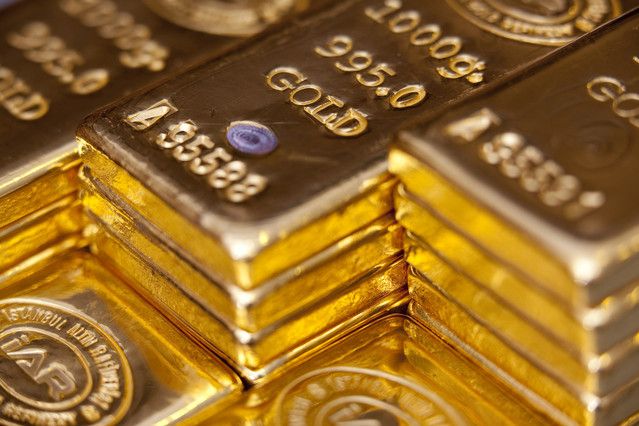
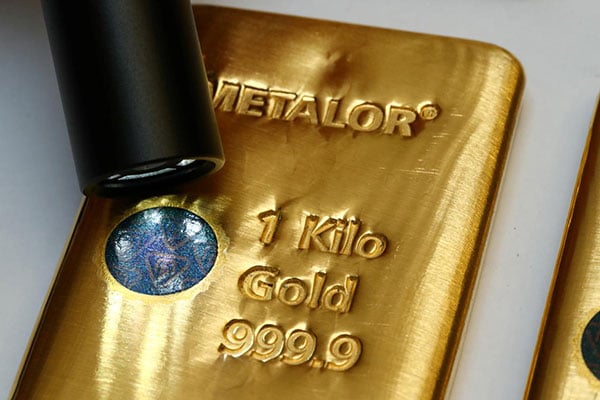
- Purity mark such as 999.9, 999, or 916
- Weight
- Individual serial number (where applicable)
Poor-quality engravings, inconsistent fonts, spelling mistakes, or missing serial numbers may indicate a counterfeit product.
If purchasing an LBMA-produced bar, compare the markings with the official images published by the refinery.
- Inspect the Colour and Finish
Authentic gold has a consistent, rich yellow appearance.
Warning signs include:
- Uneven colour
- Silver or copper showing around edges
- Peeling or flaking plating
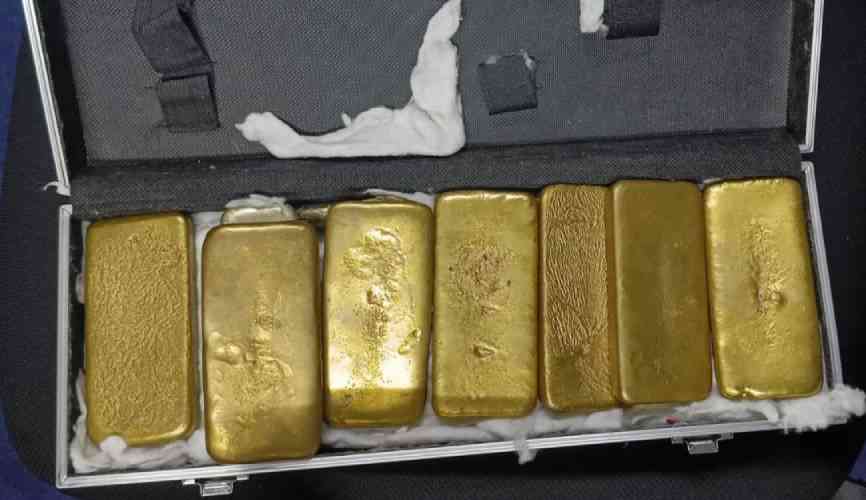
- Rough casting marks
- Excessively shiny coatings intended to imitate gold
Pay particular attention to corners, edges, and areas that receive the most wear.
- Check the Edges and Surface
Carefully inspect the entire bar or coin.
Look for:
- Cracks
- Seams
- Filing marks
- Tool marks
- Surface bubbles
- Irregular edges
High-quality investment bullion is manufactured to tight tolerances and normally has clean, consistent finishes.
- Listen to the Sound Test
When gently tapped against another precious metal object, genuine gold produces a distinctive clear ringing tone.
Counterfeit pieces often produce a dull or short sound.
Because sound varies depending on the size, shape, and purity of the item, this method should only be used as a supplementary check rather than proof of authenticity.
Visual Inspection Comparison
| Inspection | Genuine Gold | Possible Fake Gold |
| Magnet | No magnetic attraction | Strong attraction indicates base metals |
| Weight | Matches official specifications | Too light or inconsistent dimensions |
| Hallmarks | Clear logo, purity, serial number | Blurry markings, spelling errors, missing serial |
| Colour | Uniform rich yellow | Peeling, fading, uneven colour |
| Edges | Smooth, precise finish | Seams, filing marks, rough casting |
| Surface | Consistent appearance | Bubbles, cracks, scratches exposing other metals |
Important Note
Visual and physical inspections are excellent first steps, but they cannot confirm authenticity on their own. High-quality counterfeit bars may closely resemble genuine bullion in weight, appearance, and dimensions. For investment-grade gold, always request an XRF analysis, professional assay report, or independent laboratory verification before completing the transaction.
If you are buying gold in Uganda or elsewhere in Africa, Buy Gold in Africa recommends verifying the seller’s business registration, export documentation, and assay results before making payment. Combining careful visual inspection with professional testing provides the highest level of confidence when purchasing gold.
Methods Used to Spot Fake Gold in Africa
Identifying genuine gold is essential for anyone involved in gold trading or investment in Africa.
Due to the prevalence of counterfeit products in many markets, buyers must rely on proven testing methods to avoid losses.
Below are some of the most effective and widely used techniques for spotting fake gold.
1. Magnetic Test
Gold is not magnetic. If a gold item is attracted to a magnet, it is most likely fake or mixed with other metals such as iron or nickel.
For accurate results, a strong magnet should be used. Any noticeable magnetic reaction is a clear warning sign.
2. Skin Test
Wearing gold jewelry for an extended period can help identify authenticity. Real gold does not react with sweat or natural skin oils.
If the skin turns green, black, or becomes itchy, the item likely contains other metals, indicating fake or low-quality gold.
3. Ceramic Test
Gently rub the gold piece against an unglazed ceramic tile.
-
Real gold leaves a golden or yellow streak
-
Fake gold leaves a black or dark gray streak
⚠️ Caution: This method may scratch or damage the jewelry and should be performed carefully, preferably on a hidden area.
4. Acid Testing
Using a professional gold testing kit, a small drop of acid is applied to the gold.
-
Real gold does not react or change color
-
Fake gold reacts, changes color, or dissolves
This method is highly effective but should be conducted by professionals due to the corrosive nature of the acids.
5. Weight and Size Comparison
Gold is denser and heavier than most metals.
-
Compare the weight of the suspected gold with a similarly sized piece of genuine gold
-
If it feels significantly lighter, it is likely fake or alloyed
Precision scales are recommended for accurate comparison.
6. Professional Appraisal
For guaranteed results, take the gold to a professional jeweler, certified assayer, or trusted gold buyer. These experts use advanced tools such as XRF analyzers and have the experience to accurately determine gold purity and authenticity.
Conclusion
While basic tests can help identify fake gold, combining multiple methods provides better accuracy. In high-value transactions, professional appraisal remains the safest option.
By applying these proven methods, buyers in Africa can reduce risk, protect their investments, and trade gold with greater confidence.
Acid & Electronic Testing
Acid and electronic tests provide definitive proof against fake gold scams prevalent in African markets—catching 95% of tungsten-filled bars and plated fakes that visual checks miss.
Nitric acid reveals base metals instantly, while XRF guns deliver non-destructive purity reads.
Buy Gold in Africa in Kampala demonstrates both free, protecting buyers in the $4,500/oz 2026 boom.
Nitric Acid Test: The Classic Detector
Scratch a hidden spot (file bar edge), apply 1 drop of nitric acid (14K, 18K, 22K kits vary concentration).
Real gold: No reaction—clear drop stays.
Fakes: Green fizz (copper/lead), milky (silver plate), or dissolves (base).
Test core, not surface—plating fools superficial scratches. 22K (91.67%) shows faint fizz if alloy-heavy; 24K inert.
Safety: Gloves, neutralize with baking soda. Buy Gold in Africa kits: UGX 50k, pro demos catch DRC tungsten cores.
Acid Results Table:
| Karat | Acid Reaction | Fake Indicators |
|---|---|---|
| 22K | Minimal/no fizz | Green/milky fizz |
| 18K | Light green | Heavy bubbling |
| Base | Dissolves green | Immediate reaction |
XRF Guns: Pro Non-Destructive Testing
X-Ray Fluorescence scans penetrate 10-20 microns, reading elemental composition in seconds—gold %, tungsten, copper exposed.
Buy Gold in Africa uses Thermo Fisher Niton guns (99.9% accuracy): 22K reads 91-92% Au; fakes show 60% Au + 30% W. Cost: UGX 20k/test vs. free for clients.
Portable for markets; beats acid on jewelry.
Buy Gold in Africa Demos
-
Acid Live: Scratch 1kg “Rand bar”—real: Clear; fake: Green explosion revealing tungsten.
-
XRF Scan: Screen shows Au 99.9% vs. fake’s Au 5%, W 92%.
-
Combo Verify: Acid + XRF + ultrasound for LBMA certainty.
“Caught UGX 400M fake in Accra—XRF saved me,” per client. Available walk-in Kampala; escrow buys include testing.
Limitations: Acid misses thick plating; XRF needs calibration. Combine methods.
Master these—visit Buy Gold in Africa for hands-on sessions. Verify before you buy.
Advanced Verification
For high-value gold transactions exceeding UGX 100M—like bulk 1kg bars or artisanal lots—basic tests fall short against sophisticated African counterfeits.
Advanced methods like fire assay and ultrasound provide laboratory-grade certainty, meeting LBMA Good Delivery standards that ensure global tradability.
Buy Gold in Africa in Kampala deploys these for clients, eliminating 99.9% of fakes in the 2026 $4,500/oz market.
Fire Assay: The Gold Standard
Fire assay (cupellation) is the definitive refiner’s test: Crush sample (0.5-1g), mix with fluxes (lead, borax), heat to 1,200°C in a furnace.
Impurities oxidize/slag off; pure gold bead remains—weighed for exact fineness (e.g., 22K = 916.7). Detects tungsten cores invisible to acid/XRF.
Buy Gold in Africa partners with SGS Kampala: 24-48hr results, UGX 150k/test.
LBMA mandates this for Good Delivery certification—PAMP/Rand bars pass unequivocally.
Fire Assay vs. Others:
| Method | Accuracy | Depth | Cost (UGX) |
|---|---|---|---|
| Fire Assay | 99.99% | Full melt | 150k |
| XRF | 99% | 20 microns | 20k |
Ultrasound Testing: Non-Destructive Reveal
Ultrasound waves (5-10 MHz) penetrate bars, mapping density variations—real gold uniform (19.3 g/cm³); tungsten-filled show core echoes.
Handheld probes (Olympus EPOCH) visualize voids/plating on screens.
Ideal for intact LBMA bars: Scan 1kg Rand—homogeneous green; fake flashes red layers.
Buy Gold in Africa demos free: “Ultrasound caught DRC tungsten brick—saved UGX 450M.” Non-destructive, 5-min results.
LBMA Standards: Your Liquidity Guarantee
London Bullion Market Association lists 70+ refiners (PAMP, Rand, Valcambi)—bars must weigh 350-1,500g, stamp refiner logo/serial/999.9 fineness, and pass fire assay.
Verify via lbma.org.uk hologram database.
African fakes mimic stamps but fail weight tolerances (±0.5g).
Buy Gold in Africa stocks only LBMA-approved, with digital certificates blockchain-tracked.
When to Use Advanced Tests
-
Bulk buys (>5kg).
-
Artisanal nuggets (mercury residue risks).
-
Resale/export (customs demand).
Buy Gold in Africa bundles: Free ultrasound + XRF on purchase; fire assay for escrow. “Verified 10kg Ghana lot—9kg fake,” client testimonial.
Elevate from suspicion to certainty—advanced verification secures wealth. Visit Kampala for pro testing today.

Africa-Specific Scams & Laws
Africa’s $50B gold trade breeds unique scams exploiting porous borders and informal markets—smugglers cost governments UGX trillions yearly while duping buyers with fakes.
In 2026’s $4,500/oz boom, Uganda/Kenya hotspots see 25-30% counterfeits; understanding tricks and laws protects investors. Buy Gold in Africa in Kampala navigates these with compliant, verified deals.
Common Smuggler Tricks
-
Tungsten “Bricks”: DRC smugglers fill 1kg bars with tungsten, plate gold—pass scales/borders, fail assays. Routed via Rwanda to Kampala at “mine discounts.”
-
Plated Nuggets: Ghana galamsey operators electroplate lead ore as “raw gold”; sold in Accra/TZ markets with fake certificates.
-
Certificate Forgery: Photoshopped LBMA assays from Sudan; “Rand Refinery” stamps laser-printed on Chinese blanks.
-
Switcheroo: Escrow deals where real gold ships first, fake swapped mid-transit via corrupt couriers.
-
Dust Scams: “Gold dust” in paint cans—90% silica, shipped from Mali to Uganda ports.
Hotspots: Goma (DRC, 50% fakes), Obuasi (Ghana), Kampala borders. Red flag: Prices 10-20% below spot.
Uganda Customs Rules & EAC Compliance
-
Duty-Free Bullion: Uganda Revenue Authority (URA) exempts >99.99% investment gold from VAT/import duty (up to UGX 10M declared value); declare via Form 47.
-
AML/KYC: Bank of Uganda mandates ID, source proof for deals >UGX 50M; unlicensed trade = 2-year jail.
-
Export Limits: <5kg personal without license; assay certificates mandatory for EAC (Kenya/TZ/Rwanda).
-
Seizure Risks: Fakes trigger 100% fines + confiscation; 2025 saw UGX 15B busts at Entebbe.
EAC Harmonized Rules: Zero capital gains tax on bullion resale; mutual recognition of LBMA stamps.
| Scam Type | Trick | Legal Penalty (UG) |
|---|---|---|
| Tungsten Fill | Core substitution | 5-10 yrs prison |
| Fake Certs | Forged assays | UGX 100M fine |
| Smuggling | Undeclared >5kg | Confiscation + duty |
Buy Gold in Africa Protections
URA-registered, we provide blockchain-tracked assays, escrow via TradeSafe, and pre-clearance docs. “Avoided Goma scam—Kampala verification saved UGX 200M.” Clients buy risk-free.
Know the laws, spot the tricks—choose verified dealers.
Contact Buy Gold in Africa for compliant gold today.
Buy Gold in Africa Testing Services
Buy Gold in Africa in Kampala delivers comprehensive gold testing services, eliminating fake risks in Africa’s 25-30% counterfeit market.
Our URA-registered lab offers free assays for walk-in clients, using XRF, acid, ultrasound, and fire assay to verify 22K/24K bars down to 0.1% purity. Amid 2026’s $4,500/oz boom, protect UGX millions with on-site demos—trusted by 5,000+ buyers.
Free Kampala Assays: Walk-In Convenience
Visit Bukoto-Kisaasi Road HQ—no appointment needed.
XRF Gun Scans (Thermo Niton): 10-second elemental readout (Au 91.67% for 22K).
Nitric Acid Tests: Scratch-and-drop reveals plating.
Ultrasound: Maps tungsten cores. Results printed with serial-matched certificates. Free for first 2kg; UGX 20k/kg bulk. SGS-partnered for LBMA compliance.
Service Comparison:
| Test Type | Time | Cost (1kg) | Detects |
|---|---|---|---|
| XRF | 10s | Free | Composition 20μm |
| Acid | 1min | Free | Surface/base metals |
| Ultrasound | 5min | Free | Internal voids |
| Fire Assay | 48hrs | UGX 150k | Exact fineness |
Escrow Buys: Zero-Risk Purchases
All sales via TradeSafe escrow—deposit funds, we ship post-assay video.
Gold held in Brinks vault until buyer confirms purity. Ideal for international/DRC lots: “Verified UGX 450M Ghana shipment flawlessly.”
Payments: MoMo, wire, USDT. Export docs included (MEMD permit, UNBS cert).
Why Choose Our Services
-
URA/MEMD Licensed: Full KYC/AML compliance.
-
Live Demos: Witness tests on your gold.
-
Buyback Guarantee: 98% spot on verified bars.
-
Regional Reach: Assays for Kenya/TZ exports.
“Free XRF caught tungsten—bought confidently,” per review. From miners to investors, we ensure authenticity.
Secure your gold—visit Buy Gold in Africa Kampala today for complimentary testing
Prevention & Resale Tips
Prevent fake gold losses with proactive habits and certified resale channels—essential in Africa’s 25-30% counterfeit market. After verification at Buy Gold in Africa, secure holdings and exit positions profitably during 2026’s $4,500/oz rally, preserving UGX value against inflation.
Prevention Best Practices
-
Buy Certified Only: Demand LBMA assays/VERISCAN; reject verbal guarantees.
-
Certified Storage: Brinks/Loomis vaults (0.5%/yr)—allocated, insured, app-tracked. Beats home safes vulnerable to Kampala theft (15% rise).
-
Documentation: Blockchain certs + photos; annual re-assays.
-
Diversify Dealers: Test samples at Buy Gold in Africa before bulk.
-
Avoid Hotspots: Skip informal markets (Goma, Accra)—use escrow.
Quick Prevention Checklist:
-
LBMA stamps verified
-
Escrow used
-
Storage allocated
-
Insurance current
Resale with 98% Buyback Guarantee
Buy Gold in Africa Kampala repurchases verified bars/jewelry at 98% spot—e.g., UGX 440k/g for 22K (buy at 462k). Walk-in assay, instant MoMo payout, no fees.
Beats pawnshops (70%). Bulk miners: 99%. EAC-compliant for Kenya/TZ sellers.
| Resale Option | % Spot | Speed | Fees |
|---|---|---|---|
| Buy Gold in Africa | 98% | Same day | None |
| Pawnshops | 70-80% | Immediate | High |
| Global (JM) | 95% | 7 days | Ship |
“Resold 5kg verified—98% spot, seamless,” client review. Time sales post-rally peaks (BofA forecasts $5k/oz).
Prevent scams, maximize returns—store certified, sell smart with Buy Gold in Africa.
How to Test Gold with a Lighter
Testing gold with a lighter is a simple at-home method that can help indicate whether a gold item is genuine. While it is not a definitive test, it is useful for quick preliminary checks.
To perform this test, hold the gold piece with heat-resistant tweezers and expose it to the flame of a lighter for approximately 30–60 seconds. Observe the reaction carefully.
-
Real gold does not burn, melt, or discolor. Instead, it may appear brighter or shinier as it heats.
-
Fake or gold-plated items often turn darker, blackened, or dull, and may release a burning or metallic odor as the coating or base metals react to the flame.
This reaction occurs because genuine gold is highly resistant to heat and oxidation, whereas other metals used in counterfeit gold cannot withstand direct flame.
⚠️ Important Note:
This test should be used with caution. Excessive heat can damage jewelry, especially items with stones, glue, or thin gold plating. For valuable pieces, professional testing is strongly recommended.
How to Identify Fake Gold at Home
In addition to professional testing methods, several simple household tests can help you identify fake gold at home. While these methods are not foolproof, they provide useful preliminary indicators—especially for buyers operating in African gold markets.
1. Vinegar Test
Place a small drop of white vinegar on the gold item and observe the reaction.
-
Real gold remains unchanged and does not tarnish.
-
Fake gold may change color, stain, or show signs of corrosion.
This happens because genuine gold is resistant to acids, while other metals react chemically.
2. Float Test (Water Test)
Drop the gold item into a cup or bowl of water.
-
Real gold, being dense, sinks immediately to the bottom.
-
Fake gold may float, bob, or sink slowly.
This test works best for solid gold items and should be combined with other methods for accuracy.
Does Fake Gold Stick to a Magnet?
Pure gold is non-magnetic. Many counterfeit gold items contain ferrous metals that react to magnets.
-
If the gold item sticks to a magnet, it is not pure gold.
-
Some fake gold items are made from non-magnetic metals, meaning they may pass this test.
For this reason, the magnetic test should always be used in combination with other testing methods rather than on its own.
How to Avoid Buying Fake Gold
- Buy from licensed, verifiable dealers. Confirm registration with the relevant national authority before transacting.
- Never pay before testing. Legitimate sellers allow inspection and testing before payment.
- Use escrow for high-value or remote transactions, so funds aren’t released until the gold is verified.
- Request documentation — proof of origin, assay certificates, and transaction records — and verify it with the issuing body rather than assuming it’s genuine.
- Be suspicious of below-market pricing. A price meaningfully under spot is one of the most reliable red flags there is.
- Combine tests. No single method is foolproof; pairing a quick screen (magnet, density) with lab-grade verification (XRF or fire assay) for anything valuable is the safest approach.
- Know the applicable law before you transact, including any declaration thresholds, KYC/AML requirements, and export documentation needed in your country — rules vary and change, so confirm current requirements with the relevant authority rather than relying on older articles.
What Color Does Gold Turn When Heated?
When genuine gold is heated, it retains its original color and may even appear brighter or more lustrous. Pure gold does not burn, tarnish, or darken when exposed to heat.
In contrast, fake or gold-plated items often darken, discolor, melt, or show burn marks when heated. These reactions occur because counterfeit gold usually contains base metals or surface coatings that oxidize or degrade under heat. The extent of the reaction depends on the type of metal and coating used.
Points to Note in Order to Avoid Purchasing Fake Gold
Avoiding counterfeit gold requires a combination of knowledge, caution, and proper verification. Below are essential precautions every gold buyer in Africa should follow:
1. Purchase from Reputable Sources
Always buy gold from trusted dealers, licensed traders, or certified gold buyers with a proven track record. Reputable sellers provide authenticity certificates and operate transparently.
2. Check for Hallmarks
Authentic gold items typically carry purity stamps, such as:
-
24K – pure gold
-
18K – 75% gold
Be cautious of gold items without hallmarks or with poorly stamped markings, as these may indicate counterfeit products.
3. Seek Professional Verification
Before making a significant purchase, have the gold tested and verified by a professional jeweler or assayer. Experts use advanced tools and have the experience needed to confirm authenticity and purity.
4. Educate Yourself
Familiarize yourself with the appearance, weight, texture, and behavior of genuine gold. The more knowledgeable you are, the harder it becomes for counterfeit products to deceive you.
5. Request Proper Documentation
Always ask for:
-
Proof of origin
-
Authenticity or assay certificates
-
Transaction records
Proper documentation helps verify legitimacy and protects your investment.
6. Use Gold Testing Kits
Consider investing in a gold testing kit for preliminary checks. While not a substitute for professional testing, these kits are useful for identifying obvious fakes before further verification.
Frequently Asked Questions
How can I tell if 22K gold is real? Combine a density check, a magnet test, and — ideally — a nitric acid or XRF test on a hidden area. 22K gold (91.6% pure) will show minimal to no reaction to acid and no magnetic pull. For anything of real value, get a professional test rather than relying on home methods alone.
Is a nitric acid test safe to do myself? It’s best left to someone experienced — the acid is corrosive, and interpreting the reaction correctly (versus over- or under-diagnosing) takes practice. Many dealers and jewelers offer this as a service.
Does gold-plated jewelry stick to a magnet? It depends on the base metal. Plated items over steel or iron alloys will show magnetic attraction; those over brass or copper won’t. A negative magnet result doesn’t guarantee authenticity — always pair it with another test.
What does “24KGP” mean on a stamp? GP stands for “gold plated” — it explicitly means the item is not solid 24K gold, just plated. It’s easy to misread at a glance, so check stamps carefully.
Where can gold be tested professionally? Licensed jewelers, certified assayers, and accredited refineries (often affiliated with national mining authorities or LBMA-listed refiners) offer testing. For high-value transactions, fire assay or XRF testing from an accredited lab is the most reliable option.
Conclusion
Understanding how to spot fake gold in Africa is essential for anyone involved in gold buying, trading, or investment. With counterfeit gold becoming increasingly sophisticated across many African markets, relying on guesswork can lead to serious financial losses.
By applying proven testing methods—such as heat testing, magnetic checks, weight comparison, and at-home household tests—buyers can significantly reduce the risk of purchasing fake gold.
However, no single test is foolproof. The most effective approach is combining multiple verification methods with professional appraisal. Knowledge, vigilance, and proper verification remain the strongest defenses against counterfeit gold.
Call to Action
Whether you are a first-time buyer or an experienced investor, don’t take unnecessary risks when purchasing gold in Africa. Partner with Buy Gold in Africa for professional gold verification, authenticity testing, and trusted sourcing across the continent.
👉 Contact Buy Gold in Africa today to verify your gold, avoid counterfeit products, and secure genuine, high-quality gold with confidence.
Your success in the African gold market begins with the right knowledge—and the right partner.