Gold Mines in Ghana 2026 | Top 10 Mines, Owners & Prices
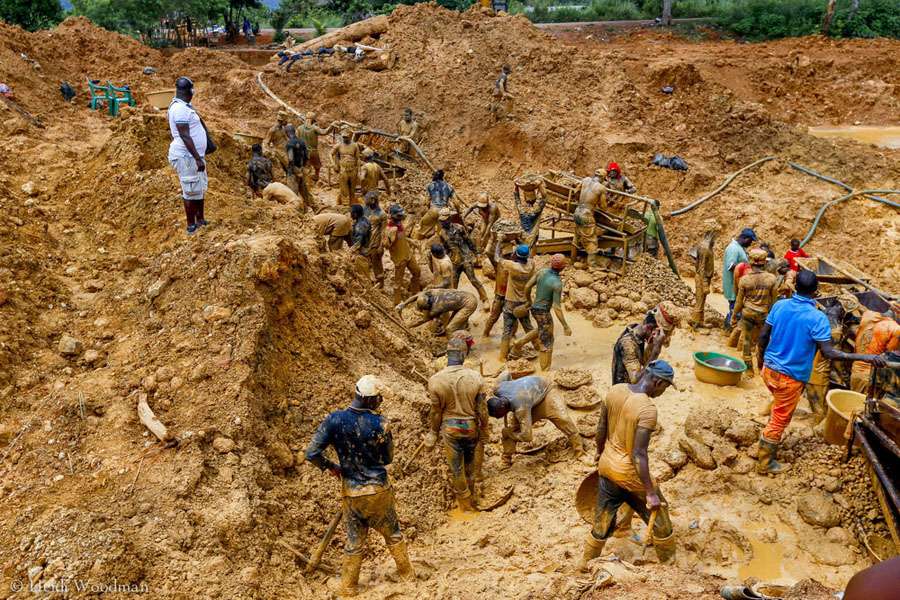
Ghana is Africa’s largest gold producer. The country produced a record about 6 million ounces of gold in 2025, approximately 3.1 million ounces from small-scale mining and 2.9 million ounces from large-scale mines, and is targeting about 6.5 million ounces in 2026. Ghana’s largest gold mines include Tarkwa (Gold Fields), Ahafo South and Ahafo North (Newmont), Obuasi and Iduapriem (AngloGold Ashanti), Akyem (Zijin Mining), Cardinal Namdini (Shandong), and Bibiani and Chirano (Asante Gold). Since 2025, gold produced by licensed small-scale miners must be purchased and exported through the Ghana Gold Board (GoldBod).
Ghana has earned its reputation as one of the world’s leading gold-producing countries through its rich mineral resources, modern mining industry, and long history of commercial gold production. From the historic Ashanti goldfields to today’s large-scale open-pit and underground operations, the country’s mining sector continues to attract international investors, global mining companies, and gold buyers seeking reliable sources of responsibly produced gold.
The country’s stable mining framework, established infrastructure, and significant gold reserves have helped make mining one of Ghana’s most important economic sectors. Large-scale operations produce millions of ounces of gold annually while creating employment, supporting local communities, and contributing substantially to government revenue and foreign exchange earnings.
Some of Ghana’s most productive mines, including Tarkwa, Obuasi, Ahafo South, Ahafo North, Iduapriem, Akyem, Cardinal Namdini, Bibiani, and Chirano, use modern mining technology and internationally recognized operational standards. These mines are operated by some of the world’s leading gold mining companies and continue to play an important role in global gold supply.
For international buyers and investors, it is also important to understand Ghana’s regulatory environment. Since the introduction of the Ghana Gold Board (GoldBod) under the GoldBod Act, 2025, licensed small-scale gold must be purchased and exported through GoldBod, while large-scale mining companies continue to export under their applicable legal framework. Understanding these rules is essential for anyone planning to source or invest in Ghanaian gold.
In this guide, you’ll discover the top gold mines in Ghana, the companies that operate them, current production statistics, major mining regions, investment opportunities, and the key regulations that international gold buyers should know before purchasing or importing gold from Ghana.
Key Facts box
| Key Fact | Information |
| Largest Gold Producer | Ghana is Africa’s leading gold producer, with large-scale and artisanal mining contributing significantly to national output. |
| 2025 Gold Production | Ghana produced approximately 6 million ounces of gold in 2025. |
| Largest Gold Mine | Tarkwa Mine, operated by Gold Fields Ghana, is one of the country’s largest and longest-running gold mines. |
| Largest Mining Company | Newmont Corporation is one of Ghana’s largest gold mining companies, operating the Ahafo and Akyem mines. |
| Main Gold Regulator | Ghana Gold Board (GoldBod) oversees the trading and export of artisanal and small-scale gold under the GoldBod Act, 2025. |
| Best Investment Gold | 24K (99.99% purity) bullion bars are generally preferred for long-term investment because they contain the highest gold content. |
| Main Export Markets | Switzerland, the United Arab Emirates (Dubai), India, China, and other international bullion markets. |
| Common Gold Forms | Gold bars, doré bars, gold nuggets, gold dust, and refined bullion. |
| Currency Used for International Trade | Most international gold transactions are priced and settled in US dollars (USD). |
| Best for International Buyers | Buy from a licensed GoldBod-authorized exporter, verify documentation, use an independent assay, and choose insured international shipping. |
Top 10 Gold Mines in Ghana
Obuasi Gold Mine:
Managed by AngloGold Ashanti, Obuasi is one of the oldest and richest gold mines in Ghana. The mine has a long history of production and is known for its highest-purity gold it is one of the richest gold mines in the world, with immense underground reserves.
Tarkwa Gold Mine:
Owned by Gold Fields, Tarkwa is one of the largest gold mines with outstanding production capacity It has consistently produced gold at competitive prices and is known for its sustainable mining practices. Tarkwa is one of the largest gold mines in Ghana, producing over 500,000 ounces of gold annually which is renowned for its open-pit mining and advanced processing technologies.
Ahafo Gold Mine:
Operated by Newmont Goldcorp, Ahafo is known for its modern mining techniques and responsible environmental practices for its efficiency and large-scale production and produced approximately 670,000 ounces of gold in 2024. The mine was an outstanding contributor to local economies through job creation and community development.
Iduapriem Gold Mine:
Also operated by AngloGold Ashanti, Iduapriem is an open-pit mine located in the western region of Ghana. It is known for its efficient operations and commitment to sustainable mining.
Nkran Gold Mine:
Part of the Asanko Gold Mine, Nkran is recognized for its remarkable gold reserves and has been a focal point for investment in recent years. The mine aims to enhance its production through innovative mining techniques.
Bibiani Gold Mine:
Owned by Mensin Gold, Bibiani has vast untapped reserves and has recently undergone exploration activities to expand its resource base. The mine has the potential for growth and development.
Sankofa Gold Mine:
This mine, part of the larger Gold Fields portfolio, has shown promising exploration results and is expected to contribute significantly to Ghana’s gold production in the coming years.
Chirano Gold Mine:
Operated by Kinross Gold Corporation, Chirano is an underground and open-pit mining operation that has consistently produced and been profitable.
Damang Gold Mine:
Also owned by Gold Fields, Damang has undergone significant upgrades and expansions, enhancing its production capabilities and sustainability efforts.
Akrokeri-Homase Gold Project:
This project, operated by Akrokeri-Ashanti Gold Mines, is in the exploration phase but has shown promising results that could lead to significant production in the future.
Gold Quality in Ghana
Ghana is globally recognized for its high-quality gold production, particularly in 22K and 24K purity. The majority of gold mined in Ghana comes from both large-scale industrial mines and small-scale artisanal operations. Here’s how gold quality is classified:
-
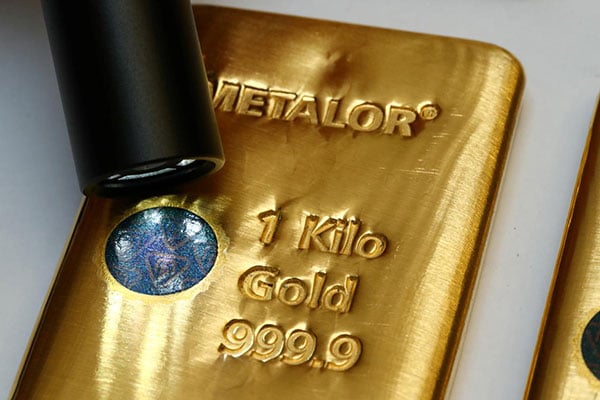
24K Gold (99.9% pure):
This is the highest purity level, mostly produced by licensed exporters and refineries. It is refined and sold as bullion for international investment or reserve holdings. -
22K Gold (91.6% pure):
Widely used in jewelry and preferred across African and Middle Eastern markets. Ghanaian jewelers and traders favor 22K for its durability and bright color. -
18K and below:
Though less common in mine output, these purities are used locally or in regional exports for jewelry manufacturing. Small-scale refiners may blend lower karats for affordability.
Ghana ensures gold quality through local refineries such as:
-
Sahara Royal Gold Refinery
-
Gold Coast Refinery
These institutions issue assay certificates, verifying the karat, weight, and purity, essential for both domestic buyers and international exports.
Gold Reserves and Gold Belts in Ghana
Most of Ghana’s gold is found in a series of northeast–southwest gold belts:
- Ashanti Belt – home to Obuasi, Tarkwa, Iduapriem, Damang and Asanko
- Sefwi-Bibiani Belt – home to Bibiani, Chirano and Ahafo
- Bole-Nangodi and northern belts – home to newer projects such as Namdini
Gold is Ghana’s single biggest export. It accounted for about 57% of total export revenue in 2024, which is why the government now treats gold as a strategic reserve asset to support the cedi.
Major Gold Mining Companies in Ghana (2026)
| Company | Ghana mines | Notes |
| Newmont | Ahafo South, Ahafo North | World’s largest gold miner; sold Akyem |
| Gold Fields | Tarkwa | Exited Damang in April 2026 |
| AngloGold Ashanti | Obuasi, Iduapriem | Historic Ghana producer |
| Zijin Mining Group | Akyem | Bought from Newmont |
| Shandong Gold | Cardinal Namdini | New large open-pit mine |
| Asante Gold | Bibiani, Chirano | 2026 guidance 275–300k oz |
| Galiano Gold | Asanko (Nkran, Esaase) | 90% owner |
| Chifeng Jilong Gold | Wassa | Underground and open-pit |
| Perseus Mining | Edikan | Central Region |
| Engineers & Planners (E&P) | Damang | Ghanaian-owned, took over in 2026 |
Gold Price in Ghana Today (24K, 22K, 18K per Gram)
Gold prices in Ghana follow the international spot price. In mid-October 2026, gold traded at about US$4,165 per troy ounce, down roughly 5% from a month earlier but far above 2024 levels.
| Purity | Gold content | Common use | Approx. price per gram (USD) |
| 24K | 99.9% | Bullion, investment bars | ~$133.90 |
| 22K | 91.6% | Fine jewelry, coins | ~$122.70 |
| 18K | 75.0% | Premium jewelry | ~$100.40 |
| 14K | 58.5% | Everyday jewelry | ~$78.30 |
| 10K | 41.7% | Budget jewelry | ~$55.80 |
Prices are based on the international spot price of about US$4,165/oz on October 18, 2026. They are indicative only and change every day. Doré (unrefined) gold is priced on its assayed gold content, minus refining, transport, and other charges.
How to calculate gold price per gram yourself: divide the spot price per ounce by 31.1035 (grams in a troy ounce), then multiply by the purity. Example: $4,165 ÷ 31.1035 × 0.916 = about $122.66 per gram for 22K gold.
Beware of “discount” prices. Any seller offering gold far below the world spot price for example, 20–40% off is almost certainly running a scam. Real sellers in Ghana price close to spot.
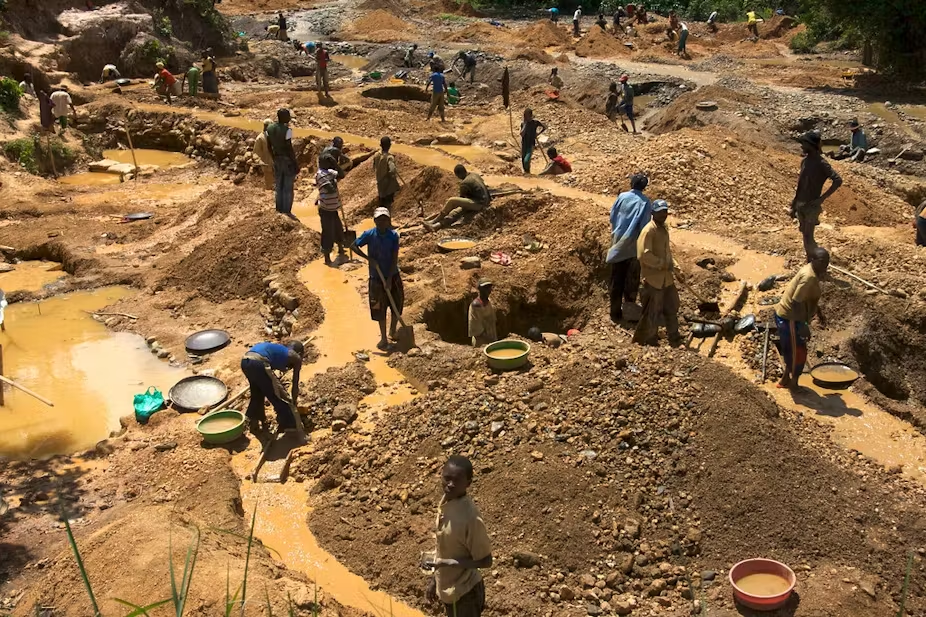
Top Mining Companies in Ghana
The mining industry in Ghana is dominated by several key players, including:
| Mining Company Name | Description | Notable Activities / Assets |
|---|---|---|
| Newmont Goldcorp | One of the world’s largest gold miners; operates Ahafo and Akyem mines in Ghana | Large-scale mining, producing hundreds of thousands of ounces annually |
| Gold Fields | Major multinational mining company; operates Tarkwa and Damang mines | Significant gold output, open pit mines |
| AngloGold Ashanti | Historic gold producer with Obuasi and Iduapriem mines in Ghana | High-quality underground mine operations |
| Asanko Gold Corporation | Mid-tier producer with Nkran and Esaase mines | Expanding operations with significant recent exploration |
| Golden Team Mining Company Ltd | Part of new agreement to sell 20% gold output to GoldBod | Large scale mining, contributing to national reserves |
| Akroma Gold Limited | Signed agreement to sell 20% of output to Ghana Gold Board (GoldBod) | Developing mining assets, increasing production |
| Adamus Resources Limited | Focuses on large- and medium-scale mining in Ghana | Known for growth and exploration |
| Cardinal Namdini Mining Limited | Operates Namdini Gold Mine, one of Ghana’s newest large mines | High-grade open pit mine; fast ramp-up production |
| Goldstone Akrokeri Limited | Part of the 2025 GoldBod agreement | Developing new mining projects |
| Earl International Group (GH) Limited | Included in the 2025 gold purchase program | Emerging mining company with operational activities |
| Xtra Gold Mining Limited | Involved in new GoldBod agreement | Growing contributor in Ghana’s mining sector |
| Prestea Sankofa Gold Limited | Established mining company | Active mining, includes underground and open pit |
| Gan He Mining Resource Development Limited | Signed deal with GoldBod to sell part of output | Developing gold assets in Ghana |
Royalties and Taxes on Gold in Ghana
| Tax or fee | Rate | Notes |
| Mineral royalty (gold) | Sliding scale 5%–12% | Replaced the flat 5% rate in March 2026; 12% applies when gold is above US$4,500/oz |
| Corporate income tax (mining) | 35% | On mining company profits |
| GoldBod offtake | 30% of large-scale output | Sold locally at a 0.55% discount |
The new sliding-scale royalty was introduced despite opposition from mining companies and several foreign governments, who argued it could slow new investment. Ghana’s regulator says it balances state revenue with industry margins.
Opportunities for Investing in Ghana’s Gold Mines
- High Gold Reserves. Ghana is known for having outstanding gold reserves which provide a solid foundation for mining operations.
- Stable Political Environment. Ghana is known for having stable environment which protects investor’s which makes a conducive environment for gold buyers and investment all over the world.
- Infrastructure Development. The government has invested in infrastructure improvements, including roads and energy supply, which benefit mining operations.
- Supportive Regulatory Framework. The Ghanaian government has supportive policies to attract foreign investment like tax incentives and streamlined permitting processes.
- Growing Demand for Gold. With increasing global demand for gold where Ghana’s gold mines are well-positioned to capitalize on market opportunities.
Factors to Consider When Investing in Ghana Gold Mines
- Regulatory Environment. Always understand the legal and regulatory framework governing mining in Ghana is a key factor for compliance and successful business.
- Environmental Concerns. Investors should prioritize companies that adhere to sustainable mining practices to mitigate environmental impact.
- Community Relations. Building positive relationships with local communities is a key point for securing social license to operate.
- Market Volatility. Always understand the gold prices can be changed depending factors and investors should be prepared for fluctuations that can impact profitability.
- Operational Risks. Investors should understand that mining operations come with inherent risks like geological challenges, labor disputes, and operational inefficiencies.
- Due Diligence. Always make research on the authenticity and reputation of mining companies before investing ask for all the necessary documents to prove the reputation
Gold Production Comparison Across Major African Producers
The table below compares Ghana with other major gold-producing countries in Africa. Regulations, production levels, and export requirements vary by country, making it important for international buyers to understand each market before purchasing gold.
| Country | Approx. Annual Production | Main Export Rule / Regulator | Best-Known Mine |
| Ghana | 6 million oz (2025) | Ghana Gold Board (GoldBod) | Tarkwa Mine |
| Uganda | Growing producer | Mineral Dealer Licence (Directorate of Geological Survey and Mines) | Busia Gold Region |
| Tanzania | 52 tonnes (2024) | Tanzania Mining Commission | Geita Gold Mine |
| South Africa | Major global producer | South African Diamond and Precious Metals Regulator (SADPMR) | South Deep Mine |
| Mali | Major producer | Ministry of Mines | Loulo-Gounkoto Complex |
| Burkina Faso | Major producer | Ministry of Energy, Mines and Quarries | Essakane Mine |
| Democratic Republic of the Congo (DRC) | Growing producer | CEEC and relevant mining authorities | Kibali Gold Mine |
Key Differences
- Ghana remains Africa’s largest gold producer, supported by both industrial and artisanal mining.
- Uganda is an important sourcing and export hub, where licensed dealers must comply with the Mining and Minerals Act and export requirements.
- Tanzania is known for large-scale commercial mining, with Geita among Africa’s leading gold mines.
- South Africa has a long history of gold mining and is home to some of the world’s deepest underground mines.
- The DRC has significant gold reserves, but buyers should verify supply chains carefully and conduct enhanced due diligence.
- Mali and Burkina Faso are major West African producers that contribute substantially to regional gold exports.
Why You Should Invest in Gold Mines in Ghana
- Leading Gold Producer in Africa. Ghana is known as the gold coast which makes it Africa’s top gold producer this makes it to have a steady gold production and investment security.
- Highly Skilled Workforce. Ghana has high experienced professionals in the gold mining sector this helps it to ensure operational efficiency.
- Government Support for Mining. Ghana’s government has a supportive system for investors to help them in their mining projects through incentives and infrastructure development.
- Diversification of Investment Portfolio. Investing in gold mines gives a hedge against inflation and market instability.
- Proven Track Record. Ghana has decades of successful gold mining activities which makes it a trustworthy gold destination for investors.
Gold Export Regulations in Ghana & Minerals Commission of Ghana
The Minerals Commission of Ghana is the government agency responsible for regulating, licensing, and monitoring mineral resources, including gold. Established under the Minerals Commission Act 1993 (Act 450), it plays a central role in:
-
Approving mining licenses and export permits
-
Ensuring compliance with mining regulations
- Monitoring production and environmental practices
Export Permits & Licensing
To legally export gold from Ghana, sellers must be licensed. Gold can only be exported by:
-
Licensed Gold Exporters (LGE)
-
Licensed Small-Scale Miners (via PMMC)
-
Large-scale mining companies
Exporters must register with the Precious Minerals Marketing Company (PMMC) and obtain:
-
Gold Export License
-
Assay Certificate (shows purity and weight)
-
Customs Declaration Form
-
Export Permit from the Minerals Commission
All gold exports are routed through PMMC, which tests and certifies every shipment to prevent smuggling or fraud.
Due Diligence for Buyers
To verify legal gold in Ghana, foreign buyers should:
-
Request documents: Export license, PMMC certificate, assay report, and tax receipts.
-
Check registration: Confirm seller’s legitimacy with the Minerals Commission or PMMC.
-
Use escrow services or reputable intermediaries: Preferably through platforms like Buy Gold in Africa.
-
Visit in person (optional but preferred): Inspect gold and documents directly or through a local agent.
Buying or exporting gold from Ghana is legal and safe—if done through licensed dealers under Minerals Commission supervision. Always verify documentation, use government channels like PMMC, and comply with Ghana’s royalty and export laws to avoid scams or legal issues.
How to Spot Gold Scams in Ghana
Gold fraud targeting foreign buyers is common. Walk away if you see any of these red flags:
- Prices far below the world spot price
- Pressure to pay “export tax,” “insurance,” or “customs” fees upfront
- Sellers who refuse an independent assay or only show photos and videos
- Documents with spelling errors, no reference numbers, or from agencies that no longer issue them (e.g. old private export licenses)
- Claims that they can export small-scale gold without GoldBod
- Requests to pay by crypto or to personal bank accounts
Ghana Gold Export Rules in 2026: GoldBod Explained
If you read older guides, you will see that PMMC and private licensed exporters handled gold exports. That system has changed.
- GoldBod controls all small-scale gold. The Ghana Gold Board Act, 2025 (Act 1140) made the Ghana Gold Board (GoldBod) the only entity allowed to buy, sell, assay, and export gold from artisanal and small-scale mining. Old export licenses were cancelled, and foreigners were ordered to leave the local gold trading market by April 30, 2025. Foreign buyers can still apply to buy gold directly from GoldBod.
- GoldBod buys 30% of large-scale mine output. From July 1, 2026, every large-scale mining company sells 30% of its gold output to GoldBod in doré form, paid in cedis at a 0.55% discount. This gold is refined locally and added to Bank of Ghana reserves.
- Local refining before export. Ghana is moving away from exporting raw doré. GoldBod requires small-scale doré bought by approved offtakes to be refined in Ghana before export, and the government aims for zero raw mineral exports by 2030 and an LBMA-accredited local refinery by the same year.
What this means for buyers: if someone in Ghana offers to sell you small-scale gold directly for export outside GoldBod, the deal is not legal. Always ask how the gold will be cleared through GoldBod.
Documents a legitimate export should include:
- GoldBod purchase/offtake approval and export clearance
- Assay certificate showing weight and purity
- Commercial invoice and certificate of origin
- Customs declaration and proof that royalties and charges are paid
- Insured shipping through a recognized secure logistics firm (like Brink’s, Malca-Amit)
Frequently Asked Questions About Gold Mines in Ghana
Which is the largest gold mine in Ghana?
The largest gold mines in Ghana by production include Tarkwa Mine (Gold Fields) and Ahafo Mine (Newmont). Tarkwa is one of West Africa’s biggest open-pit gold mines and has produced gold for decades through large-scale surface mining operations. Newmont’s Ahafo South and Ahafo North mines are also among Ghana’s most important gold-producing assets, contributing millions of ounces to national production.
The historic Obuasi Gold Mine, operated by AngloGold Ashanti, is considered one of Ghana’s most valuable gold deposits because of its exceptionally high-grade ore, long mining history, and significant remaining underground resources.
How much gold did Ghana produce in 2025?
Ghana produced approximately 6 million ounces of gold in 2025, making it the country’s highest recorded annual production level. According to provisional industry data, small-scale mining contributed about 3.1 million ounces, while large-scale mining operations produced around 2.9 million ounces.
This record output strengthened Ghana’s position as Africa’s largest gold producer and highlighted the increasing importance of both industrial mining companies and licensed artisanal and small-scale miners.
Is Ghana the biggest gold producer in Africa?
Yes. Ghana is currently recognized as Africa’s largest gold producer. The country has surpassed traditional producers such as South Africa due to strong production from major mines, expansion projects, and the continued contribution of the small-scale mining sector.
Ghana’s combination of rich gold deposits, established mining infrastructure, and a mature regulatory system has made it one of Africa’s most important gold markets.
What is the price of 1 gram of 22K gold in Ghana?
The price of 1 gram of 22K gold in Ghana changes daily depending on the international gold spot price, currency exchange rates, and local market premiums.
In mid-October 2026, 22K gold was approximately US$122–123 per gram, based on a global gold price of around US$4,165 per ounce. The final buying or selling price may vary depending on purity verification, refining costs, dealer margins, taxes, and transaction requirements.
Can foreigners buy gold in Ghana?
Yes, foreigners can buy gold from Ghana, but they must follow the country’s legal gold trading procedures. International buyers cannot legally purchase small-scale gold directly from individual miners.
Under the Ghana Gold Board (GoldBod) framework, licensed small-scale gold is purchased, assayed, and exported through approved channels. Foreign buyers must complete the required due diligence, comply with licensing requirements where applicable, and follow Ghana’s export and customs regulations.
What is GoldBod in Ghana?
The Ghana Gold Board (GoldBod) was established under the Ghana Gold Board Act, 2025 (Act 1140) to regulate the purchase, assaying, and export of artisanal and small-scale gold.
GoldBod serves as the official authority responsible for the small-scale gold supply chain, helping improve transparency, reduce illegal trading, strengthen government oversight, and provide a more structured system for international gold buyers.
Does GoldBod control all gold exports from Ghana?
GoldBod is responsible for the purchase, assaying, and export of licensed artisanal and small-scale gold. Large-scale mining companies continue to operate under their mining agreements and applicable export requirements.
From July 2026, GoldBod also began purchasing a portion of large-scale mining output under government policy aimed at improving domestic gold management and strengthening foreign exchange reserves.
What is the gold royalty rate in Ghana?
Ghana applies a gold royalty system linked to international gold prices. Since March 2026, the royalty structure uses a sliding scale ranging from 5% to 12%, with higher rates applying when gold prices rise above specific thresholds.
When international gold prices exceed US$4,500 per ounce, the maximum royalty rate of 12% applies according to the revised framework.
Who owns the Damang Gold Mine now?
The Damang Gold Mine was previously operated by Gold Fields Ghana. Following the end of Gold Fields’ mining agreement, ownership and operations transitioned to Ghanaian control in 2026.
The Government of Ghana took over the mine on April 18, 2026, and Engineers & Planners (E&P), a Ghanaian-owned mining company, became responsible for operations.
Are Ghana gold mines safe for international buyers and investors?
Ghana has one of Africa’s most established gold industries, but international buyers should always verify the legal source of gold before purchasing. Safe gold transactions require checking licences, confirming assay results, reviewing export documentation, completing AML/KYC procedures, and using secure payment and insured shipping methods.
Working through licensed exporters and approved gold trading channels helps reduce the risks of counterfeit documents, illegal gold, and fraudulent offers.
In conclusion, Buy Gold in Africa is a reputable company in Africa that can help you have a successful business in Ghana’s gold mining industry and provides a wealth of opportunities for investors willing to sail the gold business in Africa.
With careful consideration of the factors involved and a focus on sustainable practices, investing in Ghana’s gold mines can yield outstanding returns while contributing to the country’s economic development.
Contact Buy Gold in Africa today and enjoy a profitable business