Table of Contents
- Quick Answer
- Introduction
- What Is a Gold Buying Scam?
- Why Gold Scams Are Increasing
- Types of Gold Buying Scams
- Gold Buying Scams by Country
- Fake Gold Documents
- Legitimate Ways to Buy Gold
- Common Gold Scam Tactics
- Online vs In-Person Gold Scams
- How to Test Gold Purity
- Gold IRA Scams
- Pawn Shop Gold Scams
- Fake Reviews & Testimonials
- Gold Scam Statistics
- Safe Shipping Methods
- Safe Payment Methods
- Buyer Due Diligence Checklist
- What to Do If You’ve Been Scammed
- Frequently Asked Questions (FAQ)
- Conclusion
Common Gold Buying Scams & How to Avoid Them (2026)
common Gold buying scams involve fake gold dealers, counterfeit bullion, forged assay and export documents, advance-fee payment requests, cloned websites, and unrealistic discounts below market prices. You can reduce your risk by verifying the seller’s business registration, confirming documents with the issuing authorities, requesting an independent gold assay, using secure payment methods such as escrow or letters of credit, and avoiding sellers who pressure you to send money before completing proper due diligence.
Buying gold can be an excellent way to diversify your investment portfolio and preserve wealth, but it also exposes buyers to increasingly sophisticated scams. Every year, individuals and businesses lose millions of dollars to fake gold suppliers, counterfeit bullion, forged export documents, fraudulent shipping companies, cloned websites, and advance-fee payment schemes. As gold prices continue to rise and international demand grows, scammers are becoming more sophisticated by using artificial intelligence, fake certificates, professional-looking websites, and convincing marketing campaigns to deceive unsuspecting buyers.
This comprehensive guide explains how gold buying scams work, the most common fraud tactics used by criminals, how to identify fake documents, how to verify gold dealers, and the safest ways to purchase physical gold. Whether you are buying gold bars, bullion coins, gold nuggets, or wholesale gold from Africa or anywhere else in the world, understanding these risks can help you protect your investment and avoid costly mistakes.
If you are looking to buy gold from Africa, choosing a transparent and verifiable supplier is essential. Buy Gold in Africa connects international buyers with professionally managed gold sourcing services while emphasizing due diligence, responsible sourcing, secure logistics, and proper transaction procedures. We encourage every buyer to independently verify company information, documentation, and product authenticity before completing any purchase.

Why Trust Buy Gold in Africa?
Buy Gold in Africa is committed to transparency, professionalism, and responsible gold trading. We assist buyers throughout the purchasing process by providing support with supplier verification, independent gold assays, export documentation guidance, secure shipping coordination, and internationally recognized payment methods. Our goal is to help buyers make informed decisions while reducing the risks commonly associated with international gold transactions.
Request a Gold Buying Consultation
If you are planning to purchase gold from Africa and would like assistance with supplier verification, due diligence, documentation review, or secure international shipping, contact Buy Gold in Africa today. Our experienced team can help you understand the buying process, verify key transaction documents, and guide you toward safer purchasing practices.
Get started today by requesting a confidential consultation and discover why buyers worldwide choose Buy Gold in Africa, a company committed to trust, transparency, and secure gold sourcing.
What Is a Gold Buying Scam?
A gold buying scam is a fraudulent scheme in which criminals deceive individuals or businesses into paying for gold that is counterfeit, does not exist, is of lower purity than advertised, or is never delivered. These scams can occur through online marketplaces, social media, fake company websites, messaging applications, email, or even face-to-face meetings. The fraud may involve investment-grade gold bars, bullion coins, jewelry, gold dust, or raw gold, and scammers often use convincing documents and professional-looking presentations to gain the buyer’s trust.
How Gold Buying Scams Work
Most gold buying scams follow a similar pattern. The scammer advertises gold at an attractive price, often claiming to represent a mining company, refinery, exporter, or licensed precious metals dealer. They may provide photographs of genuine gold bars, forged assay certificates, export permits, shipping documents, and business registration certificates to appear legitimate. After building trust, the buyer is asked to send a deposit or full payment before the gold is delivered.
Once the payment has been made, the scammer frequently invents additional costs, such as customs duties, export taxes, insurance fees, storage charges, security deposits, or transportation expenses. Victims are repeatedly told that one final payment is required before the shipment can be released. In many cases, the gold never existed, the shipment was never arranged, or counterfeit gold is delivered instead of genuine bullion. Some fraudsters disappear immediately after receiving payment, while others continue requesting additional funds for weeks or even months.
Why Buyers Lose Money
Buyers lose money because scammers are skilled at creating a convincing appearance of legitimacy. Fraudulent businesses often use professional websites, fake customer reviews, copied company information, forged government documents, and stolen photographs of real gold bars to build confidence. Many buyers are also attracted by prices that appear significantly lower than current market rates, believing they have found an exceptional investment opportunity.
Scammers frequently create a false sense of urgency by claiming that the offer is available for only a limited time or that another buyer is ready to purchase the gold. This pressure encourages victims to act before conducting proper due diligence. In international transactions, recovering money can be particularly difficult once it has been transferred, especially when payments are made by wire transfer or cryptocurrency.
Why Gold Scams Are Increasing
Gold buying scams have become more common in recent years as rising gold prices, expanding online marketplaces, and increasingly sophisticated technology have created new opportunities for fraud. Criminals are no longer limited to face-to-face transactions. Today, they can reach potential buyers anywhere in the world through professional websites, social media, messaging apps, and online advertising. Understanding the factors driving this increase can help buyers recognize risks before making a purchase.
Record Gold Prices
One of the biggest reasons gold scams are increasing is the sustained rise in gold prices. When gold reaches record or near-record values, investor interest typically grows as people seek to protect their wealth from inflation, economic uncertainty, and market volatility. Higher demand creates more opportunities for scammers, who know that many buyers are eager to purchase gold quickly. Fraudsters often exploit this enthusiasm by advertising unrealistically low prices or claiming to have access to exclusive supplies that are unavailable elsewhere.
Increased Online Gold Trading
The growth of online bullion trading has made buying gold more convenient than ever before, but it has also made it easier for scammers to reach victims. Buyers can now purchase gold through websites, online marketplaces, mobile applications, and messaging platforms without ever meeting the seller. While many online dealers operate legitimately, fraudulent websites can be created quickly and may disappear just as fast after collecting payments. The anonymity of online transactions makes it more difficult to verify a seller’s identity, inventory, and business history.
Social Media Marketing
Social media platforms have become a major channel for promoting fraudulent gold investment opportunities. Scammers use targeted advertisements, sponsored posts, private groups, and direct messages to contact potential buyers. Professional-looking videos, photographs of gold bars, customer testimonials, and claims of exceptional investment returns are often used to create credibility. Because these advertisements can reach thousands of people within minutes, fraudulent offers spread much faster than traditional scams.
Growing International Demand for Gold
Gold is traded globally, and buyers increasingly purchase bullion from suppliers located in other countries. International demand has expanded opportunities for legitimate businesses, but it has also increased the number of cross-border scams. Fraudsters frequently claim to represent mining companies, exporters, refiners, or wholesale suppliers in gold-producing regions. They exploit the complexity of international shipping, export permits, customs procedures, and payment arrangements to convince buyers that additional fees are required before the gold can be delivered.
AI-Generated Fake Documents
Advances in artificial intelligence have made it easier for scammers to create highly convincing fake documents. Modern AI tools can generate realistic assay certificates, export permits, invoices, shipping documents, government licenses, and business correspondence that closely resemble genuine records. These fabricated documents may appear authentic at first glance, making it increasingly important for buyers to verify them directly with the issuing organizations rather than relying on digital copies provided by the seller.
Cloned Websites and Online Impersonation
Another growing trend is the use of cloned websites that imitate legitimate gold dealers, refiners, or logistics companies. Scammers copy company logos, product descriptions, customer reviews, contact information, and website layouts to create nearly identical versions of trusted businesses. Some even register domain names that differ from the genuine website by only one or two characters, making the fraud difficult to detect. Unsuspecting buyers may believe they are dealing with a reputable company when, in reality, their payments are being sent directly to criminals.
Improved Technology Makes Scams More Convincing
Fraudsters now have access to advanced graphic design software, AI-generated content, deep fake videos, automated chat systems, and professional website templates that make fraudulent operations appear highly credible. They can quickly produce realistic contracts, invoices, certificates, and promotional materials that closely resemble those used by legitimate businesses. These technological advances have made it increasingly difficult for inexperienced buyers to distinguish genuine sellers from sophisticated scammers.
Limited Buyer Verification
Many buyers, particularly those purchasing gold for the first time, do not perform comprehensive due diligence before sending payment. Scammers take advantage of this by encouraging buyers to rely on photographs, scanned documents, online reviews, or video calls instead of independent verification. Without confirming company registration, physical business addresses, assay reports, export licenses, and payment arrangements, buyers may unknowingly transfer funds to fraudulent sellers.
How Buyers Can Reduce Their Risk
Although gold scams are becoming more sophisticated, most can still be avoided through careful due diligence. Buyers should verify the seller’s business registration, confirm documentation directly with the issuing authorities, compare prices with current market values, request independent gold testing when appropriate, and use secure payment methods such as escrow or letters of credit for high-value international transactions. Taking time to verify every stage of the transaction remains the most effective defense against modern gold buying scams.
The Psychology Behind Gold Scams
Gold scammers rarely rely on fake documents alone. Their success often depends on manipulating human emotions and decision-making. By creating urgency, exploiting fear, appealing to greed, offering seemingly exclusive opportunities, and building false trust, fraudsters encourage buyers to make quick decisions before completing proper due diligence. Understanding these psychological tactics can help investors recognize warning signs and avoid costly mistakes.
Urgency
Creating a sense of urgency is one of the most common techniques used in gold buying scams. Scammers frequently claim that the gold is available for only a short period, that another buyer is ready to purchase it, or that payment must be made immediately to secure the deal. They may also insist that prices are about to increase or that export documents will expire within hours. The goal is to pressure buyers into acting quickly without verifying the seller, inspecting the gold, or confirming the authenticity of the supporting documents. Legitimate gold dealers understand that serious buyers require time to conduct due diligence and rarely pressure customers into making immediate decisions.
Fear
Fear is another powerful tool used by fraudsters. Some scammers warn that economic collapse, inflation, banking failures, or currency depreciation will cause people to lose their savings unless they purchase gold immediately. Others claim that government regulations or supply shortages will soon make gold unavailable. While gold is often considered a long-term store of value, no legitimate investment decision should be based solely on fear or panic. Buyers should evaluate market conditions carefully and avoid making rushed decisions because of alarming predictions.
Greed
Scammers often exploit the desire to make unusually high profits by advertising gold at prices far below current market value. They may promise exceptional returns, guaranteed profits, or exclusive wholesale pricing that appears too good to ignore. In reality, legitimate gold dealers generally sell bullion close to prevailing market prices, with reasonable premiums reflecting refining, manufacturing, and distribution costs. Offers that promise unusually large discounts or extraordinary investment returns should be treated with caution, as they are often designed to attract buyers seeking an unrealistic bargain.
Exclusive Offers
Many fraudulent sellers attempt to make buyers feel they have been selected for a special opportunity unavailable to the general public. They may claim to have direct access to mining companies, government auctions, private investors, or confidential liquidation sales. By presenting the transaction as exclusive, scammers encourage buyers to believe they are receiving privileged access to exceptional pricing or limited supplies. Genuine gold dealers typically operate with transparent pricing and do not rely on secrecy or exclusivity to convince customers to make a purchase.
Trust Manipulation
Building trust is one of the most sophisticated aspects of many gold scams. Fraudsters often invest significant time in developing relationships with potential victims before requesting payment. They may create professional websites, display fake customer testimonials, provide forged business registrations, arrange video calls, share photographs of genuine gold bars, or claim partnerships with well-known refiners and logistics companies. Some even maintain regular communication for weeks or months to establish credibility before introducing the investment opportunity. This gradual process can make the fraud appear genuine and reduce the likelihood that buyers will question the information being presented.
Why These Tactics Work
These psychological techniques are effective because they encourage emotional rather than rational decision-making. When buyers believe they are facing a limited-time opportunity, protecting themselves from financial uncertainty, or gaining access to an exclusive investment, they may overlook important warning signs. Once emotions replace careful analysis, the likelihood of conducting independent verification decreases significantly.
Protecting Yourself From Psychological Manipulation
The best defense against these tactics is a disciplined buying process. Before purchasing gold, verify the seller’s business registration, confirm documentation directly with the issuing authorities, compare prices with the current market, and use secure payment methods for high-value transactions. Never allow urgency, fear, or promises of extraordinary profits to replace careful due diligence. Legitimate gold dealers welcome reasonable questions, provide transparent information, and allow buyers sufficient time to make informed decisions.
Common Targets of Gold Buying Scams
Gold buying scams can affect almost anyone, regardless of their level of experience. First-time investors are often targeted because they may not be familiar with precious metals markets or verification procedures. Experienced investors can also become victims when scammers use increasingly sophisticated counterfeit products and convincing documentation.
International buyers looking to purchase gold directly from mining regions are frequently targeted because cross-border transactions involve export permits, customs procedures, shipping arrangements, and multiple intermediaries. Small businesses, jewelry manufacturers, coin collectors, retirement investors, and individuals seeking to diversify their savings with physical gold are also common targets.
Fraudsters often focus on people searching online for discounted gold bars, wholesale bullion, investment opportunities, or suppliers offering prices well below prevailing market rates. They may contact potential victims through search engine advertisements, social media platforms, messaging applications, email campaigns, online marketplaces, or investment discussion groups.
Common Gold Scam Tactics Every Buyer Should Know
Gold scams have become increasingly sophisticated, targeting first-time buyers, experienced investors, jewelry buyers, and international bullion traders alike. Fraudsters often use convincing documents, professional-looking websites, fake identities, and high-pressure sales tactics to persuade buyers to send money before verifying the authenticity of the gold or the seller.
Understanding the most common scam methods is one of the best ways to protect yourself from financial loss.
Pressure Selling
Pressure selling is one of the oldest and most effective scams used by dishonest gold sellers. The scammer creates a false sense of urgency by claiming that the gold is available only for a limited time or that another buyer is ready to purchase it. They may say that prices will increase within hours or insist that immediate payment is required to reserve the shipment.
Typical pressure-selling statements include:
- “This offer expires today.”
- “Another buyer is waiting.”
- “Send the deposit within the next hour.”
- “The customs clearance deadline is today.”
The objective is to stop buyers from conducting proper due diligence, verifying documents, checking company registrations, or arranging an independent inspection.
A legitimate gold supplier understands that professional buyers need time to review contracts, verify ownership, conduct KYC/AML procedures, and confirm assay reports. Any seller who refuses to allow reasonable verification should be treated with caution.
Fake Certification and Forged Documents
One of the most widespread gold scams involves counterfeit certificates and fabricated documentation. Fraudsters know that many buyers feel reassured when they see official-looking paperwork, so they create convincing but fake certificates using copied logos and digital editing software.
Commonly forged documents include:
- Assay certificates
- Refinery certificates
- Export permits
- Mining licenses
- Certificates of Origin
- SGS inspection reports
- Bureau Veritas reports
- Government approvals
- Customs clearance documents
- Airway bills
- Insurance certificates
Many fake documents contain copied signatures, altered dates, incorrect registration numbers, poor formatting, or logos taken from genuine organizations.
Professional buyers should always verify documents directly with the issuing authority instead of relying solely on emailed copies. Contact the refinery, inspection company, government agency, or logistics provider using official contact details obtained independently—not the phone numbers or email addresses provided by the seller.
The Switcheroo Scam
The switcheroo scam occurs when a buyer is shown genuine, high-purity gold during inspections or testing, but receives different gold after payment or shipment.
For example, a buyer may inspect authentic 24K gold bars before agreeing to purchase them. Once payment is completed, the seller secretly replaces the bars with lower-purity gold, gold-plated metal, tungsten-filled bars, or entirely fake products before delivery.
This scam is particularly common when:
- Gold is repackaged after inspection.
- Shipments change warehouses unexpectedly.
- Containers are resealed without supervision.
- Buyers do not inspect the final sealed shipment.
To reduce this risk, buyers should ensure that the inspected gold remains under secure custody, use tamper-evident seals, document serial numbers, record weights, and arrange independent inspection before shipment. Escrow services and reputable logistics providers can also help reduce the risk of substitution.
Counterfeit Gold Coins
Counterfeit investment coins have become increasingly sophisticated. Modern replicas can closely resemble genuine bullion coins in appearance, weight, and packaging, making them difficult to identify without professional testing.
Commonly copied coins include:
- American Gold Eagle
- Canadian Gold Maple Leaf
- South African Krugerrand
- Austrian Philharmonic
- British Britannia
- Australian Kangaroo
Counterfeit coins may be manufactured using tungsten, lead, copper, or other base metals with a thin layer of gold plating. Some even imitate security features and mint packaging.
Before purchasing gold coins, buyers should verify:
- Exact weight
- Diameter
- Thickness
- Purity
- Magnetic properties
- Edge design
- Mint markings
- Serial numbers (where applicable)
High-value purchases should also be tested using professional methods such as X-ray fluorescence (XRF), ultrasound, electrical conductivity testing, or fire assay when appropriate.
Buying directly from recognized government mints, authorized bullion dealers, or well-established precious metals companies significantly reduces the risk of purchasing counterfeit coins.
How to Protect Yourself
Although scammers continually develop new techniques, most fraud can be avoided by following a disciplined buying process. Verify the seller’s business registration, request independent assay reports, confirm documentation with the issuing organizations, avoid rushed transactions, use secure payment methods such as escrow where appropriate, and arrange independent inspections before releasing funds.
If an offer appears significantly cheaper than prevailing market prices, promises guaranteed profits, or discourages independent verification, it should be investigated carefully before proceeding. Legitimate gold transactions are transparent, documented, and allow buyers sufficient time to complete due diligence.
Online gold buying scams vs in-person scams
| Scam Category | Online Gold Buying Scams | In-Person Gold Buying Scams |
| How the Scam Starts | Through websites, social media, email, messaging apps, online marketplaces, or fake investment platforms. | Through face-to-face meetings, jewelry stores, trade shows, hotels, offices, mining sites, or local advertisements. |
| Common Tactics | Fake websites, phishing emails, cloned company profiles, counterfeit documents, fake escrow services, and fraudulent payment requests. | Pressure selling, counterfeit gold, bait-and-switch (switcheroo), manipulated weighing scales, fake testing demonstrations, and substitution after inspection. |
| Seller Identity | Scammers often hide behind fake company names, stolen photos, or anonymous online accounts. | The seller is physically present but may use false identification, fake business licenses, or rented office space to appear legitimate. |
| Gold Inspection | Buyers usually rely on photos, videos, or scanned assay reports without seeing the gold in person. | Buyers can inspect the gold directly, but scammers may switch genuine gold for counterfeit items before delivery or payment. |
| Documents Provided | Digital copies of export permits, assay certificates, invoices, and shipping documents that may be forged or altered. | Printed documents may also be counterfeit or outdated and should always be verified with the issuing authority. |
| Payment Methods | Wire transfers, cryptocurrency, online payment platforms, mobile money, or fake escrow services before shipment. | Cash, bank transfers, cashier’s checks, or deposits made during meetings or after physical inspection. |
| Pricing Scams | Extremely low prices, unrealistic discounts, guaranteed investment returns, or fake flash sales to create urgency. | Sellers may claim the gold is available only for a short time or pressure buyers into paying immediately before completing due diligence. |
| Shipping Risks | Fake courier tracking numbers, non-existent shipments, customs fee scams, insurance fee scams, and advance payment fraud. | Buyers may never receive the agreed gold after payment, or the delivered product may differ from what was inspected. |
| Verification Challenges | Difficult to confirm the seller’s physical location, inventory, licenses, or business registration. | Easier to verify the office or inventory, but buyers must still confirm business registration, ownership, and authenticity. |
| Common Red Flags | Poorly designed websites, copied content, fake reviews, generic email addresses, requests for upfront payments, and refusal to conduct live video inspections. | Refusal to allow independent testing, secretive behavior, altered weighing scales, restricted inspections, or reluctance to provide verifiable documentation. |
| Best Protection | Verify company registration, confirm licenses independently, use secure escrow services, request live video verification, avoid unsolicited offers, and never rely solely on digital documents. | Meet at secure business premises, arrange independent assay testing, verify serial numbers and documentation, use written contracts, and avoid carrying large amounts of cash. |
| Overall Risk | Higher risk due to anonymity, fake identities, and the difficulty of verifying the seller remotely. | Lower anonymity but still vulnerable to counterfeit gold, document fraud, substitution scams, and high-pressure sales tactics if proper due diligence is not followed. |
How to Test Gold Purity at Home
Testing gold before you buy or sell it can help reduce the risk of purchasing counterfeit or lower-purity items. While some basic tests can be performed at home, no single home test can guarantee purity or authenticity. For high-value gold bars, coins, or jewelry, professional testing by a reputable laboratory or bullion dealer is strongly recommended.
Gold Purity Testing Methods
| Testing Method | How It Works | Best For | Advantages | Limitations |
| Magnet Test | Hold a strong neodymium magnet near the gold item. Pure gold is not magnetic and should not be attracted to the magnet. | Coins, jewelry, small bars | Quick, inexpensive, and easy to perform. | Some counterfeit metals are also non-magnetic, so passing this test does not prove the item is genuine. |
| Acid Test | Apply a small drop of testing acid to a scratch made on a testing stone. Different acids react with different gold purities (10K, 14K, 18K, 22K, 24K). | Jewelry and small gold items | Relatively accurate when performed correctly and widely used by jewelers. | Slightly destructive because it requires scratching the item. Requires experience and proper safety precautions. |
| Density (Specific Gravity) Test | Weigh the gold in air and then in water to calculate its density, which is compared with the expected density of gold. | Coins, bars, jewelry | Non-destructive and inexpensive. | Less reliable for hollow items or gold-plated products and requires precise measurements. |
| Ceramic Scratch Test | Rub the gold across an unglazed ceramic plate. Genuine gold typically leaves a gold-colored streak, while many fake metals leave a black or gray mark. | Jewelry | Simple and requires minimal equipment. | Can scratch the item and should not be relied on as a definitive test. |
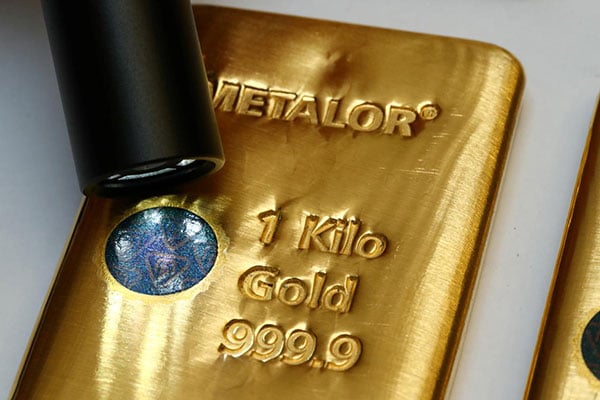
| Hallmark Inspection | Examine stamps indicating purity, such as 999.9, 999, 916, 750, or 585. | Jewelry, bars, coins | Quick way to identify claimed purity. | Hallmarks can be forged or copied and should never be the only verification method. |
| Electronic Gold Tester | Measures electrical conductivity to estimate gold purity. | Jewelry and coins | Fast, non-destructive, and easy to use. | Consumer-grade testers vary in accuracy and cannot detect every counterfeit. |
| X-Ray Fluorescence (XRF) Analysis | An XRF analyzer uses X-rays to determine the elemental composition of the gold without damaging it. | Bullion bars, coins, jewelry | Highly accurate, fast, and completely non-destructive. | Requires specialized equipment and is typically available only through professional dealers, refiners, or assay laboratories. |
| Fire Assay | A laboratory melts and analyzes the sample to determine its exact gold content. | High-value bullion and commercial transactions | Considered the industry gold standard for accuracy. | Destructive, time-consuming, and unsuitable for routine home testing. |
Which Test Is Most Reliable?
For most home users, combining several basic methods—such as checking the hallmark, performing a magnet test, and measuring the item’s weight and dimensions—can help identify obvious counterfeits. However, these tests cannot confirm the exact purity of gold.
If you are buying or selling valuable gold bars, investment coins, or large quantities of bullion, an XRF analysis performed by a reputable bullion dealer, refinery, or independent assay laboratory provides one of the most reliable non-destructive methods of verification. When an exact purity determination is required for commercial or legal purposes, a fire assay remains the internationally recognized reference method.
Buyer Tip: Never rely on a single test. Professional buyers often combine visual inspection, weight and dimension checks, magnet testing, XRF analysis, and documentation verification before completing a transaction. Multiple verification methods provide much greater confidence than any one test alone.
Gold IRA Scams: Red Flags to Watch for in Retirement Account Pitches
A Gold Individual Retirement Account (Gold IRA) allows eligible physical precious metals to be held within a self-directed retirement account under U.S. tax rules. While many Gold IRA providers operate legitimately, the industry has also attracted fraudulent and misleading sales practices. Scammers often target retirees and individuals approaching retirement by using fear-based marketing, exaggerated investment claims, and hidden fees.
Understanding the warning signs can help you protect your retirement savings before transferring funds from a 401(k), IRA, or other retirement account.
Guaranteed Returns or “Risk-Free” Investments
One of the biggest red flags is any company claiming that a Gold IRA offers guaranteed profits or is completely risk-free. Gold prices fluctuate based on market conditions, interest rates, inflation, central bank activity, and global economic events. No investment company can honestly guarantee future returns or promise that gold prices will always increase.
Be cautious if a salesperson claims that your retirement account will “double quickly,” “never lose value,” or “outperform every other investment.”
High-Pressure Rollover Sales
Fraudulent companies frequently pressure investors into transferring retirement savings immediately. Sales representatives may insist that the opportunity is available for only a short time or claim that delaying the rollover will result in significant financial losses.
Legitimate retirement planning allows time to review documentation, compare providers, consult a financial or tax adviser if desired, and understand the risks before making a decision.
Fear-Based Marketing
Some promoters attempt to create panic by claiming that banks will collapse, paper money will become worthless, or governments will seize retirement accounts unless investors immediately purchase gold.
While gold can play a role in portfolio diversification, decisions should be based on your financial goals and risk tolerance rather than fear or sensational predictions.
Hidden Fees
A Gold IRA involves costs that should be explained clearly before you invest. Unscrupulous companies sometimes advertise “free” accounts or “zero-cost” rollovers while hiding substantial charges in the paperwork.
Potential fees may include:
- Account setup fees
- Annual administration fees
- Custodian fees
- Storage fees
- Insurance charges
- Dealer markups
- Shipping costs
- Buyback spreads
- Account closing or transfer fees
Always request a complete written fee schedule before authorizing a rollover.
Inflated Precious Metals Prices
Some dishonest dealers sell gold or silver coins at prices far above their market value while promoting them as exclusive retirement investments. Excessive markups can significantly reduce the value of your retirement savings from the start.
Compare prices from multiple reputable bullion dealers and understand the premium above the current market price before making a purchase.
Misleading Claims About IRA Eligibility
Not all gold products qualify for inclusion in a Gold IRA. Scammers may encourage investors to purchase collectible or rare coins by falsely claiming they are IRA-approved.
In reality, Gold IRAs generally must comply with IRS rules regarding eligible precious metals and purity standards, and assets are typically held by an approved custodian rather than stored personally.
Unapproved Storage Arrangements
Fraudulent promoters may suggest storing IRA gold at home or in a personal safe while still claiming it remains part of the retirement account. Depending on the circumstances, this may not comply with applicable IRS requirements and could create tax or legal issues.
Before purchasing, confirm where the metals will be stored, who the custodian is, and whether the storage arrangement complies with applicable regulations.
Fake Endorsements and Testimonials
Some scammers use fabricated customer reviews, fake celebrity endorsements, or misleading claims that government agencies, financial experts, or well-known organizations recommend their services.
Always verify endorsements through official sources rather than relying solely on promotional materials.
Lack of Transparency
A trustworthy Gold IRA provider should clearly explain:
- How the rollover process works
- Which metals are eligible
- All fees and costs
- Storage arrangements
- Custodian information
- Buyback policies
- Delivery and liquidation procedures
- Investment risks
If representatives avoid direct questions, refuse to provide written documentation, or focus only on potential profits, consider it a warning sign.
How to Protect Your Retirement Savings
Before transferring retirement funds into a Gold IRA, research the company thoroughly, verify its registration and business history, request all fees in writing, compare pricing with other providers, and confirm that an approved custodian will administer the account. Take time to review the rollover process carefully, and be cautious of any company that pressures you to act immediately or guarantees exceptional returns.
A reputable Gold IRA provider should present balanced information, explain both the potential benefits and risks, disclose all costs upfront, and give you sufficient time to make an informed decision without pressure.
Pawn Shop and “We Buy Gold” Scams
Pawn shops and “We Buy Gold” businesses provide a legitimate service for people looking to sell unwanted gold jewelry, coins, or other precious metal items. Many operate honestly and comply with local laws. However, some dishonest buyers use deceptive practices to undervalue gold, manipulate testing results, or pressure sellers into accepting unfair offers.
Understanding these tactics can help you receive a fair price and avoid unnecessary financial losses.
Lowball Offers Below Market Value
One of the most common practices is offering significantly less than the gold’s actual market value. Some buyers assume that sellers are unfamiliar with current gold prices or urgently need cash, allowing them to purchase valuable items for far less than they are worth.
Before visiting any buyer, check the current spot price of gold, determine your item’s purity (such as 10K, 14K, 18K, 22K, or 24K), and know its approximate weight. Obtaining quotes from several buyers can help you understand the fair market range.
Manipulated Weighing Scales
Unscrupulous buyers may use improperly calibrated or inaccurate scales that display a lower weight than the actual amount of gold being sold. Even a small difference in weight can significantly reduce the amount you receive, particularly for larger quantities.
Ask to watch your gold being weighed on a certified digital scale and ensure the weight is displayed clearly. If possible, weigh your items beforehand using a reliable scale so you have a point of comparison.
Misrepresenting Gold Purity
Some dishonest buyers intentionally claim that higher-purity gold is of a lower karat to justify paying less. For example, a genuine 18K item may be described as 14K, or a 22K piece may be treated as 18K.
If you are uncertain about the purity, request testing in your presence. Independent jewelers or professional assay laboratories can also verify the gold’s composition before you sell.
Misleading Gold Testing
Testing methods such as acid tests or electronic gold testers require proper technique. A dishonest buyer may misuse these methods or misrepresent the results to suggest that your gold is worth less than it actually is.
Ask the buyer to explain the testing process and, for valuable items, consider obtaining an independent evaluation before accepting an offer.
Hidden Deductions and Fees
Some businesses advertise attractive purchase prices but later reduce the payment by deducting refining charges, testing fees, administrative costs, or other unexpected expenses.
Before completing the transaction, ask whether the quoted price is the final amount you will receive and request a written breakdown of any deductions.
Pressure to Sell Immediately
A buyer may claim that gold prices are about to fall or that today’s offer is available only if you sell immediately. This tactic is designed to discourage you from comparing offers elsewhere.
Reputable buyers generally allow sellers time to consider their options. Unless you have an urgent need to sell, take time to compare prices from multiple businesses.
Switching or Losing Items
In rare cases, dishonest individuals may substitute your jewelry with a lower-value item during inspection or claim that certain pieces are damaged or less valuable than when you presented them.
Whenever possible, remain present while your items are examined. Photograph valuable jewelry, coins, or bullion before handing them over, and keep records of their weight, hallmarks, and identifying features.
Misleading Advertisements
Some “We Buy Gold” businesses advertise “highest prices guaranteed” or “top dollar paid” without explaining how they calculate offers. These claims are often marketing slogans rather than guarantees.
Ask how the offer is determined, including the current gold price used, the purity assessment, the weight calculation, and any deductions for refining or processing.
How to Protect Yourself When Selling Gold
Before selling your gold, research the current market price, understand the purity and approximate value of your items, and obtain offers from several reputable buyers. Watch the weighing and testing process, request a clear explanation of how the offer is calculated, and avoid feeling pressured into making an immediate decision.
For high-value gold bars, investment coins, or valuable jewelry, consider obtaining an independent appraisal before selling. Working with established businesses that provide transparent pricing, written receipts, and clear testing procedures can significantly reduce the risk of receiving an unfair offer.
What to Do If You’ve Already Been Scammed When Buying Gold
Discovering that you have been the victim of a gold scam can be stressful, but acting quickly may improve your chances of limiting further losses and helping authorities investigate the fraud. The exact steps depend on how you paid, where the transaction took place, and the country involved, but the actions below are generally recommended.
- Stop All Further Payments Immediately
If the scammer requests additional payments for customs clearance, insurance, storage fees, taxes, or release certificates, do not send more money. Many fraudsters continue demanding additional payments after the initial transfer, claiming each payment is the final requirement before the gold is released.
Stop communicating through unofficial channels and preserve all evidence.
- Collect and Preserve Evidence
Gather every document related to the transaction before reporting the fraud.
Important evidence includes:
- Contracts and purchase agreements
- Invoices and receipts
- Wire transfer confirmations
- Credit card statements
- Bank transaction records
- Cryptocurrency transaction IDs
- Email correspondence
- WhatsApp, Telegram, or SMS messages
- Website URLs
- Company names and contact details
- Photos and videos
- Assay certificates
- Shipping documents
- Tracking numbers
- Copies of identification provided by the seller
The more documentation you have, the easier it may be for financial institutions and investigators to review your case.
- Contact Your Bank or Card Issuer
If you paid by credit card, debit card, or bank transfer, contact your financial institution immediately.
Depending on the payment method and applicable rules, you may be able to:
- Report the transaction as fraudulent.
- Request a chargeback (for eligible card transactions).
- Ask whether a wire recall or payment recovery is possible.
- Block additional unauthorized transactions.
- Receive guidance on the next steps.
Time is important. Many payment recovery options become more difficult as more time passes.
- Report the Scam to the U.S. Federal Trade Commission (FTC)
If you are in the United States or the scam targeted you as a U.S. consumer, you can report the fraud to the Federal Trade Commission (FTC) through its official fraud reporting system.
An FTC report helps authorities identify scam patterns, warn consumers, and support investigations, even if individual financial recovery is not guaranteed.
- File a Police Report
Report the fraud to your local police department, especially if substantial money was involved.
A police report may be useful when:
- Working with your bank or insurance company.
- Supporting a chargeback or fraud claim.
- Providing evidence to investigators.
- Documenting the incident for legal purposes.
Include all available documentation and communications when making the report.
- Report Internet-Based Fraud
If the scam occurred online, consider reporting it to the relevant cybercrime or consumer protection authority in your country. Depending on where you live, this may include national cybercrime units, consumer protection agencies, or financial regulators.
If the scam involved a fraudulent website, social media account, or online marketplace, report the account directly to the platform so it can be reviewed.
- Report Cryptocurrency Transactions
If payment was made using cryptocurrency, recovery is often difficult, but you should still report the fraud to the cryptocurrency exchange or wallet provider you used. Provide the wallet address, transaction ID, and any communication with the seller.
Reporting suspicious wallet addresses may help exchanges or investigators identify broader fraud networks.
- Warn Others
If the scammer used a website, marketplace, or social media platform, report the account through the platform’s reporting tools. Sharing factual information through appropriate consumer review channels may also help prevent others from becoming victims. Avoid making unsupported accusations—stick to verifiable facts about your experience.
- Monitor Your Financial Accounts
If you shared personal or financial information, continue monitoring your bank accounts, payment cards, and online accounts for suspicious activity. Change passwords for affected accounts, enable multi-factor authentication where available, and report any unauthorized transactions immediately.
Quick Action Checklist
| Action | Why It Matters |
| Stop sending money | Prevents additional financial losses. |
| Save all evidence | Supports investigations and recovery efforts. |
| Contact your bank or card issuer | May allow a chargeback, fraud claim, or payment recovery attempt. |
| Report to the FTC (U.S.) | Helps document fraud and supports consumer protection efforts. |
| File a police report | Creates an official record that may assist financial institutions and investigators. |
| Report online accounts | Helps platforms identify and remove fraudulent profiles or websites. |
| Notify your crypto exchange (if applicable) | May assist with investigations involving blockchain transactions. |
| Monitor your accounts | Reduces the risk of further fraud or identity-related misuse. |
Final Advice
Many gold scammers rely on victims believing there is still one more payment needed to release the shipment or complete the transaction. Legitimate authorities and shipping companies do not repeatedly demand unexpected payments through unofficial channels after a transaction has been completed. If you suspect fraud, stop sending money immediately, preserve all records, contact your financial institution as soon as possible, and report the incident to the appropriate authorities in your jurisdiction. Acting promptly gives you the best chance of limiting losses and supporting any investigation.
Types of Gold Buying Scams
Gold buying scams come in many forms, ranging from fake online dealers and counterfeit bullion to fraudulent shipping companies and forged government documents. Although each scam uses a different method, they all have one objective: convincing buyers to send money before they have independently verified the seller, the gold, and the supporting documentation. Understanding how these scams operate can help buyers recognize warning signs early and reduce the risk of financial loss.
Advance Fee Gold Scam
An advance fee scam occurs when a seller requests an upfront payment before delivering the gold. The scammer may claim that the deposit is required to reserve the shipment, begin refining, or process export paperwork. After receiving the initial payment, they continue requesting additional funds for new charges until the buyer refuses to pay. In many cases, no gold exists, and the shipment was never arranged.
Warning signs include requests for large deposits before verification, repeated demands for unexpected payments, and sellers who refuse to use secure payment arrangements such as escrow or letters of credit. Buyers should never send substantial funds before independently confirming the legitimacy of the seller and the transaction.
Storage Fee Scam
In a storage fee scam, victims are informed that their purchased gold is being held in a warehouse or secure vault and cannot be released until storage charges are paid. The scammer often sends invoices that appear to come from a legitimate storage facility. Once the storage fee is paid, additional charges are invented, and the gold is never delivered.
Legitimate storage providers have transparent agreements, and unexpected storage fees should always be verified directly with the facility using independently obtained contact information.
Airport Customs Scam
The airport customs scam begins after the buyer believes the gold has already been shipped. The scammer claims that customs officials have detained the shipment at an airport and that taxes, inspection fees, or clearance costs must be paid immediately. Fake customs documents and forged airport receipts are commonly used to make the story appear authentic.
Customs authorities generally do not request payment through personal bank accounts, messaging apps, or cryptocurrency wallets. Buyers should verify any customs claim directly with the relevant customs authority or shipping company.
Government Tax Scam
Fraudsters sometimes claim that a government agency requires unexpected taxes before the gold can be exported or imported. They often create fake tax invoices using government logos and official-looking letterheads to pressure the buyer into making another payment.
Government taxes should always be confirmed with the relevant tax authority rather than relying on documents supplied by the seller.
Courier Scam
A courier scam involves fake shipping companies or fraudulent tracking websites that falsely indicate a shipment is in transit. Buyers receive convincing tracking numbers and delivery updates until they are told that additional fees must be paid before delivery can continue.
Always verify tracking information through the courier’s official website and customer service channels rather than using links provided in unsolicited emails or messages.
Insurance Scam
After the alleged shipment has been dispatched, the scammer claims that insurance coverage must be purchased before delivery can proceed. The insurance company is often fictitious or controlled by the fraudsters themselves.
Legitimate insurance requirements should be disclosed before the transaction begins and verified directly with the insurer.
Fake Refinery Scam
Some scammers pretend to represent well-known gold refineries or falsely claim that their gold has been processed by internationally recognized refiners. They may use copied logos, forged certificates, and fabricated documentation to create credibility.
Before relying on refinery documentation, confirm directly with the refinery that the documents and serial numbers are genuine.
Fake Assay Report Scam
An assay report confirms the purity and composition of gold. Fraudsters frequently alter genuine reports or create entirely fake certificates showing that low-quality or nonexistent gold is 99.99% pure.
Professional buyers should verify assay reports directly with the issuing laboratory or request an independent assay before completing payment.
Fake SGS Certificate Scam
SGS is a globally recognized inspection and testing company. Scammers often forge SGS certificates to convince buyers that the gold has been independently verified. These documents may closely resemble genuine reports but contain altered reference numbers or fabricated information.
Always confirm SGS reports directly with SGS using official contact details.
Fake Bureau Veritas Report Scam
Fraudsters also misuse the name of Bureau Veritas by creating counterfeit inspection reports and quality certificates. These fake documents are designed to reassure buyers that the gold has passed independent inspection.
Verification should always be completed directly through Bureau Veritas rather than relying on documents supplied by the seller.
Fake Export Permit Scam
Scammers frequently create forged export permits that appear to have been issued by government authorities. These documents are intended to convince buyers that the gold has been legally approved for international shipment.
Before relying on any export permit, verify it with the relevant mining or export authority in the country of origin.
Fake Mining License Scam
Some fraudulent sellers claim to own mining concessions or hold government-issued mining licenses. They often provide forged licenses or certificates to support these claims.
Buyers should independently verify mining licenses through the appropriate government mining authority before entering into any transaction.
Fake Customs Declaration Scam
A fake customs declaration is used to convince buyers that the shipment has reached customs and only requires one final payment before release. These documents often contain copied government logos and fabricated reference numbers.
Customs declarations should always be confirmed directly with the customs agency involved.
Fake Certificate of Origin Scam
Fraudsters sometimes provide counterfeit certificates of origin to falsely prove where the gold was mined. These documents are intended to reassure buyers about legality and sourcing.
Certificates of origin should be verified with the issuing authority or relevant chamber of commerce where applicable.
Continue this same structure for:
- Counterfeit Gold Bars
- Gold-Plated Tungsten Bars
- Fake Gold Nuggets
- Gold Dust Scam
- Fake Supplier Websites
- Fake WhatsApp Companies
- Fake Facebook Sellers
- Telegram Investment Group Scams
- Instagram Gold Scams
- Romance and Gold Investment Scams
- Ponzi Gold Investment Schemes
- Gold Mining Investment Fraud
- Fake Escrow Company Scams
- Cryptocurrency Payment Scams
- Money Mule Scams
- Western Union and Cash Transfer Scams
By giving each scam its own optimized section with a clear explanation, warning signs, and prevention advice, your article can target a wide range of search queries while providing readers with practical, well-organized guidance.
Red Flags in Gold Seller Reviews and How to Spot Fake Testimonials
Customer reviews can be a valuable source of information when choosing a gold dealer, but they should never be your only basis for deciding whether a company is trustworthy. Fraudulent businesses frequently publish fake testimonials, purchase positive reviews, or manipulate online ratings to create the appearance of credibility. Understanding the warning signs can help you separate genuine customer experiences from misleading marketing.
Reviews That Sound Too Perfect
If every review describes the company as flawless and claims that every transaction was perfect, you should proceed carefully. Genuine businesses usually receive a mix of positive comments and constructive criticism. Real customers often mention details such as shipping times, communication, product quality, or customer service, while fake reviews tend to contain exaggerated praise without providing meaningful information.
Generic Testimonials Without Details
Many fake testimonials are intentionally vague because they are written by people who have never completed a transaction. Reviews that simply say a company is “excellent,” “highly recommended,” or “the best gold dealer” without explaining what was purchased, how the transaction was handled, or why the customer was satisfied should be viewed with caution. Authentic reviews normally include specific details about the buying or selling experience.
Large Numbers of Reviews Posted at the Same Time
A sudden surge of dozens of five-star reviews within a very short period may indicate an attempt to artificially improve a company’s online reputation. Legitimate businesses usually receive reviews gradually over months or years as customers complete transactions. An unusual spike in positive reviews deserves closer examination.
Repeated Language Across Multiple Reviews
Fake reviews are often created using similar templates or copied wording. If several testimonials repeat the same phrases, writing style, or identical descriptions, it may suggest that they were written by the same person or generated as part of a paid review campaign rather than by genuine customers.
Fake Customer Profiles
Scammers sometimes create fake reviewer accounts using stolen profile photographs or newly created social media identities. Accounts with no posting history, only one review, or generic usernames may not represent real customers. A reviewer with a long history of posting about different businesses generally appears more credible than an account created solely to praise one company.
Reviews Found Only on the Seller’s Website
Testimonials displayed exclusively on a company’s own website should not be considered independent verification. Businesses control the content published on their websites and can remove negative feedback while displaying only positive comments. For a more balanced picture, compare reviews on independent consumer review platforms, business directories, and other reputable websites.
No Verified Purchase Information
Some review platforms identify whether a reviewer has actually purchased a product or service. Although not every platform offers this feature, reviews linked to verified purchases generally provide greater confidence than anonymous testimonials with no evidence that a transaction took place.
Negative Reviews That Reveal Repeating Problems
A few negative reviews do not necessarily indicate that a company is dishonest, but recurring complaints about delayed deliveries, poor communication, counterfeit products, hidden fees, or refund problems should not be ignored. Consistent patterns across multiple reviewers often provide more useful information than the overall star rating.
Aggressive Responses to Customer Complaints
How a business responds to criticism can reveal a great deal about its professionalism. Reputable companies usually respond politely, explain the situation, and attempt to resolve customer concerns. Businesses that attack reviewers personally, threaten legal action without justification, or refuse to address legitimate complaints may be displaying warning signs.
Missing Business Information
Positive reviews cannot replace proper due diligence. Before purchasing gold, verify that the company provides a registered business name, physical address, working telephone number, professional email address, and clear information about its products, pricing, and policies. A business that hides its identity while displaying hundreds of glowing testimonials should be approached with caution.
Compare Reviews Across Multiple Sources
One of the most effective ways to identify fake testimonials is to compare customer feedback across several independent platforms. If a company has hundreds of perfect reviews on its own website but receives numerous complaints elsewhere, this inconsistency may indicate that its online reputation has been manipulated. Looking at multiple sources provides a more balanced and reliable picture of the business.
Final Thoughts
Customer reviews should be viewed as one part of your overall due diligence rather than proof that a gold seller is legitimate. Before making any purchase, combine review research with independent verification of the company’s registration, physical business location, product documentation, payment procedures, and customer support. Taking time to verify these details can significantly reduce the risk of becoming a victim of a gold buying scam.
Legitimate Ways to Buy Gold
Buying gold from a reputable source is one of the most effective ways to reduce the risk of fraud, counterfeit products, and financial loss. Whether you are purchasing gold as an investment, for portfolio diversification, or as a collectible, choosing a trusted seller is just as important as verifying the purity and authenticity of the gold itself. Established dealers typically provide transparent pricing, clear documentation, secure payment methods, and customer support throughout the buying process.
Buy From LBMA-Accredited Dealers
One of the safest ways to purchase investment-grade gold is through dealers that source bullion from refiners accredited by the London Bullion Market Association (LBMA). LBMA Good Delivery refiners meet internationally recognized standards for refining, quality control, and responsible sourcing. Gold bars produced by these refiners are widely accepted in global bullion markets, making them easier to verify and trade.
Before completing a purchase, confirm that the dealer clearly identifies the refiner, provides documentation where appropriate, and offers bullion from recognized manufacturers such as PAMP Suisse, Valcambi, Metalor, Heraeus, Argor-Heraeus, or Rand Refinery.
Purchase From Established Online Bullion Dealers
Several well-established online bullion dealers have built reputations over many years by offering transparent pricing, secure payment systems, and insured shipping. Companies such as APMEX, JM Bullion, SD Bullion, Bullion Exchanges, and Money Metals Exchange are widely known in the U.S. precious metals market and offer a broad selection of gold bars, coins, and bullion products.
Before placing an order with any online dealer, verify that the website uses secure encryption, review its shipping and return policies, compare prices with current market rates, and read customer feedback from independent review platforms.
Buy From Authorized Government Mint Dealers
Government mints often distribute investment-grade bullion through authorized dealers. Purchasing from these dealers provides additional confidence that the products are genuine and meet the specifications established by the issuing mint.
Examples include bullion products from the United States Mint, Royal Canadian Mint, The Royal Mint (United Kingdom), The Perth Mint (Australia), and the Austrian Mint. Popular investment coins include the American Gold Eagle, Canadian Gold Maple Leaf, British Britannia, Austrian Philharmonic, and Australian Kangaroo.
Purchase From Reputable Local Coin Shops
Established local coin shops can be an excellent option for buyers who prefer to inspect gold before purchasing. A reputable dealer should be willing to answer questions, explain pricing, verify the purity of the gold, and provide invoices or receipts for every transaction.
Before buying from a local shop, research the business, compare prices with other dealers, and ensure that the gold can be inspected and tested if necessary.
Buy From Established Precious Metals Companies
Large precious metals companies typically have well-developed customer service teams, transparent pricing, and secure delivery procedures. Many also offer buyback programs, allowing customers to sell their bullion back under published terms.
A trustworthy company should clearly disclose premiums above the spot price, payment methods, delivery timelines, insurance arrangements, and return policies before accepting payment.
Verify the Gold Before Purchasing
Regardless of where you buy, always verify the authenticity of the gold. Check the product’s weight, dimensions, purity, serial numbers (where applicable), hallmarks, and packaging. For larger purchases, consider requesting an independent X-ray fluorescence (XRF) analysis or another professional verification method before completing the transaction.
Understand the Total Cost
The purchase price of gold is typically made up of the current market (spot) price plus a dealer premium. That premium may reflect manufacturing costs, distribution, insurance, and market demand. Compare premiums from several reputable dealers rather than selecting a seller solely because they advertise the lowest price.
Use Secure Payment Methods
Choose payment methods that provide documentation and, where available, consumer protections. Reputable dealers generally offer secure bank transfers, credit cards, debit cards, or other established payment systems. Be cautious of sellers who insist on cryptocurrency, gift cards, cash sent through the mail, or other difficult-to-trace payment methods without offering appropriate buyer protections.
Complete Proper Due Diligence
Before making a purchase, verify the dealer’s business registration, physical address, customer service contact information, years in operation, and reputation within the precious metals industry. Read independent customer reviews, understand the company’s return policy, and make sure you receive an invoice describing the product purchased.
Final Thoughts
The safest gold purchases are usually made through established bullion dealers, authorized distributors, reputable local coin shops, or companies selling bullion produced by LBMA-accredited refiners. By verifying the seller, understanding the pricing structure, confirming the authenticity of the gold, and using secure payment methods, buyers can significantly reduce the risk of fraud while making informed investment decisions.
Gold Buying Scams by Country
Gold buying scams can vary from one country to another because each jurisdiction has different mining regulations, export procedures, licensing requirements, and trading practices. While legitimate gold businesses operate in all of the countries below, scammers often misuse the names of these countries to create false credibility or to target international buyers unfamiliar with local laws. Understanding the common scam risks in each market can help buyers conduct better due diligence before completing a transaction.
Gold Buying Scams in Uganda
Uganda is one of East Africa’s major gold trading hubs, with gold sourced both domestically and from neighboring countries. Because of its role in regional trade, scammers sometimes falsely claim to operate licensed refineries, export companies, or mining businesses in Uganda. Buyers may receive forged export permits, fake assay reports, counterfeit tax receipts, or fabricated customs documents to make transactions appear legitimate.
Before purchasing gold from Uganda, verify the seller’s company registration, confirm export documentation with the relevant government authorities, request an independent assay report, and ensure the transaction complies with applicable export and AML/KYC requirements.
Gold Buying Scams in Ghana
Ghana is Africa’s largest gold producer and attracts buyers from around the world. Fraudsters frequently impersonate licensed mining companies, exporters, or gold dealers by creating fake websites and forged Minerals Commission documents. Some also misuse the names of well-known mining companies to gain credibility.
International buyers should independently verify mining licenses, export approvals, and business registrations before transferring funds. Prices that are substantially below international market levels should be treated with caution.
Gold Buying Scams in the Democratic Republic of the Congo (DR Congo)
The Democratic Republic of the Congo is known for its significant mineral resources, including gold. Scammers often claim to have access to large quantities of gold from mining regions and may offer unusually attractive wholesale prices. Buyers are sometimes presented with forged origin certificates, transport permits, or export documentation.
Because cross-border transactions involving the DRC can be complex, buyers should conduct enhanced due diligence, verify documentation directly with the relevant authorities, and use secure payment arrangements for international transactions.
Gold Buying Scams in Tanzania
Tanzania has a well-established mining industry, but scammers may falsely claim to represent licensed exporters, mining cooperatives, or refineries. Fake export permits, counterfeit assay certificates, and advance-fee payment requests are among the most common fraud techniques.
Buyers should confirm that the seller is properly registered, verify export documentation independently, and avoid sending deposits before completing appropriate verification procedures.
Gold Buying Scams in Kenya
Although Kenya produces less gold than some neighboring countries, it serves as an important regional trading and logistics hub. Fraudsters sometimes advertise gold shipments through Nairobi while presenting forged customs documents or fake courier tracking information.
International buyers should verify shipping arrangements directly with the logistics provider and ensure that all documentation has been independently confirmed before payment.
Gold Buying Scams in Mali
Mali is one of Africa’s largest gold producers, making it a frequent target for fraudulent investment offers. Scammers may claim to own mining concessions, offer direct mine purchases, or advertise wholesale gold at unrealistic prices. Fake mining licenses and fabricated export documents are commonly used to support these claims.
Before investing or purchasing gold from Mali, verify the seller’s legal status, business history, and supporting documentation through official sources.
Gold Buying Scams in South Africa
South Africa has one of the world’s most established gold industries and is home to internationally recognized refiners. Fraudsters often misuse the names of legitimate refineries, mining companies, or bullion dealers to convince buyers that their products are genuine.
Buyers should verify refinery certificates, confirm serial numbers where applicable, and purchase bullion only from reputable dealers or authorized distributors.
Gold Buying Scams in Rwanda
Rwanda has become an important regional minerals trading center. Scammers sometimes advertise gold supposedly stored in Kigali or claim to hold government-approved export licenses. Buyers may receive forged certificates of origin or fabricated export permits designed to create confidence.
Independent verification of business registration, export approvals, and shipping arrangements is essential before completing any transaction.
Gold Buying Scams in Dubai
Dubai is one of the world’s largest precious metals trading hubs and attracts buyers and sellers from every continent. Fraudsters sometimes exploit Dubai’s reputation by falsely claiming that gold is stored in secure vaults, free zones, or refineries within the emirate. Fake warehouse receipts, forged customs documents, and fraudulent storage invoices are common features of these scams.
Buyers should verify the dealer’s business registration, confirm storage arrangements directly with the facility involved, and avoid making payments based solely on digital documentation.
Gold Buying Scams in the United Arab Emirates (UAE)
The UAE is a major international center for gold refining, trading, and exports. While many businesses operate legitimately, scammers occasionally impersonate licensed UAE companies or create websites that closely resemble established bullion dealers.
Before purchasing gold from the UAE, confirm the company’s registration, verify invoices and shipping documentation, and ensure secure payment procedures are in place.
Gold Buying Scams in the United Kingdom
The United Kingdom has a mature precious metals market with numerous established bullion dealers. Fraud in the UK often involves cloned investment websites, counterfeit gold coins, fake online dealers, and fraudulent investment opportunities promising unrealistic returns.
Investors should purchase bullion from reputable dealers, verify company registration, and be cautious of unsolicited investment offers received by phone, email, or social media.
Gold Buying Scams in the United States
The United States has one of the world’s largest retail precious metals markets. Common scams include counterfeit investment coins, fake Gold IRA promotions, fraudulent online bullion dealers, and social media investment schemes. Criminals may also impersonate well-known U.S. bullion companies to collect payments from unsuspecting buyers.
Consumers should verify the dealer’s reputation, compare prices with the current market, understand all fees, and avoid companies that guarantee investment returns or pressure customers into immediate purchases.
Gold Buying Scams in India
India has one of the world’s largest gold markets, with strong demand for jewelry, coins, and investment bullion. Fraud may involve under-karat jewelry, counterfeit hallmarks, fake online gold retailers, and investment schemes promising unusually high returns.
Buyers should purchase from reputable jewelers or bullion dealers, request proper invoices, verify hallmarks, and compare purity certifications before completing a transaction.
Gold Buying Scams in China
China is one of the world’s largest producers and consumers of gold. As with other major markets, scammers may operate fake online stores, advertise counterfeit bullion, or impersonate legitimate trading companies. Buyers involved in cross-border transactions should be particularly cautious of forged export documentation and fraudulent payment requests.
Before purchasing gold from China, verify the supplier’s business registration, confirm product authenticity through independent testing where appropriate, and use secure payment methods that provide appropriate documentation and buyer protection.
Fake Documents Used in Gold Buying Scams
One of the most convincing tactics used by gold scammers is the creation of fake documents that make an illegal or nonexistent transaction appear legitimate. These documents often contain official-looking logos, signatures, stamps, QR codes, and reference numbers copied from genuine organizations. While they may appear authentic at first glance, many are forged, altered, or entirely fabricated to persuade buyers to send money before independently verifying the transaction.
Understanding the purpose of each document and how it is commonly abused by fraudsters—can help buyers identify warning signs and conduct proper due diligence.
Assay Report
An assay report is a laboratory document that confirms the purity, composition, and weight of a gold sample. It is one of the most important documents in a gold transaction because it tells the buyer how much fine gold is contained in the bar, coin, or doré. Legitimate assay reports are issued by qualified laboratories, refiners, or accredited testing facilities after scientific analysis.
Scammers frequently forge assay reports by altering gold purity results, changing serial numbers, modifying dates, or copying logos from reputable laboratories. Some simply create entirely fake certificates showing gold purity of 99.99% even though no testing was ever performed. Buyers should always verify assay reports directly with the issuing laboratory or arrange an independent assay before completing payment.
Export Permit
An export permit authorizes the legal export of gold from one country to another in accordance with local mining and customs regulations. Depending on the country, export permits may be issued by government mining authorities, trade ministries, customs agencies, or other authorized regulators.
Fraudsters often produce counterfeit export permits to convince buyers that the shipment has been officially approved. These documents frequently contain fake registration numbers, unauthorized signatures, or copied government logos. Before relying on any export permit, buyers should verify its authenticity with the issuing authority using independently obtained contact information.
Mining License
A mining license is an official authorization issued by a government that allows an individual or company to explore for or extract minerals within a specified area. Legitimate mining companies normally hold valid licenses that can often be verified through government mining agencies.
Scammers frequently claim to own mining concessions and provide forged licenses to support their story. Some copy license numbers from legitimate companies or create documents that closely resemble official government certificates. Buyers should independently verify any mining license before assuming that a seller is legally authorized to produce or sell gold.
Tax Clearance Certificate
A tax clearance certificate generally confirms that a company has met certain tax obligations required under the laws of the issuing country. In international gold transactions, scammers sometimes present fake tax clearance certificates to create the impression that the company operates legally and complies with government regulations.
Because these certificates are relatively easy to forge, buyers should verify their authenticity with the appropriate tax authority rather than relying solely on documents supplied by the seller.
Commercial Invoice
A commercial invoice is one of the primary documents used in international trade. It describes the goods being sold, identifies the buyer and seller, states the quantity, value, payment terms, and other transaction details used by customs authorities during import and export procedures.
Fraudsters often prepare convincing commercial invoices for gold that does not exist. While the document may appear professionally prepared, it does not prove that the seller owns the gold or that the shipment has actually been arranged. Buyers should ensure that the invoice matches all supporting documentation and verify the seller independently.
Packing List
A packing list provides detailed information about the shipment, including the number of packages, dimensions, weight, packaging method, and the contents of each package. Shipping companies and customs officials commonly use this document during transportation and inspection.
Scammers may create fake packing lists to make a nonexistent shipment appear legitimate. Buyers should remember that a packing list alone does not confirm that the goods have actually been packed or dispatched.
Certificate of Origin
A certificate of origin identifies the country where the gold was mined, produced, or substantially processed. Depending on the transaction, this document may be required for customs, trade agreements, or due diligence concerning responsible sourcing.
Fraudsters frequently forge certificates of origin to disguise the true source of gold or falsely claim that it originated from a reputable mining jurisdiction. Buyers should confirm certificates of origin with the issuing authority whenever possible.
Bill of Lading
A bill of lading is a transport document commonly used for shipments moved by sea. It serves as a receipt for the cargo, evidence of the transportation contract, and, in many cases, a document of title. Shipping companies issue bills of lading after accepting goods for transport.
Scammers often create counterfeit bills of lading that falsely indicate the gold has been loaded onto a vessel. Buyers should verify shipment details directly with the shipping line using official tracking systems and independently obtained contact information.
Air Waybill (AWB)
An Air Waybill is the primary shipping document used for cargo transported by air. It contains information about the shipper, consignee, flight details, destination, cargo description, and tracking reference.
Fake Air Waybills are commonly used in gold scams to convince buyers that bullion is already in transit. Fraudsters may also create fake airline tracking websites showing false shipment updates. Buyers should verify Air Waybill numbers directly through the airline or authorized cargo company.
Refinery Certificate
A refinery certificate confirms that gold has been refined by a specific refinery and may include details about purity, weight, serial numbers, and production information. Gold produced by internationally recognized refiners generally carries greater market acceptance.
Scammers frequently forge refinery certificates by copying the names and logos of reputable refiners. Some even invent serial numbers for bars that were never produced. Buyers should verify refinery documentation directly with the refiner whenever possible.
Insurance Certificate
An insurance certificate confirms that a shipment has been insured during transportation. It normally identifies the insurer, policy number, insured value, coverage period, and conditions of the policy.
Fraudsters often produce fake insurance certificates before requesting additional payments for “insurance activation” or “coverage upgrades.” Buyers should contact the insurance company directly to confirm that the policy exists and covers the shipment described.
Quality Certificate
A quality certificate states that goods have been inspected and meet specified quality standards. In gold transactions, it may include information regarding purity, weight, manufacturing specifications, or compliance with contractual requirements.
Scammers sometimes create counterfeit quality certificates using copied company logos or inspection agency names. Buyers should remember that a quality certificate is only trustworthy if it can be independently verified with the issuing organization.
Why Independent Verification Is Essential
No document, regardless of how professional it appears, should be accepted as proof that a gold transaction is legitimate. Modern software and artificial intelligence allow fraudsters to produce highly convincing certificates, invoices, permits, and shipping documents within minutes. Buyers should independently verify every important document with the issuing laboratory, refinery, government authority, shipping company, insurer, or inspection agency before sending payment.
The safest approach is to treat documentation as one part of the due diligence process rather than proof that a transaction is genuine. Combining document verification with business registration checks, independent gold testing, secure payment methods, and professional legal or logistics support provides much stronger protection against gold buying scams.
Gold Scam Statistics and Recent Case Studies (2026 Update)
Gold scams continue to affect thousands of consumers, investors, and businesses each year. Criminals use fake bullion sales, counterfeit gold bars and coins, fraudulent investment schemes, advance-fee fraud, and impersonation scams to steal millions of dollars. As gold prices rise and demand for precious metals increases, scammers often become more active, targeting both first-time buyers and experienced investors.
While there is no single global database that tracks every gold-related scam, reports from consumer protection agencies, law enforcement organizations, financial regulators, and fraud reporting centers consistently show that investment fraud involving precious metals remains a significant concern.
Gold Investment Fraud Continues to Increase
Investment scams remain among the most financially damaging types of consumer fraud. Precious metals are frequently used because gold is widely recognized as a store of value and can be difficult for inexperienced buyers to authenticate. Fraudsters often combine fake investment opportunities with counterfeit documentation, cloned websites, and pressure-selling tactics to convince victims to send money quickly.
Many scams begin online through social media advertisements, messaging applications, dating platforms, email campaigns, or professional-looking websites that falsely claim to represent legitimate gold dealers.
Counterfeit Gold Products Remain a Global Problem
Law enforcement agencies and precious metals experts continue to identify counterfeit gold bars and investment coins entering international markets. Some counterfeit products are manufactured using tungsten or other base metals coated with gold, while others include fake serial numbers, forged assay certificates, and imitation packaging designed to resemble products from well-known refiners and government mints.
Modern counterfeit products can closely resemble genuine bullion, making professional testing and verification increasingly important for high-value purchases.
Advance-Fee Gold Scams
One of the most common international fraud schemes involves advance payments. Victims are offered gold at unusually low prices and are instructed to pay deposits before shipment. After payment, scammers demand additional funds for customs clearance, export permits, taxes, insurance, storage charges, or security fees. These requests continue until the victim stops sending money, and the promised gold never arrives.
This scam frequently targets international buyers purchasing gold from overseas suppliers without conducting adequate due diligence.
Fake Gold Dealer Websites
Cybercriminals increasingly create websites that imitate established bullion companies. These fraudulent websites often display copied product images, stolen customer reviews, fake business registrations, and fabricated certificates to appear legitimate.
Some cloned websites even copy the branding and contact information of real companies while changing payment instructions to redirect funds to scammers.
Recent Gold Scam Trends
Recent investigations have highlighted several recurring patterns in gold-related fraud:
- Criminals impersonating legitimate gold dealers and refineries.
- Counterfeit bullion bars sold through online marketplaces.
- Fake escrow companies created to collect deposits.
- Social media advertisements promoting unrealistic gold investment returns.
- Fraudulent shipping documents and customs payment requests.
- Artificial intelligence used to generate convincing websites, customer reviews, and marketing materials.
These methods continue to evolve as technology advances, making independent verification more important than ever.
Lessons From Recent Cases
Recent enforcement actions in multiple countries show that successful fraud investigations often uncover similar warning signs. Victims were typically promised gold at prices well below prevailing market rates, pressured to make quick payments, provided with forged export or assay documents, and asked to pay additional fees after the initial transaction. In many cases, the companies involved had little or no verifiable business history, and the promised shipments never existed.
These investigations reinforce the importance of verifying company registration, confirming documentation directly with issuing organizations, using reputable escrow arrangements where appropriate, and avoiding transactions that rely solely on online communication.
What Buyers Can Learn
Although every fraud case is different, many share common characteristics. Buyers who take time to verify the seller, confirm the authenticity of documents, compare prices with the current market, and arrange independent inspections significantly reduce their exposure to fraud. Legitimate gold transactions are transparent, well documented, and allow sufficient time for due diligence before payment.
Keep This Information Updated
Gold scam techniques change regularly, and search engines tend to favor content that reflects current developments. Review this section at least once a year by updating:
- Recent fraud investigations involving precious metals.
- Consumer warnings issued by government agencies.
- New scam techniques identified by law enforcement.
- Changes in online fraud trends.
- Updated guidance from industry organizations and financial regulators.
- New examples of counterfeit bullion and fraudulent documentation.
Refreshing these examples annually helps ensure readers receive current information and improves the long-term relevance of your article.
Trusted Sources for Current Scam Information
To keep your content accurate and credible, monitor updates from recognized organizations such as:
- S. Federal Trade Commission (FTC)
- FBI Internet Crime Complaint Center (IC3)
- S. Commodity Futures Trading Commission (CFTC)
- Better Business Bureau (BBB)
- London Bullion Market Association (LBMA)
- World Gold Council (WGC)
- National consumer protection agencies
- Local police and financial regulators in relevant jurisdictions
Safe Shipping for Gold: Trusted Carriers, Insurance, and Tracking
Transporting gold safely is one of the most important stages of any precious metals transaction. Whether you are purchasing gold bars, bullion coins, or refined doré for international delivery, choosing a secure shipping method helps reduce the risk of theft, fraud, damage, or shipment delays. Reputable gold dealers typically work with established logistics companies that specialize in handling high-value cargo and provide secure transportation, insurance options, and shipment tracking.
Before agreeing to any shipment, buyers should confirm who is responsible for transportation, whether the shipment is insured, how tracking will be provided, and whether the logistics company has actually accepted the cargo.
Brinks
Brinks is one of the world’s best-known providers of secure logistics for precious metals, cash, jewelry, and other high-value assets. The company offers specialized transportation, secure vault storage, and supply chain security services for bullion dealers, refiners, banks, and institutional investors. Because Brinks has an established reputation in the precious metals industry, scammers sometimes falsely claim that shipments are being handled by Brinks.
Before relying on any Brinks shipping confirmation, buyers should verify the shipment directly through Brinks using official contact information rather than documents or links supplied by the seller.
Malca-Amit
Malca-Amit is an international secure logistics company specializing in the transportation and storage of precious metals, diamonds, jewelry, luxury watches, and other valuable goods. Many bullion dealers and refiners use Malca-Amit because of its experience handling high-value international shipments.
Fraudsters occasionally create fake Malca-Amit shipping documents or tracking information to convince buyers that gold has already been dispatched. Shipment details should always be confirmed directly with the company.
DHL Express
DHL Express is one of the world’s largest international courier companies and provides express delivery services to many countries. While DHL transports a wide range of commercial shipments, the availability of services for precious metals depends on local laws, the type of shipment, the sender’s account, and DHL’s shipping policies.
Buyers should never assume that a DHL tracking number confirms the shipment contains gold. Always verify shipment details through DHL’s official tracking system and confirm with the seller exactly what has been shipped.
FedEx
FedEx provides international courier and freight services across numerous countries. Depending on the origin, destination, and applicable regulations, FedEx may transport certain high-value shipments through specialized services or approved commercial arrangements.
Scammers sometimes send counterfeit FedEx shipping confirmations or fake tracking pages. Buyers should verify tracking numbers directly on the official FedEx website and contact FedEx if there are any inconsistencies.
UPS
UPS offers domestic and international shipping solutions for businesses and consumers worldwide. Certain precious metals shipments may be accepted under specific service terms, packaging requirements, and declared-value limitations.
Before relying on UPS documentation, buyers should verify the shipment through official UPS tracking tools and ensure that the shipment complies with the carrier’s policies for valuable goods.
Lufthansa Cargo
Lufthansa Cargo is one of the world’s leading air cargo carriers and transports a wide range of commercial goods, including high-value cargo under specialized handling procedures. Many international bullion shipments travel by air cargo rather than standard parcel delivery because of enhanced security and logistics capabilities.
When a seller claims to have shipped gold through Lufthansa Cargo, buyers should independently verify the Air Waybill (AWB) and shipment status with the airline.
Emirates SkyCargo
Emirates SkyCargo is the cargo division of Emirates and serves numerous international destinations through its global air freight network. The company provides specialized cargo solutions for valuable goods, including precious metals where permitted by applicable regulations and commercial agreements.
Because Emirates is widely recognized in international trade, fraudsters sometimes misuse its name when creating fake shipping documents. Buyers should verify shipment information directly with Emirates SkyCargo.
Ethiopian Cargo
Ethiopian Cargo & Logistics Services operates one of Africa’s largest cargo networks and plays an important role in regional and international freight transportation. Depending on regulatory requirements and commercial arrangements, it may transport valuable cargo, including precious metals.
If gold is said to be travelling through Ethiopian Cargo, buyers should request the Air Waybill number and verify the shipment directly with the airline rather than relying solely on documents provided by the seller.
Shipping Insurance
Insurance is an important part of transporting high-value gold shipments because it may provide financial protection against covered risks such as theft, loss, or physical damage during transit. The scope of insurance depends on the policy terms, exclusions, declared value, and the carrier or insurer involved.
Before completing a transaction, buyers should confirm whether insurance has been arranged, who is responsible for obtaining it, the value being insured, and which company issued the policy. Any insurance certificate should be verified directly with the insurer, as scammers frequently create fake policies to request additional payments.
Shipment Tracking
Reliable shipment tracking allows buyers to monitor the movement of their gold from dispatch to delivery. Legitimate logistics providers typically offer tracking through their official websites using a shipment reference number, tracking number, or Air Waybill.
Buyers should avoid clicking on tracking links received through unsolicited emails or messaging applications unless they have confirmed the sender’s identity. Instead, enter the tracking number directly on the logistics company’s official website or contact the carrier using publicly available customer service information. If the tracking information cannot be verified or appears inconsistent, investigate further before sending additional payments.
Best Practices for Shipping Gold Safely
Secure shipping begins with choosing a reputable seller that uses established logistics providers and provides complete documentation before dispatch. Buyers should verify the shipping company independently, confirm insurance coverage, review tracking information through official channels, and retain copies of all shipping records.
For high-value international transactions, many professional buyers also use secure payment methods such as escrow arrangements or letters of credit so that funds are released only after agreed conditions have been satisfied. Combining secure shipping, independent verification, proper insurance, and transparent documentation provides the strongest protection against shipping-related gold scams.
Safe Payment Methods for Buying Gold
Choosing the right payment method is one of the most important decisions in any gold transaction. Many gold buying scams succeed because buyers send money before verifying the seller, the gold, and the supporting documentation. Using secure payment methods that provide transparency, documentation, and appropriate financial safeguards can significantly reduce the risk of fraud. Buyers should always understand how a payment method works, the protections it offers, and the potential risks involved before transferring funds.
Escrow
An escrow service is one of the safest payment methods for high-value gold transactions because it uses an independent third party to hold the buyer’s funds until the agreed conditions have been met. Instead of paying the seller directly, the buyer deposits the money with the escrow provider. The funds are released only after the gold has been delivered or the contractual conditions have been satisfied, depending on the escrow agreement.
Escrow reduces the risk for both buyers and sellers, but it is essential to use a reputable and independently verified escrow company. Scammers frequently create fake escrow websites that imitate legitimate providers and falsely claim to be holding buyer funds. Before using any escrow service, confirm its identity through official contact information and review its licensing, terms, and procedures.
Letter of Credit (LC)
A Letter of Credit is a payment instrument commonly used in international trade, particularly for high-value commercial transactions. It is issued by the buyer’s bank and guarantees payment to the seller once the required documents specified in the agreement have been presented and comply with the terms of the credit.
Letters of Credit help reduce risk because both parties rely on established banking procedures rather than direct trust between buyer and seller. Buyers should ensure that all documentary requirements are clearly defined before the transaction begins and work closely with their bank to understand the obligations and costs associated with the Letter of Credit.
Bank Transfer
Bank transfers are widely used in international gold transactions because they provide a documented record of payment and are accepted by most legitimate bullion dealers. However, once a wire transfer has been completed, recovering funds may be difficult if the payment was sent to a fraudulent seller.
Before initiating a bank transfer, verify the seller’s legal business name, banking details, company registration, and supporting documentation. If the seller requests that payment be sent to a personal account or to a bank account in a different country without a clear explanation, additional verification should be completed before proceeding.
MT103
An MT103 is a standardized SWIFT payment message used by banks to confirm that an international wire transfer has been sent. It contains information such as the sender, beneficiary, payment amount, transaction reference, and participating financial institutions.
In legitimate international gold transactions, an MT103 provides evidence that a payment instruction has been transmitted through the banking system. However, scammers sometimes create fake MT103 documents to falsely claim that payment has been made or received. Buyers and sellers should confirm payment status directly with their banks rather than relying solely on emailed copies of an MT103 document.
Documentary Collection
Documentary Collection is a trade finance method in which the seller’s bank forwards shipping and commercial documents to the buyer’s bank. Depending on the agreed terms, the buyer may be required to make payment or accept a draft before receiving the documents needed to claim the shipment.
Although Documentary Collection provides more structure than direct payment, banks generally handle documents rather than verifying the quality, quantity, or authenticity of the gold itself. Buyers should therefore continue to perform independent due diligence on both the seller and the goods being purchased.
Cash Payments
Cash may be convenient for small, local gold purchases, but it carries significant risks, particularly for large transactions. Cash payments create personal security concerns, may provide limited proof of payment, and can make it difficult to recover funds if a dispute arises. Carrying substantial amounts of cash also increases the risk of theft.
When cash is used, transactions should be completed in secure locations, documented with detailed receipts, and supported by proper identification and product verification.
Cryptocurrency Risks
Some legitimate businesses accept cryptocurrency as a payment method, but buyers should understand that cryptocurrency transactions are generally irreversible once confirmed on the blockchain. This characteristic makes cryptocurrency attractive to scammers, who often insist on digital asset payments because recovering the funds is extremely difficult.
Before sending cryptocurrency for a gold purchase, verify the seller thoroughly, understand the transaction terms, and be cautious of anyone who refuses more conventional payment methods without a reasonable explanation. If a transaction involves a large amount, additional safeguards such as escrow may be appropriate where available.
Western Union Risks
Western Union and similar money transfer services are designed primarily for sending funds to people you know and trust, not for purchasing high-value goods from unknown sellers. Once the recipient collects the money, recovery may be difficult if the transaction turns out to be fraudulent.
Gold scammers frequently request payment through Western Union because transfers can often be collected quickly in different locations. Buyers should be extremely cautious if a seller insists on this payment method, particularly for international gold purchases. Established bullion dealers typically offer more secure and traceable payment options suitable for commercial transactions.
Choosing the Safest Payment Method
The most appropriate payment method depends on the size, complexity, and location of the transaction. For high-value international purchases, many professional buyers use payment arrangements that involve established financial institutions and clearly documented conditions, such as escrow services, Letters of Credit, or other recognized trade finance mechanisms. Regardless of the payment method, buyers should independently verify the seller, confirm all supporting documentation, understand the terms of the transaction, and avoid sending funds solely because they are being pressured to act quickly.
A secure payment process, combined with proper due diligence and independent verification, provides one of the strongest defenses against gold buying scams.
Buyer Due Diligence Checklist Before Purchasing Gold
Conducting thorough due diligence is one of the most effective ways to reduce the risk of fraud when buying gold. Whether you are purchasing a single gold bar, investment coins, or a large commercial shipment, every transaction should be supported by independent verification rather than relying solely on documents or information provided by the seller. Professional bullion buyers, banks, refiners, and international traders follow structured verification procedures before releasing funds, and individual investors should adopt the same disciplined approach.
Identity Verification
The first step is to confirm the identity of the seller. Request the company’s full legal name, business registration number, registered address, telephone number, professional email address, and the names of the individuals authorized to represent the business. Compare this information with official government business registries rather than relying solely on documents supplied by the seller. If the company cannot be independently verified, the transaction should not proceed.
Anti-Money Laundering (AML) Compliance
Gold is considered a high-value commodity and is often subject to Anti-Money Laundering (AML) regulations in many jurisdictions. Buyers should ensure that the seller follows appropriate AML procedures, maintains transaction records where required, and complies with applicable financial regulations. Businesses that refuse to discuss compliance requirements or appear unwilling to provide basic information should be treated with caution.
Know Your Customer (KYC)
Legitimate gold dealers typically conduct Know Your Customer (KYC) checks before completing significant transactions. Buyers should expect to provide identification and business information where required, but they should also verify that the seller has established reasonable customer verification procedures. A company that ignores KYC requirements entirely may not be operating according to accepted industry practices.
Proof of Ownership
Before making payment, request evidence that the seller legally owns the gold being offered for sale. Depending on the nature of the transaction, this may include purchase invoices, refinery records, inventory documentation, warehouse receipts, or other evidence demonstrating lawful ownership. Buyers should not assume that possession of photographs or certificates proves ownership.
Origin Documentation
Understanding where the gold originated is an important part of responsible sourcing and due diligence. Request available documentation regarding the origin of the gold, such as certificates of origin or export records where applicable, and verify these documents with the issuing authority whenever possible. Independent confirmation helps reduce the risk of purchasing gold supported by forged documentation.
Refinery Verification
If the seller claims the gold has been refined by a recognized refinery, verify the refinery information independently. Confirm the refiner’s name, the serial numbers on investment bars where applicable, and any associated refinery certificates. When possible, contact the refinery directly to confirm the authenticity of documentation rather than relying solely on copies provided by the seller.
Shipping Verification
If the gold is being transported internationally, independently confirm the shipping arrangements before releasing payment. Verify the logistics provider, tracking information, shipment reference numbers, and transportation documents directly through the carrier’s official website or customer service channels. Never rely solely on screenshots, emailed tracking pages, or links supplied by the seller.
Insurance Verification
High-value gold shipments are often insured during transit. Ask who arranged the insurance, which company issued the policy, the insured value, and the period of coverage. Any insurance certificate should be verified directly with the insurer to ensure that the policy exists and applies to the shipment described.
Independent Legal Review
For significant commercial transactions, consider having contracts and supporting documentation reviewed by a lawyer experienced in international trade or precious metals transactions. A legal review can help identify unclear contract terms, missing protections, unrealistic obligations, or other issues that may not be obvious to the buyer.
Use a Reputable Escrow Service
Escrow can provide additional protection by holding funds with an independent third party until agreed contractual conditions have been satisfied. Before using any escrow provider, verify its identity, licensing where applicable, and reputation independently. Fraudsters frequently create fake escrow companies that exist only to collect buyer funds.
Consider a Letter of Credit (LC)
For larger international transactions, a Letter of Credit issued through an established bank can reduce risk for both the buyer and seller. Payment is generally made only after the required documents specified in the credit have been presented in accordance with its terms. Buyers should work closely with their bank to understand the documentary requirements and obligations before opening a Letter of Credit.
Complete Buyer Due Diligence Checklist
Before sending any payment, make sure you can answer “Yes” to each of the following questions:
| Due Diligence Item | Verification Completed? |
| Have you verified the seller’s legal identity and business registration? | ☐ Yes ☐ No |
| Have you confirmed the company’s physical office address and contact details? | ☐ Yes ☐ No |
| Have you reviewed the seller’s AML compliance procedures where applicable? | ☐ Yes ☐ No |
| Have you completed or reviewed the required KYC process? | ☐ Yes ☐ No |
| Have you obtained satisfactory proof that the seller owns the gold? | ☐ Yes ☐ No |
| Have you verified the origin documentation independently? | ☐ Yes ☐ No |
| Have you confirmed any refinery certificates and serial numbers? | ☐ Yes ☐ No |
| Has the gold been independently tested or assayed where appropriate? | ☐ Yes ☐ No |
| Have you independently verified the shipping company and tracking information? | ☐ Yes ☐ No |
| Have you confirmed that transit insurance is valid? | ☐ Yes ☐ No |
| Have all contracts and key documents been reviewed carefully? | ☐ Yes ☐ No |
| Has a qualified lawyer reviewed the transaction if it is high value? | ☐ Yes ☐ No |
| Are you using a reputable escrow service where appropriate? | ☐ Yes ☐ No |
| Have you considered using a Letter of Credit for an international commercial purchase? | ☐ Yes ☐ No |
| Have you compared the gold price with the current market price? | ☐ Yes ☐ No |
| Have you verified every important document directly with the issuing organization? | ☐ Yes ☐ No |
| Have you confirmed there are no unexpected fees or last-minute payment requests? | ☐ Yes ☐ No |
| Are you comfortable proceeding without being pressured to act immediately? | ☐ Yes ☐ No |
Final Thoughts
Successful gold buyers rely on independent verification rather than promises, photographs, or professional-looking documents. Completing a thorough due diligence process before transferring funds can significantly reduce the risk of fraud, counterfeit gold, and costly disputes. If any important question remains unanswered or any document cannot be independently verified, it is usually safer to delay the transaction until satisfactory evidence has been obtained.
What to Do If You’ve Been Scammed:
- Stop All Payments Immediately
If you suspect you’ve been scammed, stop sending any additional money or cryptocurrency immediately. Do not pay extra “release fees,” “taxes,” or “insurance charges,” as scammers often use these requests to obtain more funds.
- Gather and Preserve All Evidence
Collect and securely save all relevant evidence, including contracts, invoices, bank transfer receipts, SWIFT/MT103 confirmations, emails, WhatsApp or Telegram conversations, photos, videos, assay certificates, shipping documents, and any other records related to the transaction. This information will be valuable when reporting the incident or seeking legal assistance.
- Contact Your Bank or Payment Provider
Notify your bank, credit card company, or payment provider as soon as possible. If the payment was recent, they may be able to investigate the transaction, attempt a recall or recovery where available, or advise you on the next steps. The sooner you report the issue, the better the chances of assistance.
- Report the Fraud to the Relevant Authorities
Report the incident to your local police and any appropriate financial crime or consumer protection authorities in your country. If the transaction involved an international gold purchase, you should also notify the relevant licensing, customs, or regulatory authorities in the country where the seller claimed to operate, providing all supporting documentation.
- Verify Future Sellers Before Buying Again
Before making another gold purchase, conduct thorough due diligence. Verify the seller’s business registration and relevant licenses, confirm the company’s physical office, request an independent assay certificate, review export documentation, and use secure payment methods such as escrow or a documentary letter of credit (LC) for high-value transactions. Taking these precautions can significantly reduce the risk of future fraud.
Frequently Asked Questions (FAQ)
What are the most common gold buying scams in Africa?
Some of the most common gold buying scams include fake gold bars, counterfeit assay certificates, forged export permits, advance payment fraud, bait-and-switch schemes, and sellers claiming to represent mines without proof. Scammers may also pressure buyers to send deposits before inspections or use fake shipping companies and tracking numbers. To reduce risk, always verify the seller’s business registration, request genuine documentation, and arrange an independent assay before releasing payment.
H3: How can I avoid being scammed when buying gold from Africa?
The best way to avoid gold scams is to work with licensed and legally registered gold dealers, verify export documents with the relevant authorities, and insist on an independent assay of the gold before payment. Avoid sellers who demand full payment upfront, refuse third-party inspections, or offer prices that are significantly below the global market price. Using secure payment methods such as escrow or a documentary letter of credit (LC) can provide additional protection for high-value transactions.
What documents should I check before buying gold?
Before purchasing gold, request and verify the relevant transaction documents, which may include a Mineral Dealer License or equivalent authorization, export permit, certificate of analysis (assay certificate), commercial invoice, packing list, air waybill after shipment, and insurance documents where applicable. The exact documentation required depends on the country of export and the destination country’s import regulations. Always confirm that the documents are authentic before completing the transaction.
Is it safe to buy gold online from Africa?
Buying gold online can be safe when dealing with a reputable, transparent company that provides verifiable business information, clear contracts, independent assay reports, and secure payment options. Before sending money, confirm the company’s registration, physical office address, licensing where required, and customer support. Avoid offers that promise unrealistic discounts or require payment through untraceable methods such as cryptocurrency only, cash transfers, or personal accounts.
Conclusion
Buying gold from Africa can be a legitimate investment opportunity, but it requires careful due diligence. Many scams rely on fake documents, counterfeit gold, advance payment requests, and unrealistic promises designed to pressure buyers into making quick decisions. Taking the time to verify the seller, inspect the gold through an independent assay, review all export documentation, and use secure payment methods can significantly reduce the risk of fraud.
Buy Gold in Africa Limited supports international buyers by providing guidance throughout the purchasing process, including reviewing export documentation, arranging independent third-party assays, explaining shipping procedures, and helping buyers understand the steps involved in secure international gold transactions before payment. Our goal is to promote transparent and informed gold trading so buyers can make confident decisions based on verified information.
Note: The information in this guide is provided for general educational purposes only and should not be considered legal, financial, customs, or investment advice. Buyers should verify all documentation with the relevant authorities and seek independent professional advice before completing any gold transaction.