100+ Gold Buying Questions Answered |Get the Best Price for Your Gold
Buying gold can be a safe, profitable investment when you work with a trusted supplier and understand the key questions to ask before you buy. This complete guide answers 100+ of the most frequently asked gold-buying questions, covering gold purity, pricing, trusted dealers, assay reports, payment methods, secure shipping, import and export documentation, taxes, storage, insurance, scam prevention, and verification procedures. Whether you’re buying gold bars, bullion, coins, or investment gold from Africa, Dubai, Europe, the United States, Asia, or other global markets, you’ll find expert answers and practical guidance to help you make informed decisions with confidence.
If you’re looking for a trusted gold supplier, Buy Gold in Africa Limited is committed to providing authentic gold, transparent transactions, verified documentation, secure worldwide delivery, and professional customer support. Contact Buy Gold in Africa Limited today for a free consultation, request a live gold quote, verify your gold documents, or speak with our team about buying genuine African gold safely and securely.
100+ Gold Buying Questions
Beginner Gold Buying Questions
What Is Investment Gold?
Investment gold refers to gold purchased primarily to preserve wealth, diversify an investment portfolio, or protect against inflation and economic uncertainty rather than for decorative or industrial use. It typically includes high-purity gold bullion bars, investment-grade gold coins, and certain gold rounds with a purity of at least 99.5% (995 fine) or higher. Many investors choose physical gold because it is a tangible asset that is not directly tied to the performance of stock markets or the financial health of a single company. Unlike jewelry, which often includes craftsmanship and retail markups, investment gold is valued mainly for its gold content and its relationship to the global spot price. Before purchasing investment gold, buyers should verify the
Why Do People Buy Gold?
People buy gold for many different reasons, making it one of the world’s most popular precious metals. Investors often purchase gold to diversify their portfolios and reduce overall investment risk because gold has historically performed differently from stocks and bonds during periods of economic uncertainty. Others buy gold as a hedge against inflation, believing it can help preserve purchasing power when paper currencies lose value. Gold is also widely purchased for wealth preservation, long-term savings, retirement planning, gifting, jewelry, cultural traditions, and international trade. Central banks, governments, financial institutions, and private investors hold gold reserves because it is recognized globally as a store of value. During times of financial instability, geopolitical tensions, or currency depreciation, demand for gold often increases as investors seek assets perceived to be more stable.
Is Gold a Good Investment?
Gold can be a valuable long-term investment, but whether it is suitable depends on your financial goals, investment timeline, and risk tolerance. Unlike stocks, gold does not generate dividends or interest, but it has historically maintained its value over long periods and has often been used to diversify investment portfolios. Many investors include gold as part of a balanced strategy to help reduce the impact of market volatility rather than expecting rapid returns. Gold prices can rise or fall based on global economic conditions, interest rates, inflation, central bank policies, and investor demand. As with any investment, buyers should conduct thorough research, understand the risks, compare dealers, and consider seeking independent financial advice before making significant investment decisions.
How Much Gold Should Beginners Buy?
There is no single amount that is right for every beginner because the appropriate investment depends on individual financial circumstances, objectives, and budget. New investors often start with smaller purchases, such as one-ounce coins, fractional gold bars, or gram-sized bullion products, to become familiar with the buying process while limiting risk. Purchasing gradually over time can help reduce the impact of short-term price fluctuations. Before deciding how much gold to buy, consider your emergency savings, existing investments, overall financial plan, storage arrangements, insurance, and whether the purchase is intended for long-term wealth preservation or short-term trading.
Is Physical Gold Better Than ETFs?
Physical gold and Gold Exchange-Traded Funds (ETFs) each have advantages and limitations, and the better option depends on an investor’s objectives. Physical gold gives buyers direct ownership of a tangible asset that can be stored privately or in secure vaults. It does not depend on a financial institution to represent ownership, but it requires secure storage, insurance, and verification of authenticity. Gold ETFs provide exposure to gold prices through financial markets without requiring physical storage, making them convenient to buy and sell through brokerage accounts. However, ETF investors generally own shares in a fund rather than taking possession of physical bullion. Many investors choose one option or a combination of both depending on their investment strategy, liquidity needs, and preference for physical ownership.
Can Anyone Buy Gold?
In many countries, individuals and businesses can legally purchase gold, although local laws, regulations, taxes, and reporting requirements may differ. Buyers should ensure they purchase from licensed, reputable dealers who provide clear pricing, invoices, assay reports where applicable, and legally required documentation. International purchases may involve customs procedures, import duties, taxes, export permits, identity verification, and anti-money laundering (AML) requirements. Before completing any transaction, buyers should confirm the legal requirements in both the exporting and importing countries to ensure compliance.
What Is Bullion?
Bullion refers to precious metals that are valued primarily for their metal content rather than their artistic or collectible value. Gold bullion is commonly available as bars, ingots, wafers, and investment-grade coins produced by recognized refiners or government mints. Investment bullion is typically manufactured to high purity standards, often 99.5% or 99.99% pure gold, and is usually accompanied by markings that identify its weight, purity, serial number, and manufacturer. Bullion products are widely traded in international precious metal markets and are commonly purchased by investors seeking direct exposure to the value of gold.
What Is Spot Price?
The spot price is the current international market price at which gold can theoretically be bought or sold for immediate settlement. It serves as the benchmark used by dealers, refiners, bullion exchanges, and financial institutions when pricing gold products. Spot prices are continuously updated during global trading hours and are influenced by supply and demand across international financial markets. The final retail price paid by a buyer is usually higher than the spot price because it includes manufacturing costs, refining, transportation, insurance, dealer premiums, taxes where applicable, and other transaction expenses.
What Affects Gold Prices?
Gold prices are influenced by numerous economic, financial, and geopolitical factors. Changes in global supply and demand, inflation expectations, central bank purchases and sales, interest rates, currency exchange rates, geopolitical tensions, mining production, industrial demand, jewelry consumption, investment flows, and overall market sentiment can all affect the price of gold. During periods of economic uncertainty or financial market volatility, investors may increase their demand for gold, potentially influencing market prices. Because these factors change continually, gold prices can fluctuate throughout the trading day.
Where Can I Buy Gold Safely?
Gold should be purchased from reputable, transparent, and legally established dealers who provide authentic products, clear pricing, proper documentation, and secure payment and delivery options. Before purchasing, verify that the seller has a physical business presence, a verifiable trading history, transparent contact information, and clearly explained buying procedures. Review independent customer feedback where available, confirm the availability of assay certificates and export documentation for international transactions, and ensure secure shipping and payment methods are offered. If you plan to purchase African gold, Buy Gold in Africa Limited is committed to providing authentic gold, transparent transactions, verified documentation, secure worldwide delivery, and professional customer support. Buyers should always conduct their own due diligence and verify all documentation before completing any transaction.
Gold Price Questions
Why Does Gold Price Change Every Day?
Gold prices change every day because they are determined by continuous trading in global financial markets. Unlike products with fixed retail prices, gold is bought and sold around the clock through major trading centers in London, New York, Zurich, Dubai, Shanghai, Singapore, and other international markets. Every transaction reflects changing supply and demand, causing prices to fluctuate throughout the trading day.
Several factors influence these daily price movements, including inflation expectations, interest rates, central bank policies, economic data, currency exchange rates, geopolitical events, mining production, jewelry demand, industrial consumption, and investor sentiment. During periods of financial uncertainty or geopolitical tension, investors often increase their demand for gold as a store of value, which may contribute to higher prices. Conversely, stronger economic conditions or rising interest rates may reduce investor demand and place downward pressure on prices.
Because these factors change constantly, the market price of gold can rise or fall many times within a single day. Investors should monitor live market prices and understand that short-term movements are a normal feature of the global gold market.
What Is the International Gold Price?
The international gold price is the globally recognized market value of gold traded in international financial markets. It is commonly quoted as the spot price, representing the price of one troy ounce of gold before dealer premiums, taxes, shipping costs, insurance, refining charges, or other transaction expenses are added.
This benchmark price is used by bullion dealers, refineries, mints, banks, mining companies, jewelers, and investors around the world when pricing gold bars, bullion coins, and other precious metal products. Although quoted globally, the international gold price is typically expressed in U.S. dollars per troy ounce and is continuously updated while major trading markets are open.
The price paid by a buyer will usually differ from the international spot price because retail transactions include additional costs such as fabrication, distribution, insurance, secure transportation, and dealer margins.
Does LBMA Determine Gold Prices?
The London Bullion Market Association (LBMA) does not directly set the global market price of gold. Instead, the market price is established through continuous trading by buyers and sellers across international financial markets. The LBMA plays an important role by maintaining standards for the global bullion market, promoting transparency, and overseeing the LBMA Good Delivery List, which identifies refiners that meet internationally recognized quality and responsible sourcing requirements.
The LBMA Gold Price is an internationally recognized benchmark administered through an independent electronic auction process and is widely used for valuation, contracts, accounting, and settlement purposes. However, gold prices continue to move throughout the day as trading takes place across multiple global exchanges and over-the-counter markets. Understanding this distinction helps buyers recognize the difference between a benchmark price and the continuously changing market price.
Why Do Dealers Charge Premiums?
Gold dealers charge premiums because the final retail price includes more than the value of the gold itself. While the international spot price reflects the raw market value of gold, dealers incur additional costs associated with manufacturing, refining, assaying, packaging, secure storage, insurance, transportation, compliance, business operations, and customer service.
Premiums also vary depending on the type of product being purchased. Small gold bars and coins often have higher premiums than larger bullion bars because manufacturing and distribution costs are spread across less gold. Limited-edition or collectible coins may carry even higher premiums due to rarity and demand.
When comparing offers from different sellers, buyers should consider the total cost—including premiums, taxes, shipping, insurance, and payment fees—rather than focusing only on the quoted spot price.
Why Is African Gold Cheaper?
Some African gold products may be offered at prices that appear lower than those available in other markets, but buyers should approach such claims carefully. Differences in pricing can result from factors such as local production costs, refining expenses, transportation, taxation, market competition, currency exchange rates, supply chains, and the stage at which the gold enters international markets.
However, claims of gold being sold at unusually large discounts compared with international market prices should be treated with caution. Genuine commercial transactions are generally priced close to prevailing international market values, with reasonable adjustments for quality, logistics, and transaction costs. Offers promising exceptionally cheap gold may indicate fraud, counterfeit products, or advance-fee scams.
Before purchasing African gold, buyers should verify the seller’s identity, confirm assay reports, review export documentation, understand applicable regulations, and use secure payment methods. Working with reputable suppliers such as Buy Gold in Africa Limited and conducting independent due diligence can help reduce transaction risks.
How Do Exchange Rates Affect Gold?
Exchange rates influence the local price that buyers pay for gold because the international market price is generally quoted in U.S. dollars. When the value of a country’s currency changes relative to the U.S. dollar, the local cost of purchasing gold may increase or decrease even if the international spot price remains relatively stable.
For example, if a local currency weakens against the U.S. dollar, buyers may pay more in their domestic currency for the same amount of gold. Conversely, if the local currency strengthens, imported gold may become less expensive in local terms. Exchange rate movements can therefore have a significant impact on gold pricing, international trade, import costs, and investment returns.
International buyers should also consider currency conversion fees, bank charges, and payment exchange rates when calculating the total cost of a gold purchase.
Is Today’s Gold Price the Same Worldwide?
The underlying international spot price of gold is generally consistent across global financial markets because trading is interconnected. However, the final price paid by buyers is rarely identical worldwide. Retail prices vary due to dealer premiums, local taxes, import duties, refining costs, transportation expenses, insurance, currency exchange rates, regulatory requirements, and regional supply and demand.
For example, the price of a one-ounce gold bar purchased in Uganda, Dubai, London, New York, or Singapore may differ even though each dealer references the same international market price. Buyers should compare the total purchase cost, including shipping, insurance, taxes, and documentation, rather than comparing spot prices alone. Understanding these additional costs allows investors to make more informed purchasing decisions and accurately evaluate offers from different international gold dealers.
Gold Purity Questions
What Is 24K Gold?
24K gold is the purest form of commercially available gold, containing approximately 99.9% to 99.99% gold with only trace amounts of other elements. It is commonly marked as 999, 999.9, or 9999, depending on its level of refinement. Because of its high purity, 24K gold has a rich, bright yellow color and is highly valued by investors, central banks, bullion dealers, and precious metal refiners.
Investment-grade gold bars and many bullion coins are produced in 24K purity because they closely reflect the international gold price and contain very little alloy. However, pure gold is relatively soft compared to lower-karat gold alloys, making it more susceptible to scratches, dents, and bending. For this reason, 24K gold is commonly used for bullion and long-term investment rather than for everyday jewelry.
When purchasing 24K gold, buyers should verify the purity stamp, weight, assay certificate, serial number (where applicable), and the reputation of the refinery or dealer to ensure authenticity.
What Is 22K Gold?
22K gold contains approximately 91.67% pure gold, with the remaining 8.33% made up of other metals such as silver, copper, zinc, or small amounts of other alloys. These additional metals increase strength and durability while maintaining the appearance and value of high-purity gold.
Because of its balance between purity and durability, 22K gold is widely used for premium jewelry, traditional ornaments, commemorative coins, and some investment products in many countries. Although it contains slightly less gold than 24K bullion, it remains highly valuable and is often preferred where jewelry is intended for regular wear.
The value of 22K gold is influenced by its gold content, craftsmanship, weight, current market price, and local demand. Buyers should always confirm the karat marking, purity, and authenticity before making a purchase.
What Does 999.9 Mean?
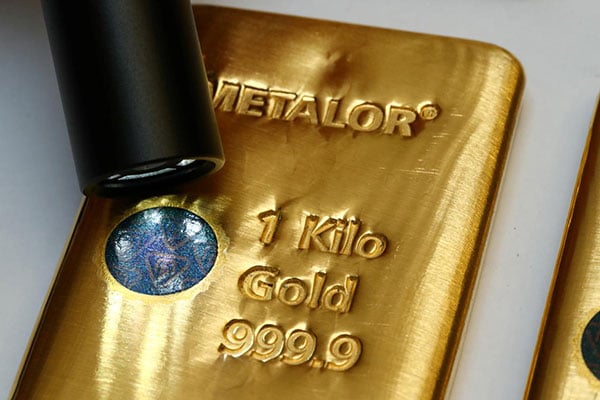
The marking 999.9 indicates that a gold product is 99.99% pure gold, meaning that out of every 1,000 parts, 999.9 parts are gold, while only a very small fraction consists of other elements. This level of purity is often referred to as “four nines fine” gold and is commonly found on investment-grade bullion bars and high-quality gold products produced by internationally recognized refiners.
A 999.9 stamp is one of the most widely recognized purity markings in the precious metals industry. Many reputable refineries engrave the bar with its purity, weight, serial number, and company logo, and often provide an accompanying assay certificate verifying these details.
Although a 999.9 stamp is an important indicator of purity, buyers should still verify the product through trusted dealers and appropriate testing methods, as counterfeit markings can exist.
What Is Fine Gold?
Fine gold refers to the actual amount of pure gold contained within a gold item after excluding all alloying metals. Instead of expressing purity in karats, the precious metals industry often uses fineness, which represents purity as parts per thousand.
For example:
- 9 fine = 99.99% pure gold
- 999 fine = 99.9% pure gold
- 995 fine = 99.5% pure gold
- 7 fine = 22K gold
- 750 fine = 18K gold
The term “fine gold” is commonly used in bullion trading, refining, mining, and international precious metals markets because it provides a precise measurement of the gold content in bars, coins, and other investment products.
How Is Purity Tested?
Gold purity is tested using a variety of scientific methods, with the choice of technique depending on the purpose of the examination, the required accuracy, and whether the sample can be altered during testing. Professional laboratories and refiners often combine multiple testing methods to achieve the most reliable results.
Common testing methods include:
- X-ray Fluorescence (XRF): A fast, non-destructive technique that analyzes the surface elemental composition of gold.
- Fire Assay: An internationally recognized laboratory method that accurately measures gold content by separating precious metals from other materials.
- Inductively Coupled Plasma (ICP) Analysis: An advanced laboratory technique used to identify gold concentration and trace impurities with high precision.
- Density Testing: Measures the specific gravity of a gold item to determine whether its physical properties are consistent with genuine gold.
- Ultrasonic Testing: Uses sound waves to inspect the internal structure of bullion bars for hidden defects or foreign-metal inserts.
Professional laboratories often use a combination of these methods because each provides different information about a gold item’s purity, composition, and structural integrity.
Which Gold Is Best for Investment?
For most investors seeking exposure to the value of gold itself, 24K investment-grade bullion with a purity of 99.5% (995 fine) or higher is generally preferred because it closely tracks the international gold price and is widely recognized in global precious metals markets. Many investors choose 999.9 fine gold bars or investment bullion coins produced by reputable government mints and accredited refiners due to their consistent quality, recognized purity, and broad market acceptance.
The most suitable investment product depends on an individual’s financial objectives, budget, liquidity needs, and storage arrangements. Smaller bars and fractional coins may be easier to purchase gradually, while larger bullion bars often carry lower premiums per gram. Regardless of the product selected, buyers should verify the authenticity, purity, weight, assay documentation, and reputation of the seller before completing any purchase.
If purchasing gold from international suppliers, working with a reputable company such as Buy Gold in Africa Limited, while independently verifying all documentation and product details, can help buyers make informed decisions and reduce transaction risks.
Gold Bar Questions
Should I Buy 1 oz Bars?
One-ounce (1 oz) gold bars are among the most popular choices for both first-time and experienced investors because they offer a practical balance between affordability, liquidity, and value. Weighing approximately 31.1035 grams, a 1 oz bar is widely recognized in international bullion markets and is easy to buy, sell, and store.
Compared with very small bars, such as 1 g, 5 g, or 10 g bars, a 1 oz bar generally carries a lower premium per gram because manufacturing and distribution costs are spread over a larger amount of gold. At the same time, it remains more accessible than larger bars such as 100 g or 1 kg, making it suitable for investors who want meaningful exposure to gold without committing a substantial amount of capital.
Before purchasing a 1 oz gold bar, buyers should verify its purity (typically 999.9 fine), weight, serial number (if applicable), assay certificate, refinery, and the reputation of the dealer. It is also important to compare the total purchase cost, including premiums, shipping, insurance, and taxes where applicable.
Is 100 g Gold Better?
A 100-gram gold bar is often considered an excellent option for investors seeking a balance between lower premiums and manageable investment size. Because larger bars generally cost less per gram than smaller products, many investors choose 100 g bars to maximize the amount of gold they receive for their money while avoiding the higher premiums associated with small bullion bars.
A 100 g bar is also easier to store than multiple smaller bars and is widely accepted by bullion dealers and precious metal buyers around the world. However, it requires a larger initial investment and may offer less flexibility if an investor wishes to sell only part of their holdings.
Whether a 100 g bar is the better choice depends on your budget, investment objectives, liquidity needs, and long-term strategy. Investors should compare premiums, verify authenticity, and purchase only from reputable suppliers.
Are Kilogram Bars Cheaper?
One-kilogram (1 kg) gold bars usually have the lowest premium per gram among commonly traded bullion products because manufacturing, packaging, and distribution costs are spread over a much larger quantity of gold. For institutional investors, high-net-worth individuals, and professional bullion traders, kilogram bars can therefore offer better value compared with purchasing many smaller bars.
However, while the premium per gram is generally lower, the total purchase price of a kilogram bar is significantly higher, making it less accessible for many investors. Large bars may also be less flexible because selling part of your investment usually requires selling the entire bar.
In addition to the purchase price, buyers should consider secure storage, insurance, transportation, and resale options before investing in kilogram bars. For many individual investors, several smaller bars may provide greater flexibility while still offering strong investment value.
Which Refineries Are Trusted?
Choosing gold from a reputable refinery is an important step in reducing the risk of counterfeit products and improving resale opportunities. Trusted refineries are known for maintaining high production standards, consistent purity, quality control, and internationally recognized manufacturing practices.
Many investors look for bullion produced by well-established refiners that meet recognized industry standards, such as those included on the LBMA Good Delivery List, where appropriate for wholesale bullion. Products from respected government mints and internationally recognized refiners are often more readily accepted in global precious metals markets.
Regardless of the refinery, buyers should verify the gold bar’s purity, weight, serial number (if applicable), assay certificate, packaging, and purchase documentation. Purchasing through transparent and reputable dealers, while independently verifying product details, provides additional confidence in the authenticity of the gold.
Should I Buy Cast or Minted Bars?
The choice between cast gold bars and minted gold bars depends on your investment goals, budget, and personal preferences. Both contain investment-grade gold when produced by reputable refiners, but they differ in appearance, manufacturing methods, and typical market use.
Cast bars are made by pouring molten gold into molds before cooling and finishing. They often have a more traditional appearance and are commonly available in larger sizes such as 250 g, 500 g, and 1 kg. Because they require less processing, cast bars may carry slightly lower premiums than minted bars of similar weight.
Minted bars are manufactured by cutting precisely measured blanks from rolled gold and stamping them with refined finishes. They typically have smooth surfaces, sharp edges, and detailed engravings that include the refinery logo, purity, weight, and serial number. Minted bars are especially popular in smaller investment sizes such as 1 g, 5 g, 10 g, 20 g, 50 g, and 1 oz.
From an investment perspective, neither type is inherently better in terms of gold content if both meet the same purity standards. The decision usually comes down to cost, intended use, ease of resale, and personal preference. Regardless of which type you choose, always verify the authenticity of the bar, review the accompanying documentation, and purchase from a reputable supplier such as Buy Gold in Africa Limited, while independently confirming all product information before completing the transaction.
Gold Coin Questions
What Are Bullion Coins?
Bullion coins are investment-grade gold coins whose value is based primarily on their precious metal content rather than their rarity or collectible appeal. They are produced by government mints and authorized institutions to strict purity and weight standards, making them widely recognized and traded in global precious metals markets. Most bullion coins contain 99.5% to 99.99% pure gold, although the exact purity varies by coin.
Popular examples include the American Gold Eagle, Canadian Gold Maple Leaf, South African Krugerrand, Austrian Philharmonic, Australian Kangaroo, and British Britannia. Each coin carries official markings indicating its weight, purity, issuing authority, and, in many cases, legal tender status within its country of issue.
Bullion coins are favored by investors because they are highly liquid, easy to authenticate, available in a range of sizes, and accepted by bullion dealers worldwide. Their market value generally reflects the international spot price of gold plus a dealer premium, which covers minting, distribution, and retail costs.
Which Gold Coins Hold Value?
Most investment-grade bullion coins retain their value because they contain a known quantity of gold that is recognized internationally. Their value is influenced by several factors, including gold purity, weight, market demand, condition, reputation of the issuing mint, and the current international gold price.
Among the most widely recognized bullion coins are the American Gold Eagle, Canadian Gold Maple Leaf, South African Krugerrand, British Britannia, Australian Kangaroo, Austrian Philharmonic, and Chinese Gold Panda. These coins are traded globally and are generally easier to buy and sell because they are familiar to investors, dealers, and financial institutions.
Some coins may also carry an additional premium because of limited mintages, historical significance, or collector demand. However, for investors whose primary objective is exposure to the value of gold, widely recognized bullion coins are often preferred due to their liquidity and transparent pricing.
Are Collectible Coins Investments?
Collectible coins, also known as numismatic coins, can form part of an investment strategy, but they differ significantly from bullion coins. While bullion coins derive most of their value from their gold content, collectible coins may command higher prices because of rarity, historical importance, condition, mint errors, limited production, or strong collector demand.
Because numismatic values depend on specialized markets, collectible coins may be more difficult to evaluate and price accurately. Their value can fluctuate independently of the gold market and may require expert grading, authentication, and knowledge of collector trends.
For beginners seeking a straightforward investment in gold, bullion coins are generally easier to understand because their value closely follows the international gold price. Collectible coins may appeal more to experienced collectors and investors who understand the numismatic market and are comfortable with its additional risks and opportunities.
Which Coins Are Easiest to Sell?
Gold coins that are widely recognized, investment-grade, and produced by established government mints are generally the easiest to sell because they are trusted by bullion dealers and investors around the world. Coins with standardized weights, high purity, and strong international recognition often have active resale markets and transparent pricing.
Examples of coins commonly regarded as highly liquid include the American Gold Eagle, Canadian Gold Maple Leaf, South African Krugerrand, British Britannia, Australian Kangaroo, and Austrian Philharmonic. Their broad acceptance means buyers and dealers are often familiar with their specifications, making verification and resale more straightforward.
To maximize resale value, investors should keep coins in their original protective packaging when possible, retain invoices and certificates if provided, and store them securely to prevent damage. Purchasing from reputable dealers such as Buy Gold in Africa Limited, while independently verifying authenticity and documentation, can also make future resale easier because buyers often prefer coins with clear and traceable purchase records.
Dealer Verification Questions
How Do I Verify a Gold Dealer?
Verifying a gold dealer is one of the most important steps before purchasing gold, especially when buying internationally or making a high-value transaction. A legitimate dealer should be transparent about their business identity, physical location, licensing, products, pricing, and transaction procedures. Never rely solely on a professional-looking website or social media profile, as fraudulent businesses can imitate reputable companies.
Start by confirming the company’s legal business registration, physical office address, telephone numbers, email addresses, and website ownership. Verify that the dealer has an established business history and provides clear contact information rather than communicating only through messaging apps. Request copies of business registration documents and compare the company name across invoices, contracts, export documents, and bank account details to ensure they are consistent.
Next, review independent customer feedback, verify whether the company has a professional online presence, and ask for references from previous commercial clients where appropriate. Request recent photographs or videos of the office, warehouse, or showroom if an in-person visit is not possible.
Before making any payment, ask the dealer to provide product specifications, assay certificates, export documentation (where applicable), and a written sales agreement outlining payment terms, delivery conditions, and responsibilities. Compare all documentation carefully to ensure names, weights, purity, invoice numbers, and shipment details are consistent.
A reliable dealer should answer questions openly, explain their procedures clearly, and never pressure you into making immediate payments.
What Licenses Should Dealers Have?
The licenses and approvals required to trade gold vary by country, but legitimate dealers should operate in accordance with the laws and regulations of the jurisdiction where they conduct business. Depending on the country, dealers may need business registration, mining or mineral trading licenses, export authorizations, tax registration, and other regulatory approvals.
For example, businesses exporting gold may need documentation issued by relevant government authorities responsible for mining, customs, taxation, or export control. Importers should also comply with the laws of the destination country, including customs declarations, taxes, and anti-money laundering (AML) requirements where applicable.
Rather than assuming a license is genuine, buyers should verify it with the issuing authority whenever possible. Ensure that the company name, license number, issue date, and permitted business activities match the information provided by the dealer.
What Documents Should They Provide?
Professional gold dealers should provide documentation that supports both the authenticity of the gold and the legality of the transaction. The exact documents required depend on the product, the country of origin, and whether the transaction is domestic or international.
Common documents may include:
- Commercial invoice
- Assay report or assay certificate
- Certificate of Origin (where applicable)
- Export permit or export authorization (for international shipments)
- Packing list
- Air Waybill (AWB) or Bill of Lading (B/L) after shipment
- Insurance documentation where applicable
- Sales agreement or purchase contract
- Payment instructions issued by the company
- Customs documentation required by the importing country
Buyers should carefully compare all documents to ensure that company names, product descriptions, gold purity, weights, quantities, serial numbers, and shipment information are consistent. Any discrepancies should be clarified before payment or shipment proceeds.
How Do I Avoid Scams?
Avoiding gold scams requires careful due diligence and a willingness to verify every aspect of the transaction before transferring funds. Fraudsters often attract buyers with unrealistic discounts, fake assay reports, forged export permits, cloned websites, counterfeit certificates, or claims of urgent investment opportunities.
Be cautious if a seller promises gold at prices far below the prevailing international market price, insists on immediate payment, requests transfers to personal bank accounts, communicates only through messaging applications, or refuses to provide verifiable documentation. These are common warning signs that require additional scrutiny.
To reduce risk:
- Verify the dealer’s legal identity and physical office.
- Confirm business registration and applicable licenses.
- Independently verify assay reports and export documents.
- Compare all transaction documents for consistency.
- Use secure and traceable payment methods.
- Consider independent inspections before shipment.
- Review contracts carefully before signing.
- Keep written records of all communications and payments.
High-value international purchases may also benefit from independent legal, customs, or professional advice where appropriate.
Should I Visit the Office?
Whenever practical, visiting a dealer’s physical office is one of the most effective ways to verify that the business genuinely exists and operates as represented. An office visit allows buyers to confirm the company’s location, meet staff, inspect facilities where appropriate, review documentation in person, and ask detailed questions about products, payment procedures, logistics, and after-sales support.
If travel is not possible, request a live video meeting, a virtual office tour, or recent photographs showing the company’s premises, signage, and operations. You can also ask to speak directly with company representatives and verify contact details independently.
A physical office alone does not guarantee that a company is trustworthy, but combined with proper licensing, transparent documentation, consistent business records, secure payment procedures, and professional communication, it provides additional confidence during the verification process.
If you are considering purchasing African gold, Buy Gold in Africa Limited welcomes buyers to communicate with its team, review available documentation, discuss transaction procedures, and, where appropriate, arrange a visit or consultation. As with any transaction, buyers should independently verify all information and conduct their own due diligence before completing a purchase.
Gold Documentation Questions
What Is an Assay Report?
An assay report, also called an assay certificate, is a document issued by a qualified laboratory or refinery that confirms the composition and purity of a gold sample after scientific testing. It is one of the most important documents in the gold trade because it provides independent evidence of the gold’s characteristics and helps buyers verify that the product matches the seller’s description.
A professional assay report typically includes:
- Laboratory or refinery name
- Certificate or report number
- Date of testing
- Client or company name
- Sample identification
- Weight of the sample
- Gold purity (for example, 99.99% or 999.9 fine)
- Other metals detected
- Testing method used (such as XRF, Fire Assay, or ICP Analysis)
- Signature or authorization from the laboratory
An assay report increases transparency, but it should not be accepted at face value. Buyers should verify that the issuing laboratory exists, confirm the report number where possible, and ensure that the information matches the invoice, export documents, and the physical gold being purchased.
What Is an Export Permit?
An export permit is an official authorization that allows gold to be exported from one country to another in accordance with that country’s laws and regulations. The exact requirements vary by jurisdiction, but export permits are commonly issued by the relevant government authority responsible for regulating mineral exports.
A genuine export permit generally contains information such as:
- Permit or reference number
- Exporter’s legal company name
- Government issuing authority
- Description of the gold
- Quantity and weight
- Gold purity
- Destination country
- Date of issue
- Validity period
- Official signatures or seals where applicable
Before relying on an export permit, buyers should independently verify its authenticity with the issuing authority whenever possible. The company name, shipment weight, product description, and destination should also match the invoice, packing list, shipping documents, and purchase agreement. Inconsistencies may require further investigation before proceeding with payment.
What Is a Certificate of Origin?
A Certificate of Origin (COO) is a document that identifies the country where the gold originated or where it meets the applicable rules of origin under relevant regulations. In international trade, this document may be requested by customs authorities, financial institutions, insurers, or importers as part of the shipment documentation.
A Certificate of Origin may include:
- Exporter’s name and address
- Importer’s details
- Country of origin
- Product description
- Quantity and weight
- Invoice reference
- Shipment details
- Date of issue
- Authorized certification by the issuing body where applicable
The Certificate of Origin should be consistent with all other transaction documents. Buyers should compare company names, shipment quantities, invoice numbers, and destination details to ensure there are no discrepancies before completing the transaction.
What Shipping Documents Are Required?
The shipping documents required for a gold transaction depend on the method of transport, the countries involved, and the applicable legal requirements. These documents help carriers, customs authorities, insurers, and buyers identify the shipment and process it correctly.
Common shipping documents include:
- Commercial Invoice
- Packing List
- Air Waybill (AWB) for air shipments
- Bill of Lading (B/L) for sea freight
- Cargo Manifest
- Shipping Instructions
- Freight Forwarder’s documentation
- Insurance Certificate (where applicable)
- Delivery documentation
- Tracking information provided by the carrier
Professional logistics companies may also issue additional documentation depending on the shipment’s destination and security requirements.
Before shipment, buyers should confirm that all documents contain matching shipment weights, product descriptions, invoice numbers, exporter details, consignee information, and tracking references. Accurate documentation reduces delays and helps prevent disputes during transportation.
What Customs Documents Are Needed?
Customs documentation is required to allow gold shipments to enter or leave a country legally. The exact documents depend on the exporting country, the importing country, the shipment value, and the applicable customs regulations.
Common customs documentation may include:
- Customs Declaration
- Commercial Invoice
- Packing List
- Certificate of Origin
- Export Permit (where required)
- Import Permit (if required by the destination country)
- Air Waybill or Bill of Lading
- Insurance documentation
- Tax or duty documentation where applicable
- Any additional documents required by customs authorities
Importers should familiarize themselves with the customs requirements of their destination country before purchasing gold. Delays can occur if documentation is incomplete or inconsistent.
Before making payment, buyers should compare all customs documents with the sales contract, assay report, shipping records, and export documentation to ensure that company names, weights, gold purity, quantities, and shipment details match across every document. Careful document verification is an essential part of responsible due diligence in international gold transactions.
For buyers sourcing gold from Africa, Buy Gold in Africa Limited provides transaction documentation appropriate to each sale and encourages customers to independently verify all documents and comply with the import and export requirements that apply to their specific transaction.
Payment Questions
Is Escrow Safer?
An escrow service is a payment arrangement in which a neutral third party temporarily holds funds until the buyer and seller have met the agreed conditions of a transaction. In international gold trading, escrow can provide an additional layer of protection because payment is generally released only after the contractual requirements have been satisfied, such as document verification or delivery milestones.
Escrow may help reduce certain transaction risks, but it is not automatically safe in every situation. Buyers should verify that the escrow provider is independent, reputable, properly licensed where applicable, and not controlled by the seller. Fraudsters sometimes create fake escrow websites or impersonate legitimate escrow companies to deceive buyers.
Before using escrow, carefully review the escrow agreement, understand when funds will be released, verify the company’s contact details independently, and confirm all fees and dispute resolution procedures. For high-value gold transactions, buyers may also wish to seek independent legal or financial advice.
Can I Pay Using Bank Transfer?
Yes. Bank transfer is one of the most commonly used payment methods for legitimate domestic and international gold transactions because it provides a formal record of payment through regulated financial institutions. Many professional gold dealers accept payments by bank wire transfer for bullion purchases.
Before sending funds, buyers should verify:
- The legal company name matches the sales contract.
- The bank account is held in the company’s name rather than an individual’s personal account, unless there is a legitimate documented reason.
- Bank details exactly match the invoice and purchase agreement.
- Payment instructions have been confirmed directly with the company through verified contact channels.
- The invoice amount, currency, and payment reference are correct.
After sending the payment, keep the transfer confirmation and communicate with the seller using written records. Never send funds simply because someone claims the payment is urgent without independently verifying the request.
What Is MT103?
An MT103 is an internationally recognized payment message used within the SWIFT banking network to confirm that a cross-border wire transfer has been initiated between financial institutions. It contains detailed information about the payment, including the sending bank, receiving bank, amount transferred, currency, payment date, and transaction reference.
In international gold trading, an MT103 may be shared as evidence that a payment instruction has been processed by the sender’s bank. However, buyers and sellers should understand that receiving an MT103 does not necessarily mean funds have already been credited to the recipient’s account.
Financial institutions remain the authoritative source for confirming whether funds have been received. Buyers should communicate directly with their bank regarding the status of international transfers rather than relying solely on copies of payment documents.
What Is a Letter of Credit?
A Letter of Credit (LC) is a financial instrument issued by a bank that helps facilitate international trade by providing a structured payment mechanism between buyers and sellers. Under a Letter of Credit, the issuing bank agrees to make payment to the seller provided that the seller presents the documents required under the terms of the LC.
Letters of Credit are commonly used in higher-value commercial transactions because they establish clearly defined documentary requirements before payment is released. Depending on the agreement, these documents may include commercial invoices, shipping documents, packing lists, insurance certificates, or other specified records.
Although a Letter of Credit can help manage commercial risk, both parties should fully understand its terms and conditions before entering into the transaction. Because LCs involve legal and banking obligations, businesses often work closely with their banks and professional advisers throughout the process.
Should I Avoid Cryptocurrency?
Some gold dealers accept cryptocurrency as a payment option, while many others prefer traditional banking methods. Whether cryptocurrency is appropriate depends on the specific transaction, the applicable laws, the parties involved, and the buyer’s understanding of the associated risks.
Cryptocurrency transactions can often be completed quickly, but they may also involve significant price volatility, irreversible transfers, cybersecurity risks, and limited options for recovering funds if a transaction turns out to be fraudulent. For these reasons, buyers should exercise additional caution before using digital assets to purchase high-value goods such as gold.
Before paying with cryptocurrency:
- Confirm that the dealer genuinely accepts cryptocurrency.
- Verify the wallet address through trusted communication channels.
- Understand the legal and tax implications in your jurisdiction.
- Ensure all transaction terms are documented in writing.
- Conduct thorough due diligence on the seller before sending funds.
Many buyers prefer regulated payment methods such as bank transfers because they provide formal transaction records and established banking procedures. Regardless of the payment method chosen, the most important step is to verify the dealer, confirm all documentation, and understand the terms of the transaction before making payment.
If purchasing through Buy Gold in Africa Limited, buyers are encouraged to discuss available payment options directly with the company and independently verify all payment instructions before transferring funds.
Shipping Questions
How Is Gold Shipped Internationally?
International gold shipments require careful planning, secure logistics, regulatory compliance, and complete documentation. The shipping method depends on the type of gold being transported, its value, the destination country, and the applicable import and export requirements. Professional dealers typically work with specialized logistics providers and follow established procedures to protect high-value shipments throughout the transportation process.
A typical international gold shipping process includes:
- Gold Inspection and Verification – The gold is weighed, tested, and verified to ensure that the purity, quantity, and product details match the sales agreement and supporting documentation.
- Preparation of Documentation – Required documents such as the commercial invoice, assay report, packing list, export authorization (where applicable), Certificate of Origin (where applicable), and shipping instructions are prepared before dispatch.
- Secure Packaging – The gold is packaged using tamper-evident materials and protective packaging suitable for high-value cargo.
- Customs Clearance – Export customs procedures are completed in the country of origin, while import documentation is prepared to satisfy the destination country’s customs requirements.
- Transportation – Depending on the shipment, the gold may travel by secure air cargo or other approved transportation methods managed by professional logistics providers.
- Import Clearance and Delivery – After arriving in the destination country, customs authorities process the shipment before final delivery to the authorized recipient.
Throughout the process, buyers should receive appropriate documentation and shipment updates where available. They should also verify that shipment details—including weight, quantity, consignee information, and tracking references—match the purchase documents.
Which Couriers Transport Gold?
High-value gold shipments are generally transported by specialized secure logistics companies or carriers experienced in handling valuable cargo. Depending on the shipment size, destination, and security requirements, transportation may involve dedicated precious-metals logistics providers, armored transportation services, or international express carriers that offer services for eligible high-value shipments.
Examples of companies that may be used in appropriate circumstances include:
- Brinks
- Malca-Amit
- G4S
- DHL Express (subject to service availability, destination, and shipment type)
- UPS (subject to applicable service conditions)
- FedEx (subject to applicable service conditions)
The availability of these services varies by country, shipment value, and local regulations. Buyers should confirm directly with both the seller and the logistics provider which services are available for their specific shipment.
Before shipment, request the carrier name, tracking information (where available), insurance details, and shipping documentation. Ensure that all information is consistent with your purchase agreement.
Is Insurance Required?
Insurance is not always legally required, but it is strongly recommended for high-value gold shipments because it may provide financial protection against certain risks during transportation. Whether insurance is available or appropriate depends on the shipment value, carrier policies, destination, and the terms agreed upon between the buyer and seller.
Insurance arrangements should be clearly discussed before shipment. Buyers should understand:
- Who is responsible for arranging insurance.
- The period during which the shipment is insured.
- The risks covered by the policy.
- Any exclusions or limitations.
- The procedure for reporting loss or damage.
- Whether proof of insurance will be provided.
For valuable international shipments, obtaining written confirmation of insurance coverage can provide additional confidence and help clarify responsibilities if unexpected events occur during transit.
How Long Does Shipping Take?
The time required to ship gold internationally depends on several factors, including the exporting country, destination country, customs processing, flight schedules, carrier availability, security procedures, documentation, and local regulations.
In many cases, once payment has been confirmed and all required documentation has been completed, international shipments may be delivered within several business days to a few weeks, depending on the shipping method and customs clearance. However, there is no universal delivery timeline, and delays can occur because of customs inspections, public holidays, weather conditions, regulatory checks, or transportation disruptions.
Before purchasing gold, buyers should ask the seller for:
- An estimated delivery schedule.
- The shipping method being used.
- Expected customs procedures.
- Tracking information, if available.
- Insurance arrangements.
- Contact information for shipment updates.
Working with an experienced supplier such as Buy Gold in Africa Limited, while independently verifying shipment documentation and tracking information, can help buyers better understand the shipping process and prepare for international delivery. Buyers should also familiarize themselves with the import requirements of their destination country before placing an order.
Fraud Questions
What Are Common Gold Scams?
Gold scams have become increasingly sophisticated, particularly with the growth of online trading, social media, messaging apps, and artificial intelligence. Fraudsters may create convincing websites, forge official documents, impersonate legitimate companies, or promise unrealistically low prices to persuade buyers to transfer money before receiving any gold. Understanding these schemes is one of the most effective ways to reduce risk.
Some of the most common gold scams include:
- Advance-fee scams, where buyers are asked to pay taxes, export fees, customs charges, insurance, or licensing costs before shipment, only to face repeated requests for additional payments.
- Fake gold dealers using cloned websites, copied company names, or stolen business registration documents to appear legitimate.
- Counterfeit gold bars or coins, including gold-plated products or bars containing other metals.
- Forged assay reports, export permits, certificates of origin, invoices, or shipping documents designed to create a false impression of authenticity.
- Fake shipping companies that send fabricated tracking numbers or demand additional transportation fees.
- Below-market price scams, where sellers advertise gold at unrealistic discounts far below prevailing international market prices.
- Pressure-selling tactics, encouraging buyers to send money immediately because of a supposed limited-time opportunity.
- Payment diversion scams, in which criminals intercept communications and provide fraudulent bank account details.
Before purchasing gold, independently verify the dealer, compare all documentation, confirm payment instructions directly with the company, and avoid making decisions based solely on unusually attractive prices.
How Do Fake Assay Reports Look?
A fake assay report may appear professional at first glance, but careful examination often reveals inconsistencies. Fraudsters frequently copy the logos of well-known laboratories, imitate genuine report layouts, or digitally alter legitimate certificates to misrepresent the purity or quantity of gold.
Common warning signs include:
- Missing or invalid certificate numbers.
- Poor-quality logos or blurred printing.
- Incorrect laboratory names or contact information.
- Spelling and grammar mistakes.
- Missing testing method.
- Inconsistent sample weights.
- Purity values that differ from invoices or contracts.
- Missing signatures or unauthorized signatories.
- QR codes or website links that do not work.
- Dates that do not match other transaction documents.
Whenever possible, contact the issuing laboratory directly using independently obtained contact information to confirm whether the report is genuine. Compare every detail of the assay report with the commercial invoice, export documents, and shipment records before proceeding.
How Do Fake Invoices Look?
Commercial invoices are essential documents in international gold transactions, and they are sometimes forged or altered by fraudsters. A fake invoice may closely resemble a genuine business document, making careful verification essential.
Typical warning signs include:
- Company names that differ from other documents.
- Different addresses across invoices and contracts.
- Incorrect tax registration numbers.
- Missing invoice numbers.
- Duplicate invoice numbers.
- Unusual payment instructions.
- Personal bank accounts instead of company accounts without a legitimate explanation.
- Incorrect product descriptions.
- Gold purity or weight that does not match the assay report.
- Calculation errors or inconsistent totals.
- Missing company contact information.
- Poor formatting or obvious spelling mistakes.
Before sending payment, compare the invoice with the purchase agreement, assay report, export documentation, and bank account details. Every document should consistently identify the same company, shipment, and product specifications.
How Can I Verify Export Permits?
An export permit should never be accepted without verification, especially in international gold transactions. Fraudsters often create counterfeit permits using copied government logos, fabricated reference numbers, or altered official documents.
To verify an export permit:
- Confirm the name of the issuing government authority.
- Check that the permit number follows the expected format where applicable.
- Verify the exporter’s legal company name.
- Compare the shipment weight, purity, and product description with the invoice and assay report.
- Confirm the destination country and consignee details.
- Review issue and expiry dates.
- Examine signatures, seals, and official markings for consistency.
- Contact the issuing authority using independently obtained contact information to confirm authenticity whenever verification services are available.
- Ensure the permit matches all other shipping and customs documentation.
If any information is inconsistent or cannot be independently verified, pause the transaction until satisfactory clarification is obtained.
What Are Red Flags?
Recognizing warning signs early can help buyers avoid financial loss and fraudulent transactions. While a single issue does not necessarily prove fraud, multiple warning signs should prompt additional due diligence before any payment is made.
Common red flags include:
- Gold offered at prices far below the international market price.
- Sellers demanding immediate payment or creating artificial urgency.
- Communication only through WhatsApp, Telegram, or social media with no verifiable business channels.
- Refusal to provide a physical office address.
- Inconsistent company names across documents.
- Fake or unverifiable business registrations.
- Forged assay reports or export permits.
- Requests to send money to personal bank accounts.
- Frequent requests for unexpected taxes, customs charges, or release fees after payment.
- Poor-quality websites with copied content or recently registered domains.
- Refusal to allow independent inspections or document verification.
- Missing contracts, invoices, or shipment documentation.
- Tracking numbers that cannot be verified with the stated logistics provider.
- Pressure to complete the transaction before conducting due diligence.
The safest approach is to verify every document independently, confirm the dealer’s identity, use secure payment methods, keep written records of all communications, and avoid making decisions based solely on attractive pricing. If you are purchasing African gold, Buy Gold in Africa Limited is committed to transparent transactions, verified documentation, and professional customer support. Regardless of the supplier you choose, always conduct your own independent due diligence before completing any gold purchase.
Country-Specific Questions
Buying Gold in Uganda
Uganda is one of East Africa’s important gold trading and refining hubs, attracting buyers from around the world. Before purchasing gold in Uganda, buyers should confirm that they are dealing with a legally established company that provides transparent pricing, proper documentation, and clear transaction procedures. International buyers should verify the authenticity of the gold, request an assay report, review the commercial invoice, and ensure that any export documentation required by Ugandan authorities has been obtained before shipment.
Buyers should also understand the import requirements of their own country, including customs declarations, taxes, and any licensing obligations that may apply. Working with experienced logistics providers and maintaining complete transaction records can help reduce delays and simplify customs clearance. If you are sourcing gold from Uganda, Buy Gold in Africa Limited provides authentic African gold, verified documentation, secure worldwide shipping, and professional customer support, while encouraging every buyer to independently verify all documents before completing a purchase.
Buying Gold in Ghana
Ghana is one of Africa’s largest gold-producing countries and is internationally recognized for its mining industry. Buyers interested in purchasing Ghanaian gold should conduct careful due diligence before entering into any transaction. Verify the seller’s legal identity, business registration, physical office, and trading history, and request supporting documentation such as assay reports, commercial invoices, and export documentation where applicable.
International buyers should be aware that gold exports are subject to Ghanaian laws and regulations, and requirements may change over time. Before sending payment, compare every document carefully to ensure that company names, shipment weights, product descriptions, and payment instructions are consistent. Purchasing from transparent and reputable suppliers and independently confirming documentation helps reduce the risk of fraud.
Buying Gold in Tanzania
Tanzania has a well-established mining sector and is an important producer of gold in East Africa. Buyers should work only with reputable dealers who can provide clear documentation demonstrating the authenticity of the gold and compliance with applicable export requirements.
Before purchasing, request an assay report, commercial invoice, sales agreement, and any export documentation required for the shipment. Verify that all information matches across the documents and ensure that secure shipping arrangements are in place. International buyers should also familiarize themselves with the customs and import requirements of their destination country to avoid unnecessary delays during delivery.
Buying Gold in Kenya
Kenya serves as a regional commercial and logistics hub for East Africa, and some international gold transactions are arranged through Kenyan businesses or delivered through Kenyan transport networks. Buyers should verify the legal status of the company, confirm its physical office location, and request complete documentation supporting the transaction.
As with any international purchase, compare the assay report, invoice, shipping documents, and payment instructions carefully before transferring funds. Buyers should avoid offers that promise unrealistic discounts or require urgent payments without allowing time for independent verification. Proper due diligence remains the most effective way to reduce transaction risks.
Buying Gold in Dubai
Dubai is one of the world’s leading precious metals trading centers and is well known for its active gold market, refineries, bullion dealers, and international trading infrastructure. Buyers often choose Dubai because of its extensive selection of gold products, competitive market conditions, and strong commercial environment.
Before purchasing gold in Dubai, compare prices from multiple reputable dealers, verify product purity and authenticity, review invoices and assay documentation, and understand any applicable taxes, import requirements, or customs procedures that may apply when transporting gold to another country. Purchasing from established dealers with transparent business practices helps improve confidence throughout the transaction.
Buying Gold in the USA
Buying gold in the United States is widely accessible through bullion dealers, coin dealers, financial institutions, and online precious metals retailers. Investors can purchase gold bars, bullion coins, and certain investment-grade products from businesses that comply with applicable federal and state laws.
Before purchasing, compare dealer premiums, shipping costs, insurance, storage options, and buyback policies. Buyers should also understand any applicable reporting requirements, import procedures for international purchases, and tax considerations that may affect their investment. Maintaining invoices, payment records, and authenticity documentation can simplify future resale and record-keeping.
Buying Gold in the UK
The United Kingdom has one of the world’s most established precious metals markets, supported by international bullion trading, professional dealers, refiners, and secure storage providers. Buyers interested in purchasing gold in the UK should compare products based on purity, premiums, liquidity, and total transaction costs rather than focusing solely on the spot price.
Before importing gold into the UK or purchasing from overseas suppliers, understand the relevant customs procedures, taxes, and documentation requirements that may apply. Buyers should retain invoices, assay certificates, and shipping documents for future reference. Working with reputable dealers, verifying documentation independently, and using secure payment methods can help ensure a smooth and transparent purchasing experience.
Choosing the Right Country to Buy Gold
There is no single “best” country for buying gold because the right choice depends on your investment objectives, budget, preferred products, local regulations, taxes, shipping costs, and access to reputable dealers. Whether purchasing gold in Uganda, Ghana, Tanzania, Kenya, Dubai, the United States, or the United Kingdom, buyers should always compare the total cost of ownership, including dealer premiums, taxes, insurance, shipping, customs charges, and storage expenses.
Regardless of where you purchase gold, always:
- Verify the dealer’s identity and reputation.
- Confirm the authenticity of assay reports and transaction documents.
- Review contracts before making payment.
- Use secure and traceable payment methods.
- Understand import and export requirements.
- Arrange appropriate insurance and secure shipping.
- Keep complete records of every transaction.
For buyers seeking authentic African gold, Buy Gold in Africa Limited offers transparent pricing, verified documentation, secure international shipping, and professional customer support. The company encourages every customer to conduct independent due diligence and verify all documentation before completing a transaction.
Investment Questions
Is Gold Good During Inflation?
Gold has historically been viewed by many investors as a way to help preserve purchasing power during periods of inflation. When the cost of goods and services rises and the value of paper currency declines, some investors increase their allocation to gold because it is a tangible asset with a long history of retaining value over time. However, gold prices do not always move in direct proportion to inflation, and performance can vary depending on broader economic conditions.
Several factors influence how gold performs during inflation, including central bank policies, interest rates, currency movements, investor sentiment, geopolitical events, and global supply and demand. There have been periods when gold prices increased during high inflation, but there have also been periods when inflation rose without a corresponding increase in gold prices. For this reason, gold should not be viewed as a guaranteed hedge against inflation.
Many financial professionals consider gold as one component of a diversified investment portfolio rather than a complete solution for managing inflation risk. Investors should evaluate their financial objectives, investment horizon, and overall risk tolerance before deciding how much exposure to gold is appropriate.
Can Gold Protect Wealth?
Gold has been used as a store of value for thousands of years and continues to play an important role in wealth preservation for governments, central banks, institutions, and individual investors. Unlike paper currencies, gold is a physical asset that cannot be created by monetary policy, which is one reason many investors choose to hold it as part of their long-term financial strategy.
Gold may help preserve wealth during periods of economic uncertainty, financial market volatility, geopolitical instability, or currency depreciation. Because its price often behaves differently from stocks and bonds, it can also contribute to portfolio diversification.
However, no investment is completely risk-free. Gold prices fluctuate in response to changing market conditions, and there is no guarantee that its value will increase over every time period. Investors should consider gold as part of a balanced investment strategy rather than relying on it as their only investment.
Is Gold Better Than Stocks?
Gold and stocks serve different purposes within an investment portfolio, so one is not universally better than the other. Stocks represent ownership in businesses and may generate returns through capital appreciation and dividends. Gold, on the other hand, is a physical commodity that does not produce income but has historically been valued for wealth preservation and diversification.
During periods of strong economic growth, stocks have often delivered higher long-term returns than gold, although they may also experience greater volatility. Gold has sometimes performed well during periods of market uncertainty or financial stress, but its price can also decline.
Many investors choose to own both assets because they can complement each other within a diversified portfolio. The appropriate balance depends on individual financial goals, investment time horizon, income needs, and tolerance for risk. Investors should carefully evaluate these factors and consider obtaining independent financial advice before making significant investment decisions.
When Should I Buy Gold?
There is no single “best” time to buy gold because market prices change continuously in response to global economic conditions, interest rates, inflation expectations, currency movements, central bank activity, and investor demand. Attempting to predict short-term price movements consistently is difficult, even for experienced market participants.
Many long-term investors focus on building their holdings gradually over time rather than trying to purchase at the exact lowest price. A disciplined approach—combined with careful research, clear investment objectives, and regular portfolio reviews—may help reduce the impact of short-term market fluctuations.
Before purchasing gold, compare dealer premiums, verify product authenticity, review assay certificates and transaction documents, understand storage and insurance options, and ensure that the purchase aligns with your broader financial plan. If you are sourcing investment-grade African gold, Buy Gold in Africa Limited provides authentic gold, verified documentation, transparent pricing, and secure international delivery. Regardless of the supplier you choose, always perform independent due diligence and make investment decisions based on your own financial circumstances.
Storage Questions
Where Should I Store Gold?
Choosing where to store your gold is one of the most important decisions after making a purchase. The right storage option depends on the value of your investment, how often you expect to access it, your security requirements, insurance considerations, and your long-term investment strategy. Gold should always be stored in a secure location that protects it from theft, damage, environmental conditions, and unauthorized access.
Many investors choose one of the following storage options:
- Home Safe: Suitable for smaller gold holdings when a high-quality, fire-resistant, securely anchored safe is used. Home storage provides immediate access but places the responsibility for security entirely on the owner.
- Bank Safe Deposit Box or Vault: Banks in some jurisdictions offer secure storage facilities for valuable items. These may provide a higher level of physical security than home storage, although availability, access policies, and insurance arrangements vary by institution.
- Professional Bullion Vault: Specialized precious metals storage providers offer high-security vaulting services designed specifically for bullion. These facilities often include inventory management, advanced security systems, and optional insurance.
- Allocated Storage: Your specific gold bars or coins are individually identified and stored in your name.
- Segregated Storage: Your gold is stored separately from other customers’ holdings, providing clear identification of your assets.
Regardless of where you store your gold, keep copies of invoices, assay certificates, photographs, serial numbers (where applicable), and insurance records in a separate secure location. Good record-keeping can simplify ownership verification, insurance claims, and future resale.
Is a Bank Vault Safer?
For many investors, a bank vault or safe deposit box can provide a high level of physical security because banks generally use controlled access systems, surveillance, alarms, and secure construction. However, whether a bank vault is the safest option depends on the services offered by the institution, your access needs, applicable regulations, and whether insurance is included.
Before choosing bank storage, consider:
- Security features and access controls.
- Business hours and accessibility.
- Storage fees.
- Insurance availability and coverage limits.
- Whether the contents are insured automatically or require separate insurance.
- Any restrictions on storing precious metals.
- Procedures for accessing your property.
Some investors prefer professional bullion vaults because they specialize in precious metals storage and may offer services specifically designed for investors. Others value the convenience of bank storage or the immediate access provided by a properly secured home safe. The best choice depends on your personal circumstances and risk preferences.
Should Gold Be Insured?
Although insurance is not always legally required, it is strongly recommended for anyone holding valuable quantities of physical gold. Insurance may help protect against financial loss resulting from risks such as theft, burglary, fire, certain types of accidental damage, or loss during transportation, depending on the terms of the policy.
Before arranging insurance, understand:
- What risks are covered.
- Coverage limits and exclusions.
- Whether gold stored at home, in a bank, or in a professional vault is covered.
- Documentation required to prove ownership.
- Claim procedures.
- Whether the policy reflects the current value of your gold.
Keep purchase invoices, assay certificates, serial numbers, photographs, and any valuation records, as these documents may be needed if you ever make an insurance claim.
Whether you purchase gold locally or internationally through a reputable supplier such as Buy Gold in Africa Limited, secure storage and appropriate insurance are important parts of protecting your investment. Buyers should periodically review their storage arrangements and insurance coverage to ensure they continue to meet their needs as the value of their holdings changes.
Selling Gold Questions
How Do I Sell Gold?
Selling gold is generally a straightforward process when you work with a reputable buyer and have the necessary documentation. Whether you are selling investment-grade bullion, gold bars, bullion coins, jewelry, or other gold products, the first step is to determine the purity, weight, and current market value of your gold. Professional buyers typically assess these factors before making an offer.
To achieve the best possible outcome, compare offers from multiple reputable buyers rather than accepting the first quote you receive. If you own investment-grade bullion, retain the original assay certificate, purchase invoice, serial number records, and original packaging whenever possible, as these may simplify verification and improve buyer confidence.
A typical gold selling process includes:
- Verify the purity and weight of the gold.
- Check the current international spot price.
- Request quotes from several reputable buyers.
- Compare premiums, commissions, and fees.
- Present supporting documents such as invoices and assay certificates.
- Agree on the selling price and payment terms.
- Complete identity verification if required by law.
- Receive payment using the agreed payment method.
When selling internationally, buyers should also understand any customs procedures, tax obligations, or export requirements that may apply. Working with established bullion dealers and maintaining complete transaction records can help ensure a smooth and transparent sale.
How Is Resale Price Calculated?
The resale price of gold is usually based on several factors rather than a single fixed amount. The most important factor is the current international spot price, which reflects the global market value of gold at the time of the transaction. Buyers then consider the purity and weight of the gold to calculate its precious metal content.
Other factors that may influence the resale price include:
- Gold purity (for example, 24K, 22K, or 18K).
- Fine gold content.
- Weight of the item.
- Current international spot price.
- Dealer premiums or discounts.
- Refining or processing costs.
- Product type (bar, coin, jewelry, or scrap).
- Condition of the product.
- Market demand and liquidity.
- Brand or refinery recognition.
- Original packaging and assay certificate.
- Local taxes, fees, and transaction costs.
Investment-grade bullion bars and widely recognized bullion coins often receive stronger resale offers because they are easier to verify and trade in international markets. While market prices fluctuate daily, understanding these pricing factors allows sellers to compare offers more effectively.
Which Buyers Pay the Most?
There is no single buyer who consistently pays the highest price for every type of gold. The amount offered depends on the product being sold, current market conditions, local competition, the buyer’s business model, and the quality of the gold. Buyers specializing in investment-grade bullion may offer different prices from jewelry buyers or scrap gold recyclers.
Potential buyers include:
- Bullion dealers.
- Precious metal refineries.
- Coin dealers.
- Jewelry retailers.
- Precious metals exchanges.
- Gold recycling companies.
- Auction houses for certain collectible items.
- Private buyers, where legally appropriate.
To maximize your return, obtain quotes from several reputable buyers on the same day, since gold prices can change throughout the trading session. Compare not only the quoted price but also any commissions, testing charges, refining fees, shipping costs, or payment processing fees that could reduce the final amount you receive.
Selling to a buyer with a transparent pricing policy, established reputation, and clear payment procedures is often more important than choosing the highest advertised price. If you purchased your gold through Buy Gold in Africa Limited, the company can provide guidance on resale considerations for its products. Regardless of the buyer you choose, always verify the buyer’s credentials, understand the terms of the transaction, and keep copies of all sale documents for your records.
Ready to Buy Gold Safely?
Purchasing gold is a significant financial decision, and success starts with choosing a trusted supplier, verifying every document, understanding the pricing, and following secure buying procedures. Whether you’re investing in gold bars, bullion, investment coins, or wholesale African gold, taking the time to perform proper due diligence can help you avoid costly mistakes and buy with confidence.
If you’re looking for a trusted company to buy authentic African gold, Buy Gold in Africa Limited is committed to providing genuine gold, transparent pricing, verified assay reports, export documentation, secure international shipping, and professional customer support for qualified buyers worldwide. Our experienced team is available to guide you through every stage of the buying process—from product selection and document verification to payment, shipping, and delivery.
Contact Buy Gold in Africa Limited Today
✔ Request a FREE Live Gold Price Quote
✔ Verify Gold Assay Reports and Export Documents
✔ Speak with Our Gold Trade Specialists
✔ Receive Secure Worldwide Shipping Assistance
✔ Get Answers to Your Gold Buying Questions Before You Invest
Don’t risk buying from unknown or unverified sellers. Choose a company that values transparency, authenticity, and customer confidence. Contact Buy Gold in Africa Limited today and let our team help you purchase genuine African gold safely, securely, and professionally.