Gold Shipping Terms Explained | CIF, FOB & DAP for Buyers
CIF (Cost, Insurance and Freight), FOB (Free on Board), and DAP (Delivered at Place) are internationally recognized Incoterms that define the responsibilities of buyers and sellers when shipping gold across borders. These shipping terms clearly specify who pays for transportation, who purchases cargo insurance, who arranges export and import customs clearance, when the risk of loss or damage transfers from the seller to the buyer, and which party is responsible if problems occur during transit.
Understanding these Incoterms is essential when importing gold from Africa or any international market because they directly affect your total costs, legal obligations, and financial risk. Choosing the wrong shipping term can result in unexpected freight charges, uninsured shipments, customs delays, storage fees, or even the loss of valuable cargo worth thousands of dollars. Before signing a purchase contract or transferring payment, every gold buyer should understand exactly what CIF, FOB, and DAP mean and which option provides the best protection for their transaction.
In this guide, you’ll learn how each shipping term works, the responsibilities of both buyers and sellers, the advantages and disadvantages of each Incoterm, and which option is generally the safest when purchasing gold for international delivery.
Quick Answer Box
The table below compares the three most common Incoterms used when shipping gold internationally. Understanding who pays for transport, insurance, and customs can help you choose the right shipping arrangement and avoid unexpected costs.
| Shipping Term | Seller Pays | Buyer Pays | Who Arranges Insurance? | Risk Transfers | Best For |
| CIF (Cost, Insurance and Freight) | Export customs, freight to the destination port/airport, and minimum cargo insurance | Import duties, taxes, customs clearance, and inland delivery after arrival | Seller (minimum insurance coverage) | When the gold is loaded onto the vessel at the port of shipment | First-time gold buyers who want the seller to arrange shipping and insurance |
| FOB (Free on Board) | Export customs, documentation, and delivery until the gold is loaded onto the vessel or aircraft (as agreed) | International freight, cargo insurance, import duties, taxes, and final delivery | Buyer | Once the gold is loaded onto the agreed carrier (depending on the transport mode and agreed term) | Experienced importers who prefer to control shipping costs and logistics |
| DAP (Delivered at Place) | Export clearance, international freight, and delivery to the named destination | Import duties, VAT/GST, customs clearance, and any local government charges | Usually the seller until delivery, unless the contract states otherwise | When the shipment is made available to the buyer at the named destination before import clearance | Buyers who want convenient door-to-door delivery with minimal logistics management |
Note: Incoterms define the allocation of costs and risk between the buyer and seller. Always specify the exact Incoterms rule and named place (for example, CIF Heathrow Airport (Incoterms 2020) or DAP New York, USA (Incoterms 2020) in your sales contract to avoid misunderstandings.
What Are Gold Shipping Terms?
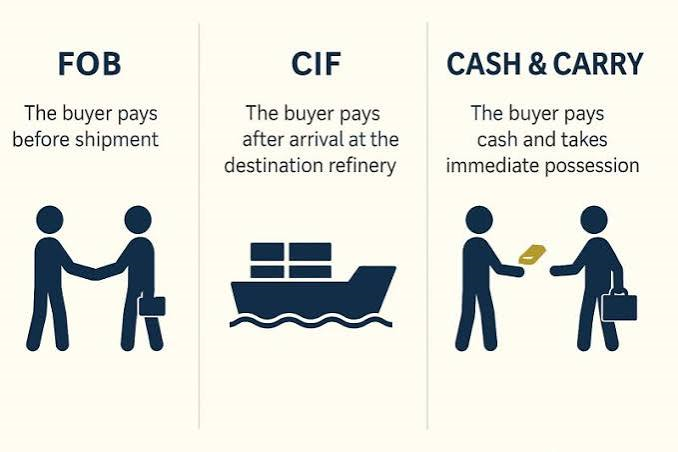
Gold shipping terms are standardized international trade rules that define the responsibilities of buyers and sellers during the transportation of gold across borders. They establish who arranges transportation, who pays freight costs, who purchases cargo insurance, who completes export and import customs procedures, and the exact point at which the risk of loss or damage transfers from the seller to the buyer.
These rules help prevent misunderstandings in international transactions by ensuring both parties understand their obligations before the shipment leaves the exporting country. Whether you are importing gold bars from Uganda, Ghana, Tanzania, or another major gold-producing nation, selecting the appropriate shipping term is an important part of negotiating the sales contract.
What Are Incoterms?
Incoterms (International Commercial Terms) are a set of globally recognized trade rules developed and published by the International Chamber of Commerce (ICC). They provide a common framework for international buyers and sellers by clearly defining which party is responsible for transportation, insurance, export documentation, customs procedures, delivery costs, and the transfer of risk during international trade.
Incoterms are used in contracts worldwide for commodities, manufactured goods, and precious metals, including gold. Because buyers and sellers may operate under different legal systems, Incoterms reduce confusion by establishing internationally accepted responsibilities. However, Incoterms do not determine ownership of the goods, payment terms, or when legal title transfers. Those matters must be agreed separately in the sales contract.
Why Shipping Terms Matter When Buying Gold
Shipping terms have a direct impact on the total cost, security, and success of an international gold transaction. Gold is a high-value commodity, and even a small misunderstanding over shipping responsibilities can lead to significant financial losses or costly delays.
One of the most important issues is risk. Every Incoterm specifies the exact point at which the risk of loss, theft, or damage passes from the seller to the buyer. Knowing this point helps determine who is responsible if something happens while the shipment is in transit.
Shipping terms also influence insurance. Depending on the agreed Incoterm, either the seller or the buyer may be responsible for arranging cargo insurance. Without adequate insurance, recovering the value of lost or damaged gold can be difficult.
Another key consideration is customs clearance. International gold shipments require export documentation in the country of origin and import clearance in the destination country. The chosen Incoterm identifies which party is responsible for handling these customs procedures and paying any associated costs.
Pricing is also affected. A quoted gold price under CIF, FOB, or DAP includes different transportation and logistics costs. Comparing offers without understanding the applicable shipping term can make one quotation appear cheaper than another, even though the overall landed cost may be higher.
Finally, while shipping terms allocate responsibilities for transport and risk, ownership and legal title to the gold are normally determined by the purchase agreement and payment conditions rather than by the Incoterm itself. Buyers should always review both the sales contract and the shipping terms before completing a transaction.
Which Shipping Terms Are Most Common for Gold?
Several Incoterms are used in the international gold trade, but a few are significantly more common than others.
CIF (Cost, Insurance and Freight) is widely used when sellers arrange international transportation and provide minimum cargo insurance to the named destination port or airport. It is often preferred by buyers who want the seller to coordinate most of the international shipping process.
FOB (Free on Board) is popular among experienced gold importers who prefer to select their own freight forwarder, insurer, and shipping schedule. Under this arrangement, the seller delivers the gold to the agreed carrier after completing export formalities, while the buyer assumes responsibility for the international transport from that point onward.
DAP (Delivered at Place) is commonly chosen when buyers want the seller to arrange delivery to a specified destination, such as a refinery, secure vault, or business premises. Although the seller organizes transportation to the agreed location, the buyer is generally responsible for import duties, taxes, and customs clearance unless the contract states otherwise.
EXW (Ex Works) places the greatest responsibility on the buyer. The seller simply makes the gold available at the agreed location, and the buyer is responsible for collecting the shipment, arranging transportation, export procedures where applicable, insurance, and import formalities. Because of its complexity and legal requirements, EXW is less common for international gold transactions.
FCA (Free Carrier) is another Incoterm sometimes used in precious metals trading. The seller delivers the gold to a carrier or freight forwarder nominated by the buyer at an agreed location after completing export clearance where required. FCA offers greater flexibility than FOB, especially for shipments transported by air, and is increasingly used in modern international logistics.
What Does CIF Mean in Gold Shipping?
CIF (Cost, Insurance and Freight) is one of the most widely used Incoterms in international gold trading. Under CIF (Incoterms 2020), the seller is responsible for arranging and paying for the transportation of the gold to the named destination port, as well as obtaining the minimum level of cargo insurance for the buyer’s benefit during the main carriage.
Although the seller pays for freight and insurance, this does not mean the seller carries all the risk until the shipment arrives. Understanding exactly when risk transfers is essential before purchasing gold under a CIF agreement.
CIF Definition
CIF stands for Cost, Insurance and Freight. It is an Incoterm published by the International Chamber of Commerce (ICC) for international trade involving goods transported by sea or inland waterway.
Under a CIF agreement, the seller:
- Delivers the gold to the agreed port of shipment.
- Completes export customs formalities.
- Pays the cost of transporting the shipment to the named destination port.
- Purchases the minimum cargo insurance required by the Incoterms® rule.
The buyer receives the shipment at the destination port and is responsible for completing import procedures and paying applicable government charges.
Important: CIF is designed for sea and inland waterway transport. For air shipments, which are common in the international gold trade, other Incoterms such as CIP or FCA may be more appropriate, depending on the agreed transport arrangement.
What Does the Seller Pay Under CIF?
Under a CIF contract, the seller is responsible for several key costs before the shipment reaches the destination port.
Export Clearance
The seller prepares the export documentation and completes all export customs procedures required in the country of origin. This typically includes obtaining export permits, commercial invoices, packing lists, certificates of origin where required, and any other documents necessary for legal export.
International Freight
The seller pays the cost of transporting the gold from the exporting country to the agreed destination port. These freight charges are already included in the CIF price quoted to the buyer.
Cargo Insurance
The seller must obtain cargo insurance that meets the minimum requirements of the applicable Incoterms rule. This insurance is intended to protect the buyer’s financial interest during the main international carriage. Buyers purchasing high-value gold shipments may wish to negotiate broader insurance coverage if the minimum level is not sufficient for their needs.
What Does the Buyer Pay Under CIF?
Although freight and insurance are included in the CIF price, the buyer is still responsible for several important costs after the shipment arrives.
Customs Duties
The buyer pays any import duties required by the destination country’s customs authority. The amount depends on local customs regulations and the classification of the imported gold.
VAT or Other Import Taxes
Where applicable, the buyer is responsible for paying VAT, GST, sales tax, or other government import taxes before the shipment can be released.
Import Customs Clearance
The buyer or their customs broker completes the import declaration, submits the required documentation, and satisfies any customs inspections or regulatory requirements before taking possession of the shipment.
Storage and Terminal Charges
If customs clearance is delayed, the buyer may also be responsible for storage fees, port handling charges, demurrage, or warehouse costs imposed by the carrier, airport, or port operator.
When Does Risk Transfer Under CIF?
This is one of the most misunderstood aspects of CIF.
Even though the seller pays for transportation and cargo insurance to the destination port, the risk of loss or damage transfers from the seller to the buyer when the goods are loaded on board the vessel at the port of shipment.
In other words, the seller pays the shipping costs, but the buyer assumes the transportation risk from the point the gold is loaded onto the vessel. If damage or loss occurs during the voyage, the buyer normally relies on the cargo insurance provided under the CIF contract to make a claim, subject to the insurance policy’s terms and conditions.
Because gold is a high-value commodity, buyers should review the insurance coverage carefully and consider requesting additional protection where appropriate.
Advantages of Buying Gold Under CIF
CIF offers several benefits, particularly for buyers who are new to international gold trading.
The seller manages the export process, books the international shipment, and arranges cargo insurance, reducing the administrative burden on the buyer. Buyers also receive a single quoted price that includes the cost of the gold, international freight, and the required insurance, making it easier to estimate overall shipping expenses.
For businesses that do not have established relationships with freight forwarders or logistics providers, CIF can simplify the purchasing process and reduce the complexity of coordinating international transportation.
Disadvantages of CIF
Despite its convenience, CIF also has limitations.
The buyer has less control over the choice of shipping company, transport schedule, and insurance provider because these arrangements are made by the seller. The insurance provided under CIF may only satisfy the minimum requirements of the applicable Incoterms® rule, which may not provide the level of protection some buyers expect for high-value gold shipments.
In addition, because freight and insurance costs are included in the quoted price, it can be more difficult to compare logistics costs or negotiate lower shipping rates independently.
Is CIF Best for First-Time Gold Buyers?
For many first-time buyers, CIF is often a practical choice because the seller handles export documentation, international freight, and the required cargo insurance, making the transaction easier to manage.
However, buyers should not assume that CIF eliminates all risk. Before making payment, confirm exactly what insurance is included, understand when the risk transfers under the agreed Incoterm, and review which import costs you will be responsible for after the shipment reaches your country.
If you regularly import gold and have trusted freight forwarders, customs brokers, and insurance providers, other Incoterms such as FCA or CIP may offer greater flexibility and control over shipping arrangements. The best option ultimately depends on your experience, logistics capabilities, and the terms negotiated with the seller.
What Does FOB Mean in Gold Shipping?
FOB (Free on Board) is one of the most common Incoterms used in international trade. In gold transactions, it is generally chosen by experienced buyers who want greater control over shipping, insurance, and logistics. Under an FOB agreement, the seller is responsible for preparing the gold for export and delivering it to the agreed port of shipment, while the buyer takes responsibility for the main international transportation and the associated costs after the agreed delivery point.
FOB can provide greater flexibility and cost control, but it also requires buyers to understand international shipping procedures and work with reliable freight forwarders, insurers, and customs brokers.
FOB Definition
FOB stands for Free on Board, an Incoterm published by the International Chamber of Commerce (ICC). It is intended for sea or inland waterway transport, where the seller fulfills their delivery obligation by placing the goods on board the vessel nominated by the buyer at the agreed port of shipment.
After the gold has been delivered in accordance with the FOB terms, responsibility for the main international carriage shifts to the buyer. Because gold shipments are frequently transported by air, businesses should consider whether FCA (Free Carrier) is a more suitable Incoterm for air freight.
Seller Responsibilities
Under an FOB agreement, the seller is responsible for preparing the shipment for export and delivering it to the agreed port of shipment.
The seller’s responsibilities typically include:
- Supplying the gold in accordance with the sales contract.
- Packaging and securing the shipment for international transport.
- Obtaining export permits and completing export customs clearance.
- Preparing commercial documents such as the commercial invoice, packing list, and any agreed certificates or export documentation.
- Delivering the gold on board the vessel nominated by the buyer at the agreed port of shipment.
- Providing proof that the shipment has been delivered in accordance with the FOB agreement.
Once these obligations have been completed, the seller’s primary responsibilities under the FOB contract are fulfilled.
Buyer Responsibilities
The buyer assumes responsibility for the shipment after delivery under the agreed FOB terms and manages the international transport process.
Typical buyer responsibilities include:
- Selecting and booking the shipping line or freight forwarder.
- Paying international freight charges.
- Arranging cargo insurance if desired.
- Paying import duties, VAT, GST, or other applicable taxes.
- Completing import customs clearance.
- Paying terminal handling, warehouse, storage, or delivery charges after arrival where applicable.
- Coordinating final transportation from the destination port to the refinery, vault, or business location.
Because the buyer controls the shipping arrangements, they also have greater flexibility in selecting carriers, insurance providers, and delivery schedules.
When Does Risk Transfer?
Understanding when risk transfers is essential when purchasing gold under FOB terms.
Under FOB (Incoterms® 2020), the risk of loss or damage transfers from the seller to the buyer once the gold has been delivered on board the vessel at the agreed port of shipment.
From that point onward, any damage, theft, or loss occurring during the main international voyage is generally at the buyer’s risk. For this reason, buyers commonly arrange comprehensive cargo insurance before the shipment departs.
It is important to remember that the transfer of risk is separate from the transfer of ownership. Legal ownership of the gold depends on the sales contract and payment terms agreed by the parties.
FOB Advantages
FOB offers several benefits for experienced gold importers.
The buyer has full control over carrier selection, freight rates, insurance coverage, and shipping schedules. This flexibility can lead to lower logistics costs and allows buyers to work with trusted freight forwarders and secure transportation providers that specialize in high-value precious metals.
FOB also provides greater transparency because the cost of the gold is separated from the international freight and insurance costs. This makes it easier to compare shipping quotations and negotiate competitive transportation rates.
Businesses that regularly import gold often prefer FOB because it allows them to maintain consistent shipping procedures across multiple suppliers and countries.
FOB Risks
Although FOB offers greater control, it also places more responsibility on the buyer.
The buyer must coordinate freight bookings, insurance, customs brokers, and import logistics. Any mistakes in scheduling, documentation, or transportation arrangements can result in delays, additional storage charges, or increased shipping costs.
Because the buyer assumes the transportation risk once delivery has occurred under the FOB terms, failing to arrange adequate cargo insurance could expose the buyer to significant financial losses if the shipment is damaged, stolen, or lost during transit.
FOB may therefore be less suitable for buyers who have limited experience with international precious metals logistics.
When Should Buyers Choose FOB?
FOB is generally the best choice for buyers who regularly import gold and already have established relationships with freight forwarders, customs brokers, insurers, and secure logistics providers.
It is particularly suitable when buyers want to negotiate their own shipping rates, obtain broader insurance coverage than the minimum required under other Incoterms, or maintain complete control over the transportation process from the port of shipment to the final destination.
For first-time gold buyers or businesses without international shipping experience, an Incoterm where the seller arranges more of the logistics may be easier to manage. However, experienced importers often choose FOB because it offers greater flexibility, transparency, and control over the entire supply chain.
What Does DAP Mean in Gold Shipping?
DAP (Delivered at Place) is an Incoterm that places most of the transportation responsibility on the seller. Under DAP (Incoterms® 2020), the seller arranges and pays for delivering the gold to a named destination chosen by the buyer, such as a refinery, secure vault, airport, warehouse, or business premises. The buyer is generally responsible for import customs clearance, import duties, taxes, and any other charges required by the destination country’s authorities.
Because the seller manages nearly the entire transportation process, DAP is often chosen by buyers who want a convenient door-to-door shipping solution without coordinating international freight themselves.
DAP Definition
DAP stands for Delivered at Place, one of the official Incoterms® 2020 published by the International Chamber of Commerce (ICC). Under this rule, the seller fulfills their delivery obligation by making the shipment available to the buyer at the agreed destination, ready for unloading.
Unlike CIF or FOB, DAP can be used with any mode of transport, including air, road, rail, sea, or multimodal shipments. This flexibility makes it well suited to international gold deliveries, particularly when secure air freight and ground transport are combined.
The agreed destination should always be clearly stated in the sales contract, for example, DAP London Vault (Incoterms 2020) or DAP Dubai Airport (Incoterms 2020), so both parties know where delivery takes place.
What the Seller Handles
Under a DAP agreement, the seller assumes responsibility for almost every stage of the international transportation process until the shipment reaches the agreed destination.
The seller typically handles:
- Preparing and packaging the gold for shipment.
- Obtaining export permits and completing export customs clearance.
- Preparing commercial shipping documents, including the commercial invoice and packing list.
- Arranging secure transportation and international freight.
- Paying freight costs to the named destination.
- Coordinating transit through carriers and logistics providers.
- Delivering the shipment to the agreed destination, ready for unloading.
Because the seller manages these logistics, the buyer has fewer transportation responsibilities before the shipment arrives.
What the Buyer Handles
Although DAP simplifies shipping for the buyer, several important obligations remain.
The buyer is generally responsible for:
- Completing import customs clearance.
- Paying import duties, customs tariffs, VAT, GST, or other applicable taxes.
- Providing any import permits or regulatory approvals required in the destination country.
- Paying inspection or government processing fees where applicable.
- Unloading the shipment at the agreed destination, unless the contract states otherwise.
Buyers should understand their country’s precious metals import regulations before agreeing to DAP terms, as customs requirements vary by jurisdiction.
DAP Advantages
DAP offers several advantages for international gold buyers, particularly those with limited experience in cross-border logistics.
Because the seller arranges transportation from the country of origin to the agreed destination, the buyer does not need to negotiate with freight forwarders or coordinate multiple logistics providers. This reduces administrative work and simplifies the purchasing process.
DAP also provides greater visibility over the delivery route because a single party manages most of the shipment. Buyers often receive one quoted price covering the gold and transportation to the named destination, making budgeting easier.
For businesses purchasing gold from overseas suppliers, DAP can reduce delays caused by poor coordination between multiple transport companies.
DAP Disadvantages
Despite its convenience, DAP has several limitations that buyers should consider.
The buyer usually has less control over the choice of shipping company, transport schedule, and routing because these decisions are made by the seller. Depending on the sales contract, shipping costs included in the DAP price may also be higher than if the buyer arranged transportation independently.
Import duties, taxes, and customs clearance remain the buyer’s responsibility. If customs documentation is incomplete or regulatory requirements are not met, delays and storage charges may still occur after the shipment reaches the destination country.
Before signing a DAP contract, buyers should also confirm whether cargo insurance is included. Unlike CIF, DAP does not require the seller to obtain cargo insurance under the Incoterms® rules, so insurance arrangements should be clearly specified in the sales agreement if protection during transit is required.
Is DAP Good for International Gold Buyers?
For many international gold buyers, DAP is an excellent option because it significantly reduces the complexity of arranging overseas transportation. The seller manages export procedures, international freight, and delivery to the agreed destination, allowing the buyer to focus primarily on import clearance and regulatory compliance.
DAP is particularly suitable for first-time importers, businesses without dedicated logistics teams, and buyers purchasing gold from suppliers in countries such as Uganda, Ghana, Tanzania, or the Democratic Republic of the Congo who want a straightforward delivery process.
However, buyers should carefully review the contract to understand exactly what is included in the quoted price, whether cargo insurance has been arranged, and which import costs they will be responsible for upon arrival. Clearly defining these responsibilities before shipment helps prevent unexpected expenses and ensures a smoother international gold transaction.
CIF vs FOB vs DAP (Side-by-Side Comparison)
Choosing the right Incoterm can significantly affect your shipping costs, insurance coverage, customs responsibilities, and overall risk when importing gold. The table below compares CIF (Cost, Insurance and Freight), FOB (Free on Board), and DAP (Delivered at Place) to help you determine which shipping term best fits your business and experience level.
| Feature | CIF (Cost, Insurance & Freight) | FOB (Free on Board) | DAP (Delivered at Place) |
| Who Pays International Shipping? | Seller pays freight to the named destination port. | Buyer pays international freight after delivery under FOB terms. | Seller pays transportation to the named destination. |
| Cargo Insurance | Seller arranges the minimum insurance required under the Incoterms® rule. | Buyer arranges and pays for insurance if desired. | Not required under DAP; insurance should be agreed separately in the sales contract. |
| Export Customs Clearance | Seller handles export documentation and export customs. | Seller handles export documentation and export customs. | Seller handles export documentation and export customs. |
| Import Customs Clearance | Buyer completes import customs clearance. | Buyer completes import customs clearance. | Buyer completes import customs clearance. |
| Import Duties & Taxes | Buyer pays import duties, VAT/GST, and other government charges. | Buyer pays import duties, VAT/GST, and other government charges. | Buyer pays import duties, VAT/GST, and other government charges unless otherwise agreed. |
| When Risk Transfers | Risk transfers when the goods are loaded on board the vessel at the port of shipment, even though the seller pays freight and insurance. | Risk transfers when the goods are delivered on board the vessel at the agreed port of shipment. | Risk transfers when the goods are made available to the buyer at the named destination, ready for unloading. |
| Delivery Point | Named destination port or airport (depending on the agreed transport arrangement). | Port of shipment after delivery under FOB terms. | Buyer’s agreed destination, such as a vault, warehouse, refinery, airport, or business premises. |
| Shipping Documentation | Seller provides export documents, transport documents, commercial invoice, and insurance documentation. | Seller provides export documents; buyer arranges freight-related documentation after delivery. | Seller prepares most transport documentation through to the agreed destination; buyer handles import-related documentation. |
| Buyer Control Over Logistics | Moderate—seller chooses the main freight and insurance arrangements. | High—buyer controls freight, insurance, and logistics providers. | Low—seller manages nearly the entire transportation process. |
| Cost Predictability | High, because freight and minimum insurance are included in the quoted price. | Moderate, as freight and insurance costs vary depending on the buyer’s arrangements. | High, since transportation to the destination is generally included in the agreed price, although import charges remain separate. |
| Administrative Work for Buyer | Low to moderate. | High. | Low. |
| Best Buyer Type | First-time gold buyers or businesses wanting the seller to arrange international shipping. | Experienced importers with established logistics and insurance providers. | Buyers seeking convenient door-to-door delivery with minimal shipping coordination. |
| Main Advantage | Simplifies shipping while including freight and minimum insurance. | Offers maximum control over shipping costs, carriers, and insurance. | Provides convenient delivery to the buyer’s chosen destination. |
| Main Disadvantage | Buyer has limited control over freight and insurance arrangements, and risk transfers before arrival. | Buyer assumes greater responsibility for transportation, insurance, and logistics. | Buyer remains responsible for import clearance, duties, taxes, and insurance should be agreed separately if required. |
Key Takeaways
- Choose CIF if you want the seller to arrange international freight and provide the required minimum cargo insurance while you handle import formalities.
- Choose FOB if you regularly import gold and want full control over shipping companies, insurance coverage, freight costs, and logistics.
- Choose DAP if you prefer the seller to manage transportation all the way to your chosen destination, leaving you responsible primarily for import customs clearance and government charges.
Understanding the differences between CIF vs FOB and FOB vs DAP helps buyers negotiate better contracts, estimate total landed costs more accurately, and reduce the risk of unexpected shipping expenses during international gold transactions.
Which Shipping Term Is Best When Buying Gold?
There is no single shipping term that is best for every gold buyer. The right Incoterm depends on your experience with international trade, your ability to manage shipping and customs procedures, and how much control you want over the transportation process. While some buyers prioritize convenience and predictable costs, others prefer greater control over freight, insurance, and logistics.
Before agreeing to any Incoterm, buyers should understand their responsibilities for transportation, insurance, customs clearance, taxes, and the point at which the risk of loss or damage transfers. Choosing the right shipping term can reduce unexpected costs, prevent delays, and make importing gold more efficient.
First-Time Buyers
For individuals or businesses importing gold for the first time, CIF (Cost, Insurance and Freight) or DAP (Delivered at Place) are often the easiest options to manage because the seller handles most of the international logistics.
With CIF, the seller arranges export clearance, international freight, and the minimum cargo insurance required under the Incoterms® rule. This reduces the need for the buyer to negotiate with shipping companies or insurance providers. The buyer’s primary responsibilities are completing import customs clearance and paying any applicable duties and taxes.
DAP offers even greater convenience in many cases because the seller organizes transportation to the agreed destination, such as a secure vault, refinery, warehouse, or business premises. Buyers only need to complete import customs procedures and pay government charges required by the destination country.
These shipping terms are popular with first-time buyers because they simplify the purchasing process and reduce the amount of coordination required. However, buyers should always review the sales contract carefully to confirm exactly what services are included, whether cargo insurance is provided, and which costs remain their responsibility after the shipment arrives.
Experienced Importers
Businesses that regularly import gold often prefer FOB (Free on Board) because it provides greater control over the international shipping process.
Under FOB terms, buyers can choose their preferred freight forwarder, negotiate shipping rates directly with carriers, arrange comprehensive cargo insurance, and select logistics providers that specialize in transporting high-value precious metals. This flexibility can improve supply chain efficiency and may reduce overall transportation costs.
Experienced importers usually have established relationships with customs brokers, insurers, secure logistics companies, and international carriers. Because they already understand import procedures and documentation requirements, they are better equipped to manage the additional responsibilities associated with FOB.
FOB also gives buyers greater transparency by separating the cost of the gold from shipping and insurance expenses, making it easier to compare quotations from different suppliers.
Commercial Gold Importers
Large commercial gold importers, bullion dealers, refiners, manufacturers, and financial institutions often select shipping terms based on their existing logistics networks, freight agreements, insurance arrangements, and customs expertise rather than using the same Incoterm for every transaction.
Many commercial importers maintain long-term contracts with secure transportation providers, cargo insurers, customs brokers, and international freight companies. These agreements may allow them to negotiate more competitive shipping rates, faster transit times, and specialized security services for high-value shipments.
The choice of Incoterm may also depend on factors such as the destination country, transport mode, regulatory requirements, shipment value, and delivery schedule. For example, one shipment may be purchased under FOB to take advantage of an existing freight contract, while another may use DAP because the seller can provide more efficient delivery to the final destination.
Regardless of the Incoterm selected, commercial buyers typically conduct detailed contract reviews, verify shipping documentation, confirm insurance coverage, and ensure that export and import requirements have been satisfied before the shipment is released. Matching the shipping term to the company’s logistics capabilities and compliance procedures helps reduce risk and improve the efficiency of international gold trade.
Gold Shipping Documents Required Under CIF, FOB & DAP
Regardless of whether your gold shipment is transported under CIF (Cost, Insurance and Freight), FOB (Free on Board), or DAP (Delivered at Place), accurate shipping documentation is essential. These documents help customs authorities verify the shipment, confirm the origin and value of the gold, support tax and duty assessments, and ensure the cargo can be legally exported and imported.
While the exact paperwork varies by country and the terms of the sales contract, the following documents are commonly required for international gold shipments.
Commercial Invoice
The Commercial Invoice is one of the most important documents in any international gold transaction. It serves as the official record of the sale and provides customs authorities with information about the shipment’s value.
A commercial invoice typically includes:
- Seller and buyer details
- Invoice number and date
- Description of the gold (bars, nuggets, or other form)
- Quantity and weight
- Purity (for example, 99.99% or 999.9 fine gold)
- Unit price and total value
- Currency used for the transaction
- Agreed Incoterm (such as CIF, FOB, or DAP)
- Country of origin
Customs authorities use this document to assess duties, taxes, and compliance with import regulations.
Packing List
The Packing List provides a detailed breakdown of the shipment and helps customs officers, freight carriers, and the buyer verify that the goods match the commercial invoice.
A packing list commonly includes:
- Number of packages
- Gross and net weight
- Dimensions of each package
- Number of gold bars or other items
- Packaging details
- Shipping marks and identification numbers
Although it does not show pricing, it is essential for cargo inspections and inventory verification.
Air Waybill (AWB)
The Air Waybill (AWB) is the transport document used for gold shipments moved by air. Because high-value gold is frequently transported by secure air cargo, the AWB is one of the most common shipping documents in international precious metals trade.
The AWB contains information such as:
- Shipper and consignee details
- Flight information
- Departure and destination airports
- Cargo description
- Weight and package information
- Tracking or reference number
It serves as evidence that the carrier has accepted the shipment for transport and allows buyers to monitor its progress.
Certificate of Origin
A Certificate of Origin confirms the country where the gold originated. Customs authorities may require this document to verify the source of the shipment and determine whether any trade agreements, import restrictions, or reporting requirements apply.
Depending on the exporting country, the certificate may be issued or certified by a government authority or another authorized organization.
For buyers, the Certificate of Origin helps demonstrate supply chain transparency and supports due diligence during international trade.
Assay Certificate
The Assay Certificate verifies the quality and composition of the gold. It is one of the most important documents for buyers because it provides independent information about the precious metal being purchased.
An assay certificate generally states:
- Gold purity (for example, 99.99% fine gold)
- Weight
- Identification or serial numbers (where applicable)
- Testing method
- Results issued by the laboratory or refinery that performed the analysis
Many buyers request an independent assay before final payment, particularly for high-value transactions.
Export Permit
An Export Permit confirms that the shipment has been authorized for export by the relevant government authority in the exporting country.
Requirements vary by jurisdiction, but the permit generally demonstrates that the exporter has met applicable legal and regulatory requirements for exporting gold. Without the necessary export authorization, customs authorities may delay or prevent the shipment from leaving the country.
Buyers should verify that the exporter is legally permitted to export gold under the laws of the country of origin.
Insurance Certificate
An Insurance Certificate provides evidence that the shipment is covered by cargo insurance during transportation.
Under CIF, the seller is required to obtain the minimum insurance required by the applicable Incoterms® rule. Under FOB and DAP, insurance is not automatically provided by the Incoterms and should be arranged by the responsible party if protection is desired.
The insurance certificate typically includes:
- Name of the insured party
- Insurer’s details
- Policy number
- Covered shipment
- Insured value
- Coverage period
- Risks covered under the policy
Before shipment, buyers should confirm that the insurance coverage matches the value and risk profile of the gold being transported.
Customs Declaration
The Customs Declaration is submitted to customs authorities to declare the shipment for export or import. It contains detailed information about the goods and supports customs processing.
A customs declaration generally includes:
- Description of the gold
- Quantity and weight
- Declared customs value
- Country of origin
- Harmonized System (HS) tariff classification
- Importer and exporter information
- Applicable duties and taxes
Accurate customs declarations help reduce delays, avoid penalties, and ensure compliance with the laws of both the exporting and importing countries.
Document Checklist for International Gold Shipments
| Document | Purpose | Usually Prepared By |
| Commercial Invoice | Records the sale and customs value of the shipment | Seller |
| Packing List | Lists package contents, weight, and dimensions | Seller |
| Air Waybill (AWB) | Transport document for air cargo shipments | Airline or freight forwarder |
| Certificate of Origin | Confirms the country where the gold originated | Authorized issuing body/exporter |
| Assay Certificate | Verifies the gold’s purity and weight | Independent laboratory or refinery |
| Export Permit | Authorizes the legal export of the gold | Relevant government authority/exporter |
| Insurance Certificate | Confirms cargo insurance coverage | Seller or buyer, depending on the agreed Incoterm |
| Customs Declaration | Declares the shipment to customs authorities | Exporter, importer, or customs broker |
Having complete and accurate documentation is one of the most important steps in a successful international gold shipment. Before transferring funds or arranging delivery, buyers should carefully review each document and confirm that it matches the terms of the sales contract, the agreed Incoterm, and the applicable import and export requirements.
How Insurance Works Under Different Shipping Terms
Cargo insurance is one of the most important considerations when importing gold internationally. Because gold is a high-value commodity, even a single incident involving theft, loss, damage, or mishandling during transit can result in substantial financial losses. The shipping term agreed between the buyer and seller determines who is responsible for arranging insurance, but it does not always determine whether the coverage is sufficient.
Before completing a gold purchase, buyers should confirm who is responsible for obtaining insurance, what risks are covered, the insured value, and whether additional protection is needed. Understanding these details can help prevent disputes and reduce financial risk if something goes wrong during transportation.
Who Buys Insurance?
The responsibility for arranging cargo insurance depends on the agreed Incoterm.
Under CIF (Cost, Insurance and Freight), the seller is required to obtain cargo insurance that meets the minimum insurance requirements of the applicable Incoterms® rule. The seller provides an insurance certificate so the buyer can make a claim if the shipment suffers a covered loss during the insured portion of the journey.
Under FOB (Free on Board), the seller is not responsible for obtaining cargo insurance. Once delivery has occurred under the FOB terms, the buyer assumes the transportation risk and should arrange insurance if they want protection during the international voyage.
Under DAP (Delivered at Place), the seller organizes transportation to the agreed destination, but DAP does not require the seller to provide cargo insurance under the Incoterms® rules. If insurance is required, the parties should clearly state in the sales contract who will obtain the policy and what level of coverage will apply.
The table below provides a quick comparison.
| Shipping Term | Who Usually Arranges Insurance? | Is Insurance Required by the Incoterm? |
| CIF | Seller | Yes, minimum required coverage |
| FOB | Buyer | No |
| DAP | As agreed between the parties | No |
Regardless of the agreed shipping term, buyers should request a copy of the insurance policy or certificate before the shipment leaves the exporting country.
What Does Insurance Cover?
Cargo insurance is designed to protect the financial value of a shipment against certain risks that may occur during transportation. The exact protection depends on the insurance policy, so buyers should always review the terms and exclusions carefully.
Depending on the policy, cargo insurance may cover events such as:
- Theft or armed robbery during transit.
- Loss of the shipment.
- Physical damage caused during handling or transportation.
- Fire or explosion affecting the cargo.
- Certain natural events, where covered by the policy.
- Damage resulting from accidents involving the carrier.
However, not every risk is automatically covered. Insurance policies may contain exclusions or limits relating to improper packaging, delays, ordinary wear, fraud, customs seizures, or losses arising from events specifically excluded by the policy.
Because gold has a high commercial value, buyers should confirm:
- The total insured value.
- Whether the policy covers the full replacement value of the shipment.
- The geographical area covered.
- The period during which coverage applies.
- Any deductibles, exclusions, or limits on liability.
- The procedure for making a claim if a loss occurs.
Understanding these details before shipment can prevent disputes if an insurance claim becomes necessary.
When Should Buyers Purchase Additional Insurance?
Even when insurance is already included under the agreed shipping term, buyers may decide that additional protection is appropriate.
Additional insurance should be considered when:
- The shipment contains high-value gold bars or bullion.
- The minimum insurance provided under CIF does not meet the buyer’s risk requirements.
- The shipment passes through multiple countries or transport hubs.
- The delivery route involves areas with increased security or logistical risks.
- The buyer wants broader protection than the standard cargo policy provides.
- The shipment is being stored temporarily before final delivery.
Commercial gold importers often purchase broader insurance because the value of a single shipment may be substantial. More comprehensive coverage can provide greater financial protection against risks that may not be included in a basic cargo insurance policy.
Before agreeing to any international gold shipment, buyers should compare the cost of additional insurance with the potential financial impact of an uninsured loss. Spending a relatively small amount on enhanced coverage may provide valuable protection for a shipment worth tens or hundreds of thousands of dollars.
Best Practice: Always ask the seller for a copy of the insurance certificate, verify the coverage before the shipment departs, and ensure the policy aligns with the agreed Incoterm and the value of the gold being transported.
Common Mistakes Buyers Make
Choosing the right Incoterm is only part of a successful international gold transaction. Many costly disputes arise because buyers misunderstand their responsibilities or assume that certain costs and risks are included when they are not. By recognizing these common mistakes before signing a contract or sending payment, buyers can reduce the risk of unexpected expenses, shipment delays, or financial loss.
Assuming CIF Covers Import Taxes
One of the most common misconceptions is that CIF (Cost, Insurance and Freight) covers every cost involved in importing gold. While the seller pays for international freight and provides the minimum cargo insurance required under the Incoterms® rule, CIF does not normally include import duties, customs clearance fees, VAT, GST, or other taxes imposed by the destination country.
Many buyers are surprised when customs authorities require additional payments before releasing the shipment. These charges vary depending on local laws, the type of gold being imported, and the destination country’s customs regulations.
Before agreeing to CIF terms, ask the seller to explain exactly which costs are included in the quoted price and which expenses remain your responsibility after the shipment arrives.
Not Reading the Sales Contract
An Incoterm explains how costs, delivery responsibilities, and risk are allocated, but it does not replace a detailed sales contract. Important commercial terms—such as payment schedules, ownership of the gold, inspection rights, quality standards, dispute resolution, and delivery deadlines—should all be clearly stated in the purchase agreement.
Failing to read the contract carefully can result in misunderstandings about what the seller has agreed to provide or what happens if the shipment is delayed, damaged, or rejected.
Before signing, confirm that the contract clearly states:
- The agreed Incoterm and named place (for example, DAP London Vault (Incoterms® 2020)).
- The description, weight, and purity of the gold.
- Required shipping and assay documents.
- Payment terms and conditions.
- Inspection procedures.
- Responsibilities if problems occur during shipment.
A well-drafted contract helps protect both the buyer and the seller.
Ignoring Risk Transfer
Many buyers mistakenly believe that the party paying for transportation automatically bears the transportation risk throughout the journey. Under the Incoterms®, this is not always the case.
For example, under CIF, the seller pays for freight and insurance, but the risk of loss or damage transfers when the goods are loaded on board the vessel at the port of shipment. Under FOB, risk also transfers when delivery occurs in accordance with the FOB terms. Under DAP, risk generally transfers when the shipment is made available to the buyer at the named destination, ready for unloading.
Understanding exactly when risk transfers helps buyers determine who is responsible if the shipment is lost, stolen, or damaged during transit and whether insurance is available to cover the loss.
Buying Without Insurance Verification
Never assume that a shipment is fully insured simply because the seller mentions insurance.
Before making payment, request a copy of the insurance certificate and verify:
- Who purchased the policy.
- The name of the insurer.
- The insured value.
- The period of coverage.
- The risks covered.
- Any important exclusions or deductibles.
If the shipment is being transported under FOB or DAP, confirm whether cargo insurance has been arranged at all, since these Incoterms do not automatically require the seller to obtain insurance.
Reviewing the insurance documentation before shipment can prevent costly surprises if a claim becomes necessary.
Choosing the Cheapest Offer Instead of the Safest
A quotation that appears significantly cheaper than competing offers is not always the best value. In international gold trading, unusually low prices may reflect reduced insurance, limited logistics services, incomplete documentation, or hidden costs that become apparent after the shipment has been dispatched.
Instead of comparing price alone, evaluate the complete transaction by considering:
- The agreed Incoterm.
- The seller’s export experience.
- The quality of shipping documentation.
- Cargo insurance arrangements.
- Secure transportation methods.
- Customs compliance.
- Independent assay verification.
- Overall landed cost, including freight, duties, taxes, and clearance fees.
A slightly higher quotation from a reputable supplier with transparent documentation and secure shipping procedures may provide better value and significantly lower risk than the cheapest available offer.
Buyer Tip
Before committing to an international gold purchase, ask the seller for a written breakdown of all costs, responsibilities, and shipping documents. Understanding your obligations under the chosen Incoterm, and verifying the shipment before payment, can help you avoid many of the most common mistakes made by gold buyers.
Example Gold Shipment from Uganda to Europe
To better understand how international shipping terms work, consider a practical example of a licensed gold exporter in Uganda selling 10 kilograms of refined 99.99% gold bars to a buyer in Europe. The gold has been assayed, packaged for secure transport, and all export approvals have been obtained before shipment. The only difference between the following examples is the Incoterm agreed in the sales contract. This illustrates how responsibilities, costs, and risk change depending on whether the parties choose CIF, FOB, or DAP.
Example Using CIF
A buyer in Germany purchases 10 kilograms of gold from a licensed exporter in Uganda under CIF Hamburg Port (Incoterms 2020). The Ugandan seller arranges export customs clearance, prepares the commercial shipping documents, books the international transport, and obtains the minimum cargo insurance required under the CIF rule. The seller also pays the freight charges to the named destination port.
Although the seller pays for the transportation and insurance, the risk of loss or damage transfers once the gold is loaded on board the vessel at the port of shipment. If an incident occurs during the voyage, the buyer generally relies on the cargo insurance provided under the CIF contract, subject to the policy’s terms and conditions.
When the shipment reaches Germany, the buyer is responsible for completing import customs clearance, paying any applicable duties or taxes, and arranging delivery from the port to the final destination, such as a refinery or secure vault.
Example Using FOB
In another transaction, the same shipment is sold under FOB Mombasa Port (Incoterms® 2020) after being transported from Uganda to the agreed port of shipment. The seller prepares the gold for export, completes export customs formalities, and delivers the shipment on board the vessel nominated by the buyer.
From the moment delivery occurs under the FOB terms, responsibility for the main international transport shifts to the buyer. The buyer selects the shipping company, negotiates freight rates, arranges cargo insurance, and manages the shipment’s journey to Europe.
Once the gold arrives, the buyer also completes import customs procedures, pays any required duties and taxes, and organizes final delivery. This approach gives the buyer greater control over logistics and insurance but also requires more experience in managing international shipments of high-value precious metals.
Example Using DAP
Now consider the same shipment sold under DAP Frankfurt Refinery (Incoterms® 2020). In this arrangement, the Ugandan seller organizes transportation from Uganda all the way to the agreed refinery in Germany. The seller coordinates export clearance, secure international freight, and delivery to the named destination, reducing the amount of logistical work required from the buyer.
When the shipment reaches Germany, the buyer completes import customs clearance, pays any import duties, VAT, or other government charges, and accepts delivery at the agreed location. Under DAP, the risk generally transfers when the shipment is made available to the buyer at the named destination, ready for unloading.
For many buyers, DAP provides a convenient solution because the seller manages most of the transportation process. However, the buyer should still verify the shipping documents, understand the import requirements in the destination country, and confirm whether cargo insurance has been arranged, as DAP does not automatically require the seller to provide insurance under the Incoterms rules.
Why Buy Gold in Africa Limited Uses Secure International Shipping
Purchasing gold internationally requires more than finding a competitive price. Buyers also need confidence that the shipment will be handled legally, securely, and transparently from the point of export through to delivery. At Buy Gold in Africa Limited, we believe every transaction should be supported by clear documentation, open communication, and a structured export process that helps buyers understand their responsibilities before any shipment is arranged.
Whether you are purchasing investment-grade gold bars or sourcing gold for commercial purposes, our goal is to help you make informed decisions by explaining the shipping terms, documentation requirements, and export procedures that apply to your order.
Verified Export Documentation
Proper documentation is the foundation of a compliant international gold shipment. Before shipment, we provide the commercial and export documents required under the agreed sales contract, helping buyers review the paperwork before the gold leaves the country of export.
Depending on the transaction and applicable legal requirements, this may include documents such as the commercial invoice, packing list, assay certificate, export authorization, certificate of origin where applicable, transport documents, and other supporting paperwork required for customs clearance.
Assay and Purity Verification
Every gold purchase should be supported by reliable information about the product being sold. We encourage buyers to review the assay results, purity specifications, weight, and identifying details of the gold before completing a transaction.
Where applicable, assay documentation provides confirmation of the gold’s fineness and helps buyers verify that the shipment matches the agreed contract specifications.
Insured International Shipments
International gold shipments involve valuable cargo, making transportation security an important part of the transaction. Where insurance forms part of the agreed shipping arrangement, buyers receive documentation confirming the applicable coverage.
Because insurance responsibilities vary depending on the selected Incoterm, we explain how terms such as CIF, FOB, or DAP affect shipping obligations so buyers understand who is responsible for arranging insurance and what protection is included.
Shipment Tracking
Keeping buyers informed during transit is an important part of international trade. Once a shipment has been dispatched, available transport and tracking information is shared so buyers can monitor the progress of their order and prepare for customs clearance and final delivery.
Providing shipment updates helps improve transparency throughout the transportation process and allows buyers to coordinate import procedures more efficiently.
Transparent Sales Contracts
Every international gold transaction should be governed by a clear written agreement. Our sales contracts identify the agreed Incoterm, the delivery location, the product specifications, payment terms, shipping responsibilities, and the obligations of both parties.
By defining these details before shipment, buyers can better understand the allocation of costs, transportation responsibilities, insurance arrangements, and the point at which risk transfers under the agreed Incoterm.
Support Throughout the Export Process
International gold exports often involve questions about documentation, customs procedures, shipping methods, payment arrangements, and import requirements. We work with buyers throughout the transaction by explaining each stage of the export process and providing guidance on the documents required for shipment.
Whether you are purchasing gold for the first time or have experience importing precious metals, our objective is to help you understand the process before making a purchasing decision.
Discuss Your Gold Shipping Requirements
If you are planning to import gold and would like to compare CIF, FOB, or DAP shipping options, Buy Gold in Africa Limited is available to discuss your requirements before you place an order. We can explain the documentation needed for your shipment, outline the responsibilities associated with each Incoterm, and help you understand the export process applicable to your transaction.
Contact Buy Gold in Africa Limited today to discuss your shipping options, required export documents, assay verification, and international delivery requirements before completing your next gold purchase.
For accuracy and compliance, ensure every statement about your company’s documents, insurance, tracking, or services reflects your actual business practices and the regulations that apply to your exports.
Frequently Asked Questions About Gold Shipping Terms
What is FOB, CIF, and EXW?
FOB (Free On Board), CIF (Cost, Insurance and Freight), and EXW (Ex Works) are internationally recognized Incoterms that define the responsibilities of buyers and sellers during international trade. FOB places more responsibility on the buyer after the goods are delivered to the carrier or loaded as agreed. CIF requires the seller to arrange freight and minimum insurance to the named destination. EXW places the greatest responsibility on the buyer, who arranges nearly all transportation and export logistics from the seller’s premises.
What are the common terms used in shipping?
The most common international shipping terms are the 11 Incoterms® 2020 published by the International Chamber of Commerce (ICC). These include EXW, FCA, FAS, FOB, CFR, CIF, CPT, CIP, DAP, DPU, and DDP. Each term defines who pays transportation costs, who arranges insurance, who handles customs clearance, and when the risk transfers from seller to buyer.
What are some terms related to gold?
When buying or shipping gold internationally, you may encounter terms such as bullion, doré bars, assay certificate, Certificate of Origin, refinery, purity (999.9 or 24K), spot price, LBMA, customs clearance, export permit, Air Waybill (AWB), CIF, FOB, DAP, and Incoterms. Understanding these terms helps buyers communicate clearly with suppliers and avoid costly misunderstandings.
What is CIF in gold?
CIF (Cost, Insurance and Freight) means the seller pays the cost of transporting the gold to the named destination and provides minimum cargo insurance during transit. The buyer is typically responsible for import customs clearance, duties, taxes, and other destination charges. Buyers should review the sales contract carefully to understand exactly when risk transfers and what insurance coverage is provided.
What are the 11 types of Incoterms?
The 11 Incoterms® 2020 are:
- EXW – Ex Works
- FCA – Free Carrier
- FAS – Free Alongside Ship
- FOB – Free On Board
- CFR – Cost and Freight
- CIF – Cost, Insurance and Freight
- CPT – Carriage Paid To
- CIP – Carriage and Insurance Paid To
- DAP – Delivered at Place
- DPU – Delivered at Place Unloaded
- DDP – Delivered Duty Paid
Each Incoterm allocates transportation costs, customs responsibilities, insurance obligations, and risk differently.
Who pays for CIF shipping?
Under CIF, the seller pays for the main transportation and minimum cargo insurance to the agreed destination. The buyer usually pays for import customs clearance, duties, taxes, storage charges, and any additional destination fees. Buyers may also choose to purchase extra insurance if they want broader coverage than the minimum required.
What is FOB, EXW or CIF?
FOB, EXW, and CIF are three widely used Incoterms that allocate responsibilities differently:
| Incoterm | Seller’s Main Responsibility | Buyer’s Main Responsibility | Best For |
| EXW | Makes goods available at their premises | Arranges pickup, export, freight, insurance, and import | Experienced importers |
| FOB | Delivers goods to the agreed carrier/loading point and completes export formalities | Pays freight, insurance (if desired), and import costs | Buyers managing their own logistics |
| CIF | Pays freight and minimum insurance to the destination | Handles import clearance, duties, and taxes | Buyers seeking simpler shipping arrangements |