The Ultimate Guide How to Avoid Gold Scams in Uganda and Africa
Gold scams in Uganda and across Africa are preventable if you know how to verify the seller, the gold, and every document before sending payment. While Africa is home to many legitimate gold producers and licensed exporters, it also attracts fraudsters who use fake licenses, forged assay certificates, counterfeit shipping documents, and advance-fee scams to target international buyers. If you’re wondering how to avoid gold scams in Uganda or whether buying gold from Africa is safe, the answer depends on following a structured verification process rather than relying on promises or unusually low prices.
Africa is one of the world’s largest gold-producing regions, with countries such as Ghana, Uganda, Tanzania, South Africa, Mali, and the Democratic Republic of the Congo supplying gold to global markets. Every year, licensed mining companies, refiners, and exporters complete legitimate international transactions with buyers in the United States, Europe, the Middle East, and Asia. However, scammers often impersonate genuine businesses, offering gold at unrealistic prices while requesting upfront payments for fake export permits, customs clearance, taxes, insurance, or other fabricated fees.
The safest way to buy gold is to carry out independent due diligence before transferring funds. Verify that the supplier is a legally registered company, confirm any relevant mining or export authorizations, review the commercial invoice, certificate of origin, assay certificate, export permit, and shipping documents, and insist on independent testing such as XRF analysis or a fire assay before making final payment. Using secure payment methods like escrow services, refinery settlement, or a Letter of Credit can further reduce the risk of fraud.
This guide explains how to avoid gold scams in Uganda and Africa with practical, step-by-step advice. You’ll learn how to verify gold suppliers, confirm company registrations and licenses, identify fake documents, recognize common scam warning signs, test gold before buying, choose secure payment methods, and complete a legal and transparent gold transaction with greater confidence. Whether you’re purchasing gold bars, gold nuggets, gold dust, or investment-grade bullion, these best practices can help you protect your investment and make informed buying decisions.
Contact Buy Gold in Africa Limited today to discuss your gold purchase, request verification documents, or learn more about our sourcing and export process. We’re committed to helping buyers make informed decisions through transparency, proper documentation, and compliance with applicable export requirements.
Ready to verify before you buy?
Visit https://buygoldinafrica.com or contact our team to request information about our gold sourcing, verification, and export procedures.
Why Gold Scams Are Common in Uganda and Africa
Africa is one of the world’s leading gold-producing regions, supplying gold to international refiners, bullion dealers, jeweler manufacturers, and investors around the world. Countries such as Ghana, Uganda, Tanzania, South Africa, Mali, and the Democratic Republic of the Congo contribute significantly to global gold production and exports. While thousands of legitimate transactions are completed each year through licensed businesses, the industry’s high values and international nature also make it attractive to fraudsters.
Most scams do not involve genuine mining companies or licensed exporters. Instead, criminals impersonate legitimate businesses, create convincing websites, forge official documents, and persuade buyers to send money before independently verifying the transaction. Understanding why these scams occur is the first step toward avoiding them.
Growing International Demand
Global demand for physical gold continues to be driven by investors seeking a store of value, jeweler manufacturers requiring raw materials, bullion dealers supplying investment products, and refiners purchasing gold for processing and resale. As one of the world’s major gold-producing regions, Africa attracts buyers from North America, Europe, the Middle East, and Asia who are looking to source gold through legitimate commercial channels.
The expansion of international trade, improved logistics, and digital communication have made it easier for buyers to connect directly with suppliers across the continent. Unfortunately, these same technologies also allow fraudsters to advertise fake gold offers, impersonate licensed companies, and approach buyers through websites, social media, email, and messaging apps.
The increasing global demand for African gold has created more opportunities for legitimate exporters, but it has also increased the number of scams targeting buyers who fail to verify suppliers before making payment.
How Criminals Exploit First-Time Buyers
Most gold scams rely more on psychology than sophisticated technology. Rather than proving that the gold is genuine, fraudsters attempt to create pressure that discourages buyers from carrying out proper due diligence.
A common tactic is urgency. The buyer is told that another customer is ready to purchase the gold, that an export deadline is approaching, or that immediate payment is needed to secure an exceptional deal. The goal is to make the buyer act before verifying the seller’s licenses, company registration, or the authenticity of the gold.
Another tactic is secrecy. Scammers may claim that the transaction must remain confidential because of government restrictions, tax advantages, or exclusive mining agreements. They often discourage buyers from consulting lawyers, customs brokers, independent laboratories, or experienced precious metals professionals.
Fraudsters also attract attention by advertising huge discounts that appear too good to ignore. While legitimate commercial transactions may involve negotiated premiums or discounts depending on quantity, purity, and logistics, offers that promise gold at prices dramatically below the global spot price are a major warning sign. Unrealistic pricing is frequently used to encourage buyers to overlook obvious risks.
Finally, criminals frequently rely on fake documents to create an illusion of legitimacy. They may produce forged assay certificates, altered business licenses, counterfeit export permits, fabricated shipping records, or invoices bearing the names of real government agencies or logistics companies. These documents often look convincing, which is why buyers should always verify them directly with the issuing authority rather than accepting them at face value.
Legitimate Trade vs Fraud
Not every seller in the African gold market operates in the same way. Understanding the difference between licensed exporters, intermediaries, and outright criminals can help buyers make better decisions.
Licensed exporters are businesses that operate within the applicable legal and regulatory framework of their country. They typically hold the required trading or export licenses, maintain registered business operations, use formal contracts and commercial invoices, and can provide documentation that can be independently verified with the relevant authorities. Reputable exporters generally welcome reasonable due diligence because it builds confidence in the transaction.
Middlemen or brokers act as intermediaries between buyers and producers or exporters. Some brokers operate legitimately and disclose their role openly, while others exaggerate their authority or claim to own gold that actually belongs to someone else. Buyers should establish exactly who owns the gold, who is legally authorized to sell it, and which company will appear on the contract, export permit, and payment instructions.
Criminals have no intention of completing a legitimate transaction. They often use fake company names, stolen identities, forged licenses, counterfeit assay certificates, fabricated export permits, or cloned websites to convince buyers that they represent genuine mining or export businesses. Their objective is usually to obtain advance payments, “processing fees,” “customs charges,” or other upfront transfers before disappearing or inventing additional reasons to request more money.
The safest approach is to judge every transaction on independently verifiable evidence, not persuasive sales claims. Confirm the seller’s legal registration, verify licenses with the issuing authority, arrange an independent assay, review export documentation, and use secure payment procedures before releasing funds.
Is Buying Gold From Africa Safe?
Yes, buying gold from Africa can be safe—provided you purchase from a licensed exporter, follow the applicable legal procedures, and independently verify the gold before making payment. Every year, legitimate gold transactions take place between African suppliers and buyers in the United States, Europe, the Middle East, and Asia through regulated commercial channels.
The safety of a transaction depends less on the country of origin and more on who you are buying from and how thoroughly you verify the transaction. Reputable gold exporters operate as legally registered businesses, hold the necessary trading or export licences, comply with national mining and export regulations, and provide documentation that buyers can independently confirm with the relevant authorities.
Professional gold transactions also include verification by accredited laboratories or recognized refineries, where the gold’s purity can be confirmed through XRF analysis and, when appropriate, fire assay. In addition, buyers should ensure that export permits, commercial invoices, packing lists, customs declarations, insurance documents, and shipping records are complete, accurate, and consistent before releasing payment.
By following these due diligence steps, buyers can significantly reduce the risk of fraud while ensuring the transaction complies with the legal requirements of both the exporting and importing countries.
When Buying Gold Is Safe
Buying gold from Africa is generally much safer when the transaction follows established commercial and regulatory procedures. This includes purchasing from a licensed gold dealer or exporter whose business registration and licenses can be verified with the relevant government authorities. The seller should be transparent about the source of the gold, willing to provide supporting documentation, and cooperative with reasonable due diligence.
A safe transaction also includes independent refinery or laboratory verification of the gold before the final payment is made. The assay results should match the bar’s weight, purity, serial numbers, and refinery markings, while the supporting documents—including the commercial invoice, export permit, customs paperwork, insurance certificate, and shipping records—should all be consistent and independently verifiable.
Using a clear written contract, secure payment arrangements, and professional logistics providers further reduces the likelihood of disputes or fraud. Legitimate exporters generally welcome these procedures because they help build trust with international buyers.
When Buying Gold Is Dangerous
Buying gold becomes significantly riskier when buyers bypass verification or rely solely on information provided by the seller. Warning signs include offers at prices far below the global spot market, pressure to make immediate payment, refusal to allow an independent assay, or reluctance to provide verifiable licenses and company registration details.
Transactions are also dangerous when the seller cannot produce valid export permits, refuses to explain the export process, or provides documents that contain inconsistent company names, registration numbers, addresses, or bank account details. Requests to send funds to personal bank accounts, unrelated companies, or cryptocurrency wallets without a legitimate commercial reason should be treated with extreme caution.
Another major risk arises when buyers rely only on photographs, videos, PDF assay certificates, or shipping documents without independently confirming their authenticity. Sophisticated scammers can produce convincing-looking paperwork, but genuine verification requires direct confirmation with the issuing authorities, accredited laboratories, and logistics providers.
If any part of the transaction cannot be independently verified, pause the purchase until the issue has been resolved. In high-value gold transactions, careful due diligence before payment is far less costly than trying to recover funds after fraud has occurred.
15 Common Gold Scams in Uganda and Africa
Understanding the most common gold scams can help you recognize warning signs before you lose money. While legitimate gold exporters operate legally and transparently, fraudsters often use the same tactics repeatedly to deceive buyers. The following scams are among the most frequently reported in international gold transactions.
Fake Gold Bars
Some scammers sell bars made entirely from base metals while claiming they are investment-grade gold. The bars may look convincing, with polished finishes, refinery logos, serial numbers, and even protective packaging. Never rely on appearance alone. Always arrange an independent XRF test and, for high-value purchases, a fire assay before releasing payment.
Gold-Plated Tungsten Bars
One of the most sophisticated counterfeits uses a dense metal core coated with a thin layer of real gold. These bars can resemble genuine bullion in weight and appearance, making them difficult to identify through visual inspection alone. Independent laboratory testing is essential because basic home tests may not detect internal fraud.
Advance Fee Scam
In this scam, the seller asks for money before the buyer has independently verified the gold. The payment may be described as a license fee, export charge, customs clearance fee, refinery fee, insurance premium, or government tax. After payment is made, the seller requests additional fees or disappears entirely. Be cautious of any transaction that requires substantial upfront payments before the gold has been verified.
Fake Export Permits
Fraudsters often create professional-looking export permits bearing government logos, stamps, or signatures. A document that appears official is not necessarily genuine. Always confirm export permits directly with the government authority responsible for issuing them before proceeding with the transaction.
Fake Assay Certificates
An assay certificate is only valuable if it can be independently verified. Scammers frequently alter genuine certificates, reuse reports from previous shipments, or create entirely fabricated documents showing unrealistically high purity levels. Contact the issuing laboratory or refinery directly to confirm that the certificate is authentic and relates to the specific gold being purchased.
Counterfeit Company Registration
Some criminals register websites using the names of real companies or create forged company registration certificates to appear legitimate. Before signing a contract or transferring funds, verify the company’s legal registration, registration number, registered address, and authorized representatives through the relevant government business registry.
Gold That Never Exists
Some frauds involve gold that simply does not exist. The seller provides photographs, assay reports, invoices, and shipping documents for bullion that is never produced. Buyers may continue paying “processing” or “release” fees for months without ever seeing the gold. Independent inspection before final payment is one of the best ways to prevent this type of fraud.
Photos Stolen From Real Companies
Scammers often copy photographs of genuine gold bars, mining operations, refineries, warehouses, or offices from legitimate businesses and present them as their own. Images on a website or social media account do not prove ownership of the gold. Ask for independently verifiable evidence rather than relying on photographs alone.
WhatsApp-Only Dealers
While many legitimate businesses use WhatsApp for communication, you should be cautious if it is the seller’s only method of contact. A reputable exporter should normally have a registered business address, company email, telephone number, website, and verifiable legal documentation. If every conversation is limited to private messaging and the seller refuses formal communication, carry out additional due diligence.
Pressure to Pay Immediately
Fraudsters often create a false sense of urgency by claiming another buyer is waiting, export deadlines are about to expire, or prices will increase dramatically unless payment is made immediately. Legitimate businesses generally allow reasonable time for due diligence, contract review, and independent verification.
Below-Market Gold Prices
Gold is traded in a highly transparent global market, with prices closely linked to the international spot price plus legitimate costs such as refining, logistics, insurance, taxes, and commercial margins. Offers promising investment-grade gold at prices dramatically below the global spot price are rarely realistic and should be treated as a major warning sign. If a deal appears significantly better than prevailing market prices without a credible commercial explanation, investigate thoroughly before proceeding.
Fake Shipping Companies
Some scammers send counterfeit air waybills, shipment tracking numbers, or insurance certificates while claiming the gold has already been dispatched. Others impersonate recognized logistics providers using fake emails or cloned websites. Always confirm shipment details directly with the logistics company using independently obtained contact information.
Changing Bank Accounts
A sudden request to change the payment account shortly before funds are transferred is a common fraud tactic. If the beneficiary name differs from the registered company name in the contract or invoice, stop the transaction and verify the reason through an independent contact at the business. Never assume a last-minute change is legitimate without confirmation.
Cryptocurrency Payment Requests
Some legitimate businesses may accept cryptocurrency by agreement, but buyers should exercise extreme caution when a seller insists that digital assets are the only acceptable payment method. Cryptocurrency transactions are generally difficult or impossible to reverse once completed. For high-value gold purchases, use payment methods that provide clear documentation and appropriate commercial protections for both parties.
Conflict Gold Misrepresentation
Not all African gold is conflict-related, and it would be inaccurate to assume that gold from a particular country is automatically associated with illegal activity. However, responsible buyers should conduct supply chain due diligence to understand the origin of the gold and ensure compliance with applicable laws and sourcing requirements. Ask the seller to explain the source of the gold, provide relevant documentation where available, and demonstrate compliance with applicable regulations and responsible sourcing practices. Verifying the supply chain helps reduce legal, financial, and reputational risks while supporting legitimate gold trade.
How to Verify a Gold Seller Before You Pay
One of the biggest mistakes international gold buyers make is sending money before confirming that the seller is a legitimate, licensed business. Professional-looking websites, polished documents, and attractive prices do not guarantee that a company is genuine. Every year, buyers lose significant amounts of money to businesses that either do not exist or are operating without the legal authority to trade and export gold.
Before making any payment, carry out a thorough background check on the seller. A reputable gold dealer should be willing to provide company documents, licenses, business information, and independent verification without hesitation. The following checks can greatly reduce your risk of fraud and help you identify trustworthy suppliers in Uganda and across Africa.
Verify Company Registration
Start by confirming that the company is legally registered in the country where it operates. Every legitimate gold trading business should have an official registration number issued by the relevant government authority.
Ask the seller to provide:
- Company registration certificate
- Registration number
- Date of incorporation
- Registered business address
Do not rely solely on a certificate sent by email. Verify the information directly through the official company registry whenever possible. Compare the company name, registration number, directors, and business address with what appears on the company’s website and contracts.
Fraudsters often use fake certificates, alter genuine documents, or claim to represent companies that no longer exist. Even small differences in spelling or registration details should be treated as warning signs.
Confirm Mining or Export License
A registered company is not automatically authorized to buy or export gold. Gold trading is a regulated industry, and licensed exporters must obtain approval from the relevant mining or mineral authorities before exporting precious metals.
Request copies of:
- Gold dealer license
- Mineral trading license
- Export permit (for the specific shipment)
- Any other required authorization applicable in that country
Check that:
- The license is still valid.
- The company name matches exactly.
- The issuing authority is genuine.
- The license covers gold trading or exports.
- Expiry dates have not passed.
Remember that a business license alone does not prove a company can legally export gold.
Check Tax Registration
Legitimate exporters are generally registered with the country’s tax authority and should be able to issue proper commercial invoices for international transactions.
Ask the seller for their:
- Tax Identification Number (TIN)
- VAT registration (where applicable)
- Tax clearance documentation if required
A company that refuses to provide basic tax information or insists on receiving payment into a personal account instead of a registered business account should be approached with caution.
Matching the company name on invoices, tax records, contracts, and bank accounts helps confirm you are dealing with the same legal entity.
Verify Physical Office
A genuine gold exporter should have a real business location that clients can verify. Be cautious of companies that operate only through WhatsApp, Telegram, or social media without a traceable office.
Verify:
- Office address
- Telephone numbers
- Email domain
- Business signage
- Office photographs
- Location on mapping services
If you cannot visit in person, request a live video call from the office. During the call, ask the representative to show:
- Office reception
- Company signage
- Staff members
- Gold handling facilities (where appropriate)
- Documentation area
A legitimate business is usually transparent about where it operates.
Request Previous Export Records
Experienced exporters should be able to demonstrate a history of legitimate international shipments while protecting confidential customer information.
Ask whether they can provide examples such as:
- Previous export documentation with sensitive details redacted
- Air waybills (AWBs)
- Packing lists
- Commercial invoices
- Assay certificates
- Certificates of origin
- Export permits
These documents help demonstrate that the company has previously completed international exports and understands the legal requirements for cross-border gold shipments.
Check Independent Reviews
Do not rely only on testimonials displayed on the seller’s own website. Search for independent evidence that other buyers have completed transactions.
Look for:
- Reviews on third-party platforms
- Independent business directories
- Industry associations
- Media coverage
- References from previous clients
- Professional networking profiles
Read both positive and negative reviews carefully. Be cautious if every review appears overly promotional, was posted within a short period, or uses nearly identical wording.
Consistent independent feedback is generally more reliable than testimonials controlled by the seller.
Ask for Video Verification
A live video verification is one of the simplest ways to confirm that a seller has access to the gold they claim to own.
During the video call, ask the seller to show:
- The actual gold bars or other products
- Serial numbers
- Packaging
- Weight markings
- Refinery stamps
- Assay reports
- Office or warehouse environment
Request a real-time demonstration rather than a pre-recorded video. This reduces the risk of edited footage or reused promotional videos.
While a video alone does not prove ownership or authenticity, it can provide additional confidence when combined with independent verification.
Verify Directors
Research the individuals who own or manage the company. Reputable businesses are usually transparent about their leadership.
Check whether the directors:
- Appear on official company registration records
- Have professional profiles
- Are associated with the company on multiple trusted sources
- Have a history in the mining or precious metals industry
If the people listed on the website cannot be verified anywhere else or their identities appear inconsistent across documents, investigate further before proceeding.
Knowing who is responsible for the business adds another layer of accountability.
Search Government Databases
Whenever possible, confirm the seller’s information using official government databases instead of relying solely on documents supplied by the company.
Depending on the country, you may be able to verify:
- Company registration
- Business licenses
- Mining licenses
- Export permits
- Tax registration
- Court records
- Regulatory actions
Official government records are generally the most reliable source for confirming whether a company is legally established and authorized to operate.
If a seller discourages you from performing independent checks or claims that verification is unnecessary, treat this as a significant warning sign.
Buyer Tip: Never rely on a single document before transferring funds. Verify the company’s registration, export authorization, tax registration, office location, directors, and supporting documentation together. Combining multiple independent checks significantly reduces the risk of fraud when buying gold from Uganda or elsewhere in Africa.
Documents Every Gold Buyer Should Receive
When purchasing gold from Uganda or any other African country, the documentation you receive is just as important as the gold itself. Proper paperwork proves the legitimacy of the transaction, supports customs clearance, helps verify the origin and purity of the gold, and protects both the buyer and seller in the event of disputes. Before making payment or accepting delivery, ensure every required document has been issued by the appropriate authority or service provider. Missing or inaccurate documents can lead to customs delays, shipment seizures, financial losses, or legal complications.
Commercial Invoice
The commercial invoice is the primary financial document used in every international gold transaction. It serves as the official record of the sale and is required by customs authorities, freight companies, banks, and insurance providers. The invoice should accurately describe the gold being sold, including its purity (for example, 99.99% or 24K), weight, unit price, total purchase price, currency, and payment terms.
A legitimate commercial invoice also includes the seller’s registered company name, business address, tax identification details where applicable, invoice number, transaction date, buyer’s information, and agreed Incoterms such as FOB, CIF, or CIP. Buyers should carefully compare the invoice with the purchase agreement to ensure all information matches. Any discrepancies in weight, value, or company details should be clarified before payment is released.
Certificate of Origin
A Certificate of Origin confirms the country where the gold was mined or legally sourced. This document is particularly important for customs authorities, refiners, financial institutions, and buyers who need to comply with responsible sourcing policies and import regulations.
The certificate should identify the exporting company, describe the gold shipment, specify the country of origin, and include official authentication from the relevant authority where required. Buyers should verify that the country listed on the certificate matches all other export documentation, including the export permit and customs declaration. If the origin cannot be verified, buyers may face compliance issues or additional scrutiny when importing the shipment.
Assay Certificate
The assay certificate verifies the purity and composition of the gold. It is one of the most important documents in any precious metals transaction because it confirms exactly what the buyer is purchasing. The certificate is typically issued by an accredited laboratory, refinery, or government-approved assayer after scientific testing.
A genuine assay certificate should include the weight of the sample, fineness or purity percentage, testing method used, laboratory identification, report number, date of testing, and authorized signatures where applicable. Buyers should ensure the reported purity matches the specifications in the sales contract and commercial invoice. If the gold has not been independently assayed, arranging third-party testing before final payment can significantly reduce the risk of fraud.
Export Permit
An export permit authorizes the legal export of gold from the country of origin. Without this document, the shipment may be detained by customs authorities or refused export altogether. The permit demonstrates that the exporter has received approval from the relevant government authority to export the stated quantity of gold.
The permit should identify the exporter, describe the shipment, state the approved quantity and value, specify the destination country, and display the issuing authority’s details. Buyers should verify that the exporter named on the permit matches the seller named on the commercial invoice and other transaction documents. Any inconsistencies should be investigated before the shipment leaves the exporting country.
Packing List
The packing list provides a detailed description of the physical shipment. Although it does not include pricing information, it allows freight companies, customs officials, insurers, and buyers to verify exactly what has been packed and shipped.
A complete packing list normally includes the number of packages, package identification marks, dimensions, gross weight, net weight, method of packaging, and a detailed description of the contents. Buyers should compare the packing list with the commercial invoice and shipping documents to ensure the shipment details are consistent throughout the transaction.
Air Waybill
The Air Waybill (AWB) is the shipping document issued by the airline or authorized freight forwarder once the shipment has been accepted for transport. It serves as evidence that the cargo is moving through the agreed logistics network and provides a unique tracking number that buyers can use to monitor the shipment.
An Air Waybill typically contains the shipper’s information, consignee details, departure and destination airports, flight routing, cargo description, shipment weight, and AWB tracking number. Buyers should verify the tracking information directly with the airline or freight carrier rather than relying solely on screenshots or documents provided by the seller. Independent verification helps reduce the risk of fake shipping documents.
Insurance Certificate
Because gold is a high-value commodity, shipments are commonly insured while in transit. An insurance certificate confirms that financial protection has been arranged against risks such as theft, accidental loss, or damage during transportation.
The certificate should identify the insured shipment, specify the coverage amount, policy number, insurance provider, period of coverage, and the risks included under the policy. Buyers should review the policy to determine whether the insurance remains valid throughout the entire transport route and whether it adequately covers the shipment’s declared value. If the shipment is uninsured, the buyer could be exposed to significant financial risk if problems occur during transit.
Customs Documents
Customs documents demonstrate that the shipment complies with the export requirements of the originating country and the import requirements of the destination country. These documents allow customs authorities to assess duties, taxes, reporting obligations, and regulatory compliance before the shipment is released.
Depending on the countries involved, customs documentation may include export customs declarations, import declarations, customs entry forms, duty assessments, tax documentation, and supporting compliance records. Buyers should ensure all customs documents are consistent with the commercial invoice, packing list, export permit, and shipping records. Complete and accurate customs documentation helps reduce clearance delays and ensures the gold can legally enter the destination country.
How to Test Gold Before Buying
Testing gold before you complete a purchase is one of the most effective ways to protect yourself from fraud. Even if a seller provides assay reports, export documents, and certificates, you should verify that the gold matches the stated purity and weight. Professional testing confirms whether the metal is genuine, while simple field tests can help identify obvious counterfeits. For high-value transactions, especially international purchases, independent verification by an accredited laboratory or refinery is strongly recommended before releasing the final payment.
XRF Analysis
X-ray Fluorescence (XRF) analysis is one of the fastest and most widely used methods for testing gold. XRF machines use X-rays to measure the elemental composition of the metal without causing any damage to the sample. Within a few seconds, the device can estimate the percentage of gold and identify other metals such as silver, copper, nickel, zinc, or platinum that may be present in the alloy.
Because the test is non-destructive, XRF is commonly used by gold dealers, refiners, pawn shops, and precious metals laboratories to verify bars, coins, and jewelry. It provides immediate results and is useful for confirming whether the gold is close to the purity claimed by the seller.
Although XRF is highly accurate for surface analysis, it has limitations. It primarily measures the outer layer of the metal and may not detect tungsten or other metals hidden inside counterfeit bars if the surface is genuine gold. For very high-value purchases, buyers should combine XRF analysis with additional testing methods such as fire assay or ultrasonic testing when appropriate.
Fire Assay
Fire assay is widely regarded as the most accurate method for determining the purity of gold. It has been used by the mining industry, refineries, and accredited laboratories for centuries and is often considered the benchmark for precious metal analysis.
During the process, a small sample is removed from the gold and heated at extremely high temperatures together with specialized chemicals. The procedure separates the gold from other metals and impurities, allowing technicians to determine the precise gold content.
Because fire assay requires removing and destroying a small portion of the sample, it is considered a destructive test. However, its accuracy makes it the preferred method for settling large commercial transactions, refinery purchases, and disputes over purity. Buyers purchasing significant quantities of gold should consider requesting an independent fire assay before making final payment.
Density Test
A density test compares the weight of the gold with its volume to determine whether it has the expected density. Pure gold has a density of approximately 19.32 g/cm³, making it one of the densest commonly traded metals.
To perform the test, the gold is weighed in air and then measured again while submerged in water. The difference between the two measurements allows technicians to calculate the density. If the calculated value differs significantly from the expected density for the claimed purity, the item may contain other metals or may not be genuine gold.
Density testing is inexpensive and useful for identifying many counterfeit products. However, some sophisticated counterfeit bars made with dense metals can produce similar density readings, so the test should be used together with professional analysis rather than as the only method of verification.
Magnet Test
Gold is not magnetic. A simple magnet test can therefore help identify some fake items made from magnetic metals such as iron or steel. If a gold bar or coin is strongly attracted to a magnet, it is almost certainly not pure gold.
However, the magnet test has important limitations. Many counterfeit bars are manufactured using non-magnetic metals, including tungsten, brass, copper, or lead, which will not be attracted to a magnet. Likewise, genuine gold jewelry may contain small magnetic components in clasps or fittings without affecting the authenticity of the gold itself.
For these reasons, a magnet test should never be used as proof that gold is genuine. It is only a quick preliminary screening tool. Buyers should always rely on professional testing methods such as XRF analysis or fire assay before completing a high-value purchase.
Serial Number Verification
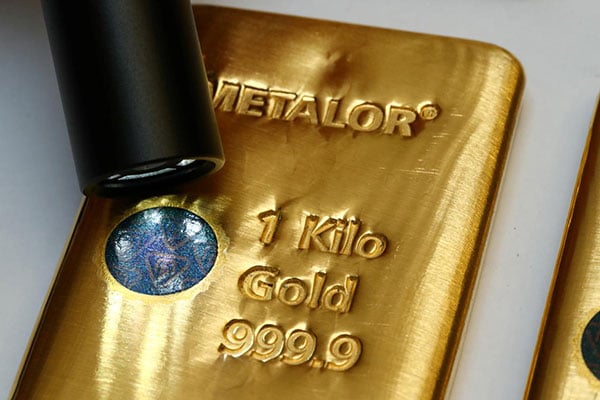
Many professionally manufactured gold bars from recognized refineries carry unique serial numbers engraved directly onto the bar. These serial numbers help establish traceability and allow buyers to verify the authenticity of the product.
Before purchasing a serialized gold bar, compare the serial number with the accompanying assay certificate and any documentation issued by the refinery. The weight, purity, refinery name, and serial number should all match exactly. If possible, verify the serial number directly with the issuing refinery or through its official verification service where available.
Keep in mind that serial numbers alone do not guarantee authenticity. Counterfeit bars can also be engraved with fake or duplicated serial numbers. Buyers should therefore confirm that the physical characteristics of the bar, its documentation, and independent test results are all consistent. Combining serial number verification with XRF analysis, an independent assay, and proper documentation provides a much higher level of confidence when purchasing investment-grade gold.
Safe Ways to Pay for Gold
The payment method you choose can determine whether your gold transaction is secure or becomes a costly mistake. Fraudsters often pressure buyers into sending money through untraceable or irreversible payment methods before any gold has been verified. Reputable gold sellers, on the other hand, generally accept payment methods that provide documentation, transparency, and legal protection for both parties.
Before transferring any funds, ensure you have verified the seller’s identity, reviewed the transaction documents, and confirmed the gold’s existence through an independent assay or inspection whenever possible. For high-value international transactions, payments should only be made through established financial institutions using methods that leave a clear audit trail.
Escrow Services
Escrow is one of the safest payment methods for buying gold, particularly when dealing with a supplier for the first time. An independent escrow provider temporarily holds the buyer’s funds while both parties complete their obligations under the sales agreement.
Typically, the buyer deposits the agreed purchase amount into the escrow account rather than paying the seller directly. The seller then ships or presents the gold for inspection and verification. Once the buyer confirms that the gold matches the agreed specifications, the escrow provider releases the funds to the seller.
Escrow reduces the risk of advance-payment fraud because neither party has complete control over both the money and the gold at the same time. Buyers should only use reputable, licensed escrow providers and independently verify the escrow company’s identity before sending any funds.
Refinery Settlement
Refinery settlement is widely used for commercial gold transactions involving doré bars, gold dust, or large investment-grade shipments. Instead of paying immediately, the buyer and seller agree to have the gold delivered directly to an independent refinery or accredited assaying facility.
The refinery performs professional testing to determine the exact weight and purity of the shipment. Once the results are confirmed and accepted by both parties, payment is made according to the agreed pricing formula based on the verified gold content.
This method significantly reduces disputes because an independent third party determines the final assay results. Refinery settlement is often preferred for high-value transactions where accurate purity verification is essential before payment is released.
Letter of Credit
A Letter of Credit (LC) is a secure payment instrument commonly used in international trade. It is issued by the buyer’s bank and guarantees payment to the seller only after the seller submits the documents required under the terms of the Letter of Credit.
These documents may include the commercial invoice, export permit, certificate of origin, packing list, air waybill, insurance certificate, and any other documents specified in the sales contract. Banks review the submitted documents before releasing payment.
Letters of Credit provide protection for both buyers and sellers because payment depends on compliance with agreed documentary conditions rather than verbal promises. While an LC does not guarantee the quality of the gold itself, it helps reduce payment risk and provides a structured framework for international transactions.
Bank Wire After Verification
A bank wire transfer can be a safe payment method when used only after appropriate verification has been completed. Buyers should first confirm the seller’s company registration, export authorization where applicable, business address, shipment documents, and the results of any agreed independent inspection or assay.
Before sending the transfer, verify that the receiving bank account belongs to the registered business named in the sales contract and commercial invoice. The beneficiary name, bank details, and company information should match across all transaction documents.
International bank transfers provide an official payment record and are widely accepted in legitimate gold trading. However, once funds are transferred, recovering them can be difficult if fraud has occurred. For this reason, bank wires should only be sent after completing all due diligence.
Payments to Avoid
Certain payment methods offer little or no protection for buyers and are frequently requested by fraudsters. If a seller insists on these methods while refusing safer alternatives, it should be treated as a significant warning sign.
Crypto-only payments are particularly risky when the seller refuses traditional banking options. Cryptocurrency transactions are generally irreversible, and once funds are transferred, recovering them is extremely difficult. While some legitimate businesses may accept cryptocurrency alongside other payment methods, insisting on crypto as the only option should raise concerns.
Western Union or similar money transfer services should generally be avoided for commercial gold purchases. These services are designed primarily for personal remittances rather than high-value international trade and usually provide limited protection if fraud occurs.
Payments to personal bank accounts instead of a registered company account are another major red flag. Legitimate gold exporters typically receive payments through business accounts that match the legal name shown on contracts, invoices, and company registration documents. A mismatch between the company name and the beneficiary account should be investigated before any payment is made.
Cash payments, especially for large international transactions, also carry significant risks. Cash provides little documentary evidence, can create compliance and reporting issues, and offers virtually no recourse if a dispute arises. For investment-grade gold purchases, payments should be made through traceable financial channels that create a clear record of the transaction.
Whenever possible, choose payment methods that involve banks, licensed escrow providers, or independent refineries. These options provide greater transparency, stronger legal protection, and a documented trail that helps safeguard both buyers and sellers throughout the transaction.
Step-by-Step Process to Buy Gold Safely
Buying gold safely requires more than finding a supplier with attractive prices. Every stage of the transaction—from verifying the seller to receiving the shipment—should be completed carefully to reduce the risk of fraud, shipment delays, or legal issues. Following the process below helps ensure that your purchase complies with international trade requirements and that you receive the gold you paid for.
1. Verify the Supplier
Start by researching the supplier before discussing prices or making any commitments. Confirm that the business has a professional website, a physical office, verifiable contact information, and a history of legitimate gold trading. Ask for references from previous international buyers and check independent reviews where available. Be cautious of sellers who communicate only through messaging apps or refuse video meetings.
2. Verify Licenses
Request copies of the supplier’s relevant business and precious metals licenses. Depending on the country, this may include mining, trading, refining, or export authorizations issued by the appropriate government authorities. Verify that the licenses are current and applicable to the type of transaction being offered.
3. Verify the Company
Confirm that the company is legally registered in its country of operation. Compare the registered business name with the name shown on contracts, invoices, bank accounts, and licensing documents. Verify the names of the company directors and ensure the business address can be independently confirmed. Any inconsistencies should be resolved before proceeding.
4. Review All Transaction Documents
Carefully examine the documents provided by the seller before agreeing to purchase. These should typically include the commercial invoice, certificate of origin, assay certificate, export permit, packing list, insurance documentation, and any available shipping information. Ensure the weight, purity, quantity, company details, and shipment information are consistent across every document.
5. Arrange an Independent Assay
Whenever possible, have the gold tested by an independent laboratory, accredited refinery, or qualified assayer before making final payment. Professional testing methods such as XRF analysis or fire assay can verify the gold’s purity and help detect counterfeit products. Independent verification is especially important for large commercial purchases.
6. Sign a Written Sales Contract
Never rely solely on verbal agreements or informal messages. A written contract should clearly define the gold specifications, purchase price, payment terms, delivery conditions, shipping responsibilities, inspection procedures, dispute resolution process, and governing law. Both parties should review and sign the agreement before funds are transferred.
7. Use a Secure Payment Method
Choose a payment method that protects both the buyer and seller. Escrow services, refinery settlement arrangements, Letters of Credit, or bank wire transfers after successful verification provide significantly greater security than irreversible or untraceable payment methods. Never send money before completing your due diligence.
8. Confirm Export Clearance
Before the shipment leaves the exporting country, verify that all required export approvals and customs procedures have been completed. The exporter should provide evidence that the shipment has been legally authorized for export and complies with the country’s regulations.
9. Monitor the Shipment
Once the gold has been dispatched, obtain the Air Waybill (AWB) or other official shipping documents. Track the shipment directly through the airline or logistics provider rather than relying solely on updates from the seller. Ensure the shipment is fully insured throughout transit whenever possible.
10. Complete Customs Clearance
When the shipment arrives in the destination country, customs authorities may require import declarations, supporting documents, and payment of any applicable duties or taxes. Work with a licensed customs broker if necessary to ensure the shipment complies with local import requirements and is released without unnecessary delays.
11. Receive and Inspect the Gold
Upon delivery, inspect the shipment immediately before accepting it as complete. Verify that the weight, purity, serial numbers (if applicable), packaging, and accompanying documentation match the purchase agreement. For high-value transactions, consider conducting a final independent verification before concluding the transaction and retaining all records for future reference.
Quick Summary
- Verify the supplier.
- Verify licenses.
- Verify the company.
- Review all documents.
- Obtain an independent assay.
- Sign a written contract.
- Use a secure payment method.
- Confirm export clearance.
- Track the shipment.
- Complete customs clearance.
- Receive and inspect the gold.
Red Flags That Should Make You Walk Away
Not every gold seller is legitimate. While many reputable companies operate across Africa, fraudsters often use the same tactics to convince buyers to send money before any gold exists or before proper verification can take place. Recognizing these warning signs early can save you from significant financial loss. If a seller displays one or more of the red flags below, stop the transaction until you can independently verify every claim. In many cases, the safest decision is to walk away and find another supplier.
Seller Refuses Independent Testing
A trustworthy gold seller should have no objection to independent verification of the gold’s purity and authenticity. If a supplier refuses XRF analysis, fire assay, refinery testing, or inspection by an agreed third party, you should treat this as a major warning sign.
Scammers often claim that testing is unnecessary because they already have an assay certificate. However, genuine businesses understand that independent verification protects both parties. If the seller insists on payment before any independent testing can be completed, reconsider the transaction.
No Physical Office
Legitimate gold trading companies usually operate from a registered business location that buyers can verify. The office should have a physical address, company signage where appropriate, and staff who can be contacted during business hours.
If the seller cannot provide a verifiable office address, refuses in-person visits or virtual office tours, or only claims to operate remotely without supporting evidence, proceed with extreme caution. Many fraudulent operations exist only online and disappear once payment has been received.
Only WhatsApp Communication
WhatsApp is widely used for business communication, but it should not be the only way a company conducts transactions. Professional gold dealers normally communicate through multiple official channels, including company email addresses, telephone numbers, business websites, and signed contracts.
Be cautious if the seller refuses email communication, avoids video calls, frequently changes phone numbers, or insists that all discussions remain exclusively on messaging apps. Professional businesses maintain clear and traceable communication throughout the transaction.
Too Good to Be True Pricing
One of the oldest gold scams involves offering prices far below the global market value. Fraudsters often advertise gold at unrealistic discounts to create urgency and attract buyers looking for extraordinary bargains.
Gold prices generally follow international spot market prices, with legitimate sellers adding refining, logistics, insurance, taxes, and operating costs where applicable. If a seller promises prices dramatically below the prevailing market without a credible explanation, the offer should be treated with skepticism. Extremely low prices are often designed to encourage buyers to send deposits before discovering the fraud.
Constant Requests for New Fees
Advance-fee fraud often begins with a reasonable-looking quotation but is followed by repeated demands for additional payments. After the buyer sends one fee, the seller claims another payment is required for export permits, customs clearance, taxes, insurance, anti-money laundering certificates, airport handling, security clearance, or other unexpected charges.
These requests frequently continue until the buyer refuses to pay or realizes the scam. Legitimate costs should be clearly disclosed in the written agreement before payment is made. Unexpected fees appearing throughout the transaction should be carefully verified before any additional money is transferred.
No Written Contract
A professional gold transaction should always be supported by a written sales agreement. The contract should specify the quantity, purity, price, payment terms, delivery conditions, responsibilities of each party, dispute resolution procedures, and governing law.
If a seller refuses to provide a contract, insists that verbal promises are sufficient, or pressures you to transfer funds based only on chat messages, this is a serious warning sign. Without a written agreement, enforcing your rights or resolving disputes becomes significantly more difficult if problems arise later.
Remember: A legitimate gold supplier should welcome due diligence, provide complete documentation, communicate professionally, and allow reasonable verification before payment. If multiple red flags appear during a transaction, the safest course of action is to stop the process and seek another verified supplier.
How Licensed Gold Exporters Protect Buyers
Licensed gold exporters are generally expected to follow legal, commercial, and documentation requirements established by the countries in which they operate. While procedures vary between jurisdictions, professional exporters typically use structured processes that improve transparency, support regulatory compliance, and reduce the risk of disputes during international transactions.
These practices do not guarantee that every transaction will be successful, but they provide buyers with opportunities to verify the seller, the gold, and the shipment before significant funds are transferred. When comparing suppliers, buyers should look for exporters that are willing to document each stage of the transaction and cooperate with reasonable due diligence requests.
Identity Verification
Professional gold exporters usually verify the identity of the parties involved before completing a transaction. This process helps comply with anti-money laundering (AML) and know-your-customer (KYC) requirements that may apply under local laws and financial regulations.
Identity verification may include confirming government-issued identification, company registration documents, authorized company representatives, and business addresses. For corporate buyers, exporters may also request company incorporation documents and proof of authority for the person signing contracts.
Buyers should expect similar transparency from the exporter. A legitimate business should be willing to provide its registered company details, business address, and other information necessary for reasonable due diligence.
Independent Assays
Professional exporters commonly support independent verification of the gold before final settlement, particularly for high-value transactions. This may involve testing by an accredited refinery, an independent laboratory, or another mutually agreed third-party assayer.
Independent assays provide an objective assessment of the gold’s weight and purity, helping both parties confirm that the shipment matches the agreed specifications. The results can reduce disputes and provide greater confidence before payment is finalized.
When evaluating a supplier, buyers should ask whether independent testing can be arranged and how assay results will be incorporated into the transaction process.
Transparent Documentation
A legitimate export transaction should be supported by clear, consistent, and complete documentation. Professional exporters generally provide documents appropriate to the shipment, such as the commercial invoice, assay certificate, certificate of origin, export permit, packing list, shipping documents, and insurance records where applicable.
These documents should contain consistent information regarding the seller, buyer, gold description, purity, weight, shipment details, and destination. Buyers should carefully review every document and confirm that names, quantities, and dates match throughout the transaction.
Providing documentation promptly and answering reasonable questions about the paperwork are indicators of a transparent business process.
Secure Shipping
Professional exporters generally work with established logistics providers and follow procedures designed to protect high-value shipments during transportation. Depending on the transaction, shipments may be packaged using secure methods, insured against specified risks, and transported through recognized international freight carriers or specialized secure logistics companies.
Buyers should receive shipping documentation, including an Air Waybill (AWB) or equivalent transport document where applicable, allowing them to monitor the shipment through the carrier’s official tracking system. Insurance coverage, shipment routing, and delivery responsibilities should also be clearly identified before dispatch.
Using secure shipping procedures helps reduce transportation risks and improves visibility throughout the delivery process.
Contract-Based Transactions
Professional gold exporters normally conduct transactions under a written sales agreement rather than relying on verbal promises or informal messages. A contract establishes the rights and responsibilities of both parties and helps reduce misunderstandings throughout the transaction.
A comprehensive agreement typically specifies the gold’s weight and purity, purchase price, payment terms, inspection procedures, delivery conditions, shipping responsibilities, required documentation, dispute resolution process, and governing law.
Before signing, buyers should review the contract carefully and ensure it accurately reflects the agreed commercial terms. Where appropriate, obtaining independent legal or commercial advice can provide additional assurance, particularly for large international transactions.
By following documented procedures and maintaining transparent communication, licensed exporters can help create a more structured and verifiable buying process, allowing buyers to make informed decisions based on evidence rather than promises alone.
Frequently Asked Questions About Gold Scams and Buying Gold in Uganda
How can you avoid gold scams?
The best way to avoid gold scams is to verify every part of the transaction before sending money. Confirm that the seller is a legally registered business, check any relevant mining or export authorizations, request complete transaction documents, and insist on an independent assay before final payment. Use secure payment methods such as escrow, refinery settlement, a Letter of Credit, or a bank wire after verification. Avoid sellers who refuse inspections, demand upfront fees, communicate only through WhatsApp, or advertise prices that are unrealistically below the global gold price.
Which places in Uganda have gold?
Uganda has gold occurrences and mining activity in several parts of the country. Some of the better-known gold-producing and gold-trading areas include:
- Karamoja Region (Moroto, Nakapiripirit, Amudat and surrounding districts)
- Busia District
- Buhweju District
- Mubende District
- Kassanda District
- Namayingo District
- Ibanda District
- Kitumbi and other parts of Central Uganda
- Kampala, which serves as Uganda’s primary commercial gold trading and export hub rather than a mining area.
Mining activity varies over time, and commercial exports are generally handled through licensed exporters operating from Kampala and other registered business locations.
How can you avoid being scammed when buying gold?
Protect yourself by conducting thorough due diligence before committing to any purchase. Verify the seller’s identity, company registration, and business address. Review all supporting documents, including the commercial invoice, certificate of origin, assay certificate, and export documentation. Have the gold independently tested whenever possible, use a written sales contract, and pay only through secure, traceable financial channels. If a seller pressures you to act quickly or asks for repeated unexpected payments, it is usually safer to stop the transaction.
How much does it cost to obtain a licenses in Uganda to buy or export gold?
There is no single standard licenses fee because the cost depends on the type of licenses required, the applicant’s business activities, and the regulations in force at the time of application. Businesses involved in buying, dealing, refining, or exporting gold may require different approvals issued by the relevant Ugandan authorities.
Applicants should confirm the current requirements, official fees, and application procedures directly with the responsible government agencies before starting the licensing process, as fees and regulations can change.
How much is 1 gram of gold worth in Ugandan Shillings (UGX)?
The value of 1 gram of gold changes continuously because it follows international gold prices and the USD/UGX exchange rate. To estimate the current value:
Gold Price per Gram (UGX) = International Gold Price per Gram (USD) × Current USD/UGX Exchange Rate
For example, if gold is trading at USD 140 per gram and the exchange rate is UGX 3,800 per USD, then:
USD 140 × 3,800 = approximately UGX 532,000 per gram
Always check the latest spot price and exchange rate, as gold prices fluctuate throughout the trading day.
Which African country is the largest exporter of gold?
Ghana is widely recognized as Africa’s leading gold producer and one of the continent’s largest gold exporters. Gold is Ghana’s largest export commodity and contributes significantly to its economy.
Other major African gold-exporting countries include:
- Ghana
- South Africa
- Mali
- Burkina Faso
- Tanzania
- Democratic Republic of the Congo
- Sudan
- Guinea
The ranking can vary depending on whether exports are measured by value or volume and on the reporting period.
Protect Yourself From Gold Scams With Buy Gold in Africa Limited
Buying gold from Uganda or anywhere in Africa doesn’t have to be risky. The key is working with a licensed supplier that welcomes independent verification before payment. At Buy Gold in Africa Limited, we encourage every buyer to verify our company registration, export documentation, assay certificates, and gold purity through independent laboratories and government authorities before completing a transaction.
Our process is designed to promote transparency at every stage. We provide the necessary export documents, arrange independent gold assays, support buyer inspections, and coordinate secure international shipping through reputable logistics providers. We also assist clients with understanding the documentation required for customs clearance in their destination country.
If you’re planning to import gold from Uganda or other African countries, our team can guide you through the verification process and explain the documents you’ll need before making any payment.
Contact Buy Gold in Africa Limited today to discuss your gold purchase, request verification documents, or learn more about our sourcing and export process. We’re committed to helping buyers make informed decisions through transparency, proper documentation, and compliance with applicable export requirements.