5 Step Checklist to Verify Real Gold Bars in Kenya (Guide)
Verifying genuine gold bars in Kenya has become more important than ever as counterfeit gold scams continue to target buyers in Nairobi and across the country. Fraudsters often use fake assay certificates, forged export permits, gold-plated metals, and unrealistic prices to deceive local investors and overseas buyers. International traders and members of the Kenyan diaspora are particularly vulnerable because many transactions begin online before they ever meet a supplier in person.
Whether you’re purchasing investment-grade bullion, sourcing mine-direct gold, or importing gold bars for your business, carrying out proper due diligence can help you avoid costly mistakes. This guide is designed for Kenyan investors, diaspora buyers, international traders, and first-time gold purchasers who want to verify that the gold they are buying is authentic and legally sourced.
Below, you’ll find a practical 5-step checklist covering supplier verification, government licensing, independent gold testing, documentation review, and secure payment methods. By following these essential checks before transferring any funds, you can significantly reduce the risk of fraud and purchase gold bars with greater confidence.
Why Verifying Gold Bars in Kenya Matters
Kenya has become an important gold trading hub in East Africa, attracting local investors, international traders, and buyers from the Kenyan diaspora. While many legitimate dealers operate within the country’s legal framework, the market has also gained a reputation for sophisticated gold scams. Fraudsters often exploit buyers who are unfamiliar with the verification process by presenting convincing paperwork, arranging fake meetings, and demanding advance payments before any genuine gold is delivered. Taking time to verify the seller, the gold itself, and every supporting document can help protect your investment and reduce the risk of financial loss.
How Common Fake Gold Scams Are in Kenya
Fake gold scams are one of the biggest risks facing anyone looking to buy gold bars in Kenya. Criminal networks frequently advertise discounted gold online, claiming to represent licensed mining companies or government-approved exporters. Some even rent temporary offices in Nairobi to appear legitimate during meetings with prospective buyers. In many cases, the gold either does not exist or turns out to be gold-plated metal, low-purity alloys, or completely different materials. Because many transactions involve international buyers who cannot easily inspect the products in person, scammers often rely on forged documentation and high-pressure sales tactics to convince victims to send money before proper verification has taken place.
Typical Tactics Scammers Use
Gold fraud has evolved well beyond simple fake advertisements. Many scammers produce forged export permits, counterfeit assay certificates, fake certificates of origin, and fabricated shipping documents that appear authentic at first glance. Others demand unexpected “customs clearance,” “export tax,” “government approval,” or “security release” fees after the buyer has already made an initial payment. Some organize staged gold purity demonstrations using substituted samples or manipulated testing equipment to create the illusion that the gold is genuine. Common warning signs also include prices significantly below the international spot market, requests for cryptocurrency payments, refusal to use independent assay laboratories, and pressure to complete the transaction immediately.
Who Gets Targeted Most
Although anyone can become a victim of gold fraud, some buyers face a much higher risk than others. Foreign investors, international gold traders, members of the Kenyan diaspora, and first-time buyers are the most common targets because they may have limited knowledge of Kenya’s gold trading regulations or may be unable to inspect the gold personally. Businesses seeking bulk purchases are also frequently approached with offers of mine-direct gold at unusually low prices. Before committing to any transaction, buyers should independently verify the supplier’s business registration, request official licensing and export documentation, arrange an independent assay of the gold, and avoid sending advance payments until all legal and quality checks have been completed. These precautions greatly reduce the likelihood of falling victim to sophisticated gold scams.
Top 5 Checklist for Verifying Genuine Gold Bars in Kenya
Checklist #1 – Confirm the Seller Is a Licensed Gold Dealer
The first and most important step when buying gold bars in Kenya is confirming that the seller is legally authorized to trade in precious minerals. A legitimate gold dealer should be able to demonstrate that they operate under Kenya’s mining laws and provide documentation supporting the lawful source and sale of their gold. Purchasing from an unlicensed individual or company significantly increases the risk of counterfeit gold, stolen minerals, forged export documents, and financial fraud. Before discussing prices or making any payment, verify that the business exists, has a physical office, and holds the appropriate licences issued by the relevant Kenyan authorities.
Gold Dealer and Mineral Licenses Required Under Kenya’s Mining Act
Gold trading in Kenya is regulated under the Mining Act, 2016 and related regulations administered by the State Department for Mining within the Ministry responsible for mining. Businesses involved in buying, selling, processing, or exporting gold are generally required to hold the appropriate mineral dealer, trading, or export authorizations depending on the nature of their operations. A legitimate dealer should also provide supporting documents such as a company registration certificate, tax registration details, and records showing the lawful origin of the gold. If the gold is being exported, the seller should also possess the necessary export documentation and comply with customs requirements before the shipment leaves Kenya.
How to Check a Dealer’s License With the Ministry of Mining
Never rely solely on copies of licenses sent through email or messaging apps. Ask the dealer to provide clear copies of their license together with the registered company name, license number, business address, and contact information. Compare these details across invoices, contracts, and official company records to ensure they are consistent. Where possible, verify the license directly with the State Department for Mining or the relevant government office responsible for issuing mineral trading licenses. You should also confirm that the company is legally registered, operates from a verifiable physical location, and is willing to allow independent inspections or meetings at its offices. Reputable dealers are generally transparent about their licensing status and have no objection to buyers carrying out independent verification before proceeding with a transaction.
Red Flags: Unlicensed “Middlemen” and Off-Record Deals
Many gold scams begin with individuals claiming to be brokers, agents, or intermediaries who say they can supply gold directly from mines without paperwork or government involvement. These “middlemen” often refuse to disclose the identity of the actual supplier, cannot produce valid license, or ask buyers to conduct transactions outside normal business procedures. Other warning signs include requests for cash payments, cryptocurrency transfers, personal bank accounts instead of company accounts, unusually low prices far below the international spot market, pressure to complete the purchase quickly, or demands for advance “government,” “security,” or “customs clearance” fees. If a seller discourages independent verification, refuses an independent assay, or insists that documents will only be provided after payment, treat the transaction as high risk and do not transfer funds until every legal and commercial requirement has been verified.
Checklist #2 – Inspect the Bar’s Hallmarks, Stamps and Serial Number
After confirming that the seller is properly licensed, the next step is to carefully inspect the physical gold bar. Genuine investment-grade gold bars contain identifying marks that help verify their authenticity, purity, and origin. These markings should be clear, professionally engraved, and consistent with the accompanying documentation. Missing, poorly stamped, or altered markings may indicate counterfeit, tampered, or lower-purity gold. Never rely solely on photographs or videos provided by the seller—whenever possible, inspect the gold in person or have it examined by an independent professional before completing the purchase.
What a Genuine Gold Bar Stamp Should Show (Refiner, Weight, Purity, and Serial Number)
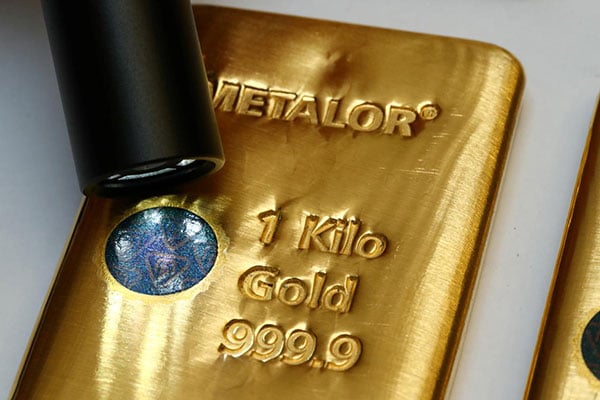
A genuine gold bar should display several essential markings that identify both the product and its manufacturer. Most investment-grade bars include the refiner’s name or logo, the weight (such as 1 oz, 100 g, or 1 kg), the gold purity (for example, 999.9 or 99.99% fine gold), and a unique serial number assigned by the refinery. Some refiners also include a security mark, QR code, or tamper-evident packaging for additional protection against counterfeiting. The engraving should be clean, evenly spaced, and free from spelling errors, blurred impressions, or signs of alteration. If any of these details are missing or inconsistent, request further verification before proceeding with the transaction.
LBMA-Accredited Refiners and Why They Matter
Gold bars produced by LBMA (London Bullion Market Association) Good Delivery refiners are widely recognized and accepted in international bullion markets. LBMA-accredited refiners must meet strict standards for refining quality, production controls, and responsible sourcing, making their products easier to verify and trade globally. Well-known LBMA refiners include PAMP Suisse, Metalor, Valcambi, Heraeus, Argor-Heraeus, Perth Mint, Rand Refinery, and the Royal Canadian Mint, among others. Purchasing gold bars from recognized refiners generally provides greater confidence in the bar’s stated purity and improves its resale value because banks, bullion dealers, and institutional buyers are more likely to accept these products without additional concerns.
Matching the Serial Number to the Assay Certificate
Every serialized gold bar should have documentation that matches its physical markings. The serial number engraved on the bar should exactly match the number shown on the accompanying assay certificate or refinery-issued certificate of authenticity. You should also confirm that the certificate lists the same refiner, weight, purity, and bar specifications as those stamped on the gold itself. Carefully inspect the certificate for signs of forgery, including inconsistent fonts, poor print quality, missing security features, or altered information. For higher-value purchases, request that the serial number be verified directly with the refiner where possible, and arrange an independent assay to confirm the bar’s purity. Matching documentation and serial numbers are important safeguards, but they should always be supported by independent testing before payment is released.
Checklist #3 – Verify Weight, Dimensions and Density
A genuine gold bar should match the manufacturer’s published specifications for weight, dimensions, and density. While counterfeit bars may appear convincing, many fail one or more of these basic physical checks. Professional buyers never rely on appearance alone—they use precision measuring tools to confirm that the bar meets the expected standards before arranging laboratory testing or payment. Verifying these characteristics can quickly identify many counterfeit or altered bars and is an essential step before conducting an independent assay.
Using a Precision Scale and Calipers
Start by weighing the gold bar with a calibrated digital precision scale capable of measuring to at least 0.01 grams for smaller bars or higher accuracy for larger bullion. The recorded weight should match the value stamped on the bar within the manufacturer’s permitted tolerance. Next, use digital calipers to measure the bar’s length, width, and thickness. Compare these measurements with the official specifications published by the refinery or manufacturer. Even small differences in size can indicate that the bar contains a different metal or has been altered. If the measurements or weight do not match the expected specifications, stop the transaction and request further verification before proceeding.
Standard Gold Bar Sizes and Their Correct Measurements
Investment-grade gold bars are manufactured according to standard weights and dimensions established by individual refiners. Common retail sizes include 1 gram, 5 grams, 10 grams, 20 grams, 50 grams, 100 grams, 250 grams, 500 grams, 1 kilogram, and 1 troy ounce (31.1035 grams). Although exact dimensions vary slightly between manufacturers, each reputable refiner publishes official specifications for every product they produce. Buyers should compare the measured dimensions of the bar with the refiner’s published data rather than relying on estimates or photographs supplied by the seller. Bars that are unusually thick, thin, or oversized for their stated weight should be treated with caution and examined further before purchase.
Why Tungsten-Filled Bars Can Pass a Weight Test
One of the most sophisticated forms of gold fraud involves tungsten-filled gold bars. Tungsten has a density that is very close to that of gold, allowing counterfeit bars to closely match the correct weight while containing far less gold than claimed. Because of this similarity, a simple weight test alone cannot guarantee authenticity. Fraudsters may cover a tungsten core with a layer of real gold, making the bar appear genuine during a basic visual inspection. This is why experienced bullion buyers combine weight and dimensional checks with density calculations, X-ray fluorescence (XRF) analysis, ultrasonic testing, or fire assay performed by an independent laboratory. Using multiple verification methods greatly reduces the risk of purchasing a sophisticated counterfeit and provides much stronger evidence that the gold bar is genuine.
Checklist #4 – Run Professional Purity Tests
Even if a gold bar has the correct markings, weight, and dimensions, its purity should still be verified through professional testing before payment is released. Counterfeit bars can be manufactured to closely resemble genuine bullion, making visual inspection alone unreliable. Independent purity testing provides objective evidence of the gold’s composition and helps confirm that the bar matches the purity stated by the seller. For high-value transactions, professional buyers often use more than one testing method to reduce the risk of fraud and ensure the gold meets international bullion standards.
XRF (X-Ray Fluorescence) Testing
X-ray fluorescence (XRF) is one of the most common non-destructive methods used to analyze gold bars. An XRF analyzer uses X-rays to determine the elemental composition of the metal without cutting or damaging the bar. Within seconds, it can estimate the percentage of gold and detect the presence of other metals such as silver, copper, nickel, or zinc. XRF testing is fast, accurate, and widely used by bullion dealers, refineries, jewelers, and assay laboratories. However, because XRF primarily analyzes the surface or near-surface composition, it should be combined with other tests when verifying large or high-value gold bars.
Ultrasonic Testing for Hidden Cores
Ultrasonic testing is designed to detect hidden defects or foreign materials inside a gold bar without damaging it. High-frequency sound waves are transmitted through the bar, and changes in the reflected signals can reveal internal voids, cracks, or dense metals concealed beneath the surface. This method is particularly useful for identifying sophisticated counterfeits, including bars containing tungsten or other hidden cores that may pass basic weight and visual inspections. Professional bullion dealers and independent testing laboratories often use ultrasonic testing alongside XRF analysis to provide a more comprehensive assessment of authenticity.
Fire Assay: The Most Accurate Method
Fire assay is widely regarded as the industry’s reference method for determining gold purity. During this process, a small sample of the metal is removed and analyzed under controlled laboratory conditions to measure its precise gold content. Because the procedure is destructive, it is typically used for doré bars, raw gold, scrap gold, or situations where the highest level of analytical accuracy is required. Fire assay is commonly performed by accredited assay laboratories and refineries and remains the benchmark for resolving disputes over gold purity. For commercial transactions involving significant quantities of gold, many buyers request a fire assay before releasing the final payment.
Where to Get Gold Tested in Kenya (Independent Labs vs. Seller-Arranged Labs)
Whenever possible, buyers should choose an independent assay laboratory rather than relying on a laboratory selected by the seller. Independent testing reduces the risk of conflicts of interest and provides greater confidence in the results. Reputable laboratories follow established testing procedures and issue formal assay reports that can support commercial transactions and export documentation. While some sellers may offer to arrange testing themselves, buyers should ensure the laboratory is independent, qualified, and acceptable to both parties. If there is any disagreement about the results, both buyer and seller may agree to use a mutually selected laboratory for a second opinion before completing the transaction.
Home Tests (Magnet, Acid, Ping Test) and Their Limits
Simple home tests can help identify obvious counterfeit gold, but they should never be relied upon as proof of authenticity for investment-grade bullion. A magnet test may reveal ferromagnetic metals, but many counterfeit bars are made from non-magnetic materials and will pass this check. Acid testing can provide a rough indication of surface purity, yet it may damage the bar and cannot detect metals hidden beneath a gold coating. Likewise, the ping test, which evaluates the sound produced when the metal is struck, is useful only as a basic screening method and cannot confirm the composition of the entire bar. Because sophisticated counterfeit bars can pass these simple tests, serious buyers should always obtain an independent professional assay before transferring funds or accepting delivery.
Checklist #5 – Validate Paperwork and Export/Import Documents
The final step before purchasing gold bars in Kenya is verifying that every document supporting the transaction is authentic, complete, and consistent with the gold being sold. Even genuine gold can be detained, seized, or delayed if the required export or import paperwork is missing or inaccurate. Fraudsters frequently use forged licenses, fake assay certificates, fabricated export permits, and counterfeit government letters to persuade buyers that a transaction is legitimate. Always compare every document with the physical gold bar, verify the issuing authority where possible, and never release payment until all paperwork has been independently confirmed.
Assay Certificates: What a Real One Looks Like
An authentic assay certificate should clearly identify the gold bar being tested and contain information that matches the physical bullion. This normally includes the refiner’s name, unique serial number, weight, purity (such as 999.9 fine gold), date of testing, and the name of the laboratory or refinery that carried out the analysis. Many genuine certificates also include security features such as QR codes, holograms, watermarks, digital verification systems, or official signatures. The serial number and purity shown on the certificate must exactly match the markings engraved on the gold bar. If there are differences in weight, serial numbers, or refinery details, request clarification and independent verification before proceeding with the purchase.
Export Permits and KRA/Customs Documentation
If the gold bars are being exported from Kenya, the shipment should be supported by the appropriate export documentation required under Kenyan law. Depending on the transaction, buyers may expect documents such as an export permit issued by the relevant mining authority, a commercial invoice, packing list, certificate of origin where applicable, air waybill, insurance documents, and customs export declarations processed through the Kenya Revenue Authority (KRA). Once the shipment reaches the destination country, the importer must also comply with local customs, tax, and precious metals regulations. Buyers should ensure that all documents are consistent, issued to the correct parties, and correspond with the quantity, weight, and description of the gold being shipped.
How to Spot Forged Certificates and Fake Government Letters
Sophisticated scammers often produce documents that closely resemble genuine government records, making careful verification essential. Warning signs include poor print quality, spelling or grammatical errors, incorrect government logos, inconsistent fonts, missing reference numbers, altered dates, and signatures that cannot be verified. Some fraudsters also create fake email addresses or counterfeit websites that imitate government agencies to make forged documents appear legitimate. Before accepting any certificate, permit, or official letter, verify it directly with the issuing authority whenever possible rather than relying on copies supplied by the seller. If a seller refuses independent verification, pressures you to pay before documents can be checked, or claims that confidential government procedures prevent verification, treat the transaction as high risk and do not transfer funds until the authenticity of every document has been confirmed.
Warning Signs of a Gold Scam in Kenya
Gold scams in Kenya have become increasingly sophisticated, with fraudsters targeting both local and international buyers through online advertisements, social media, messaging apps, and referrals. Many scams appear convincing because they involve professional-looking websites, forged government documents, rented offices, and polished sales presentations. Regardless of how legitimate an offer seems, buyers should carefully evaluate every transaction before transferring money. Recognizing the most common warning signs can help you avoid financial losses and ensure you only deal with licensed, transparent, and verifiable gold suppliers.
Prices Far Below the Global Spot Price
One of the biggest warning signs is an offer that promises gold bars at prices substantially below the international spot market. While legitimate suppliers may charge different premiums depending on the quantity purchased, refinery costs, transport, insurance, and market conditions, genuine investment-grade gold is rarely sold at deep discounts. Scammers often advertise “mine-direct” or “government auction” gold at unrealistically low prices to attract buyers quickly. If a seller claims they can provide 24K gold far below prevailing market prices without a credible commercial explanation, treat the offer with extreme caution. Always compare the quoted price with the current international gold spot price and request a detailed written quotation showing all applicable fees and charges.
Pressure to Pay “Release,” “Clearance,” or “Insurance” Fees
Advance-fee fraud is one of the most common gold scams affecting buyers in Kenya. After agreeing on a purchase, scammers frequently invent unexpected charges such as release fees, customs clearance fees, security deposits, government taxes, export license fees, anti-money laundering certificates, or insurance payments that must supposedly be settled before the gold can be released. Once one payment is made, additional fees often follow, with new excuses for why the shipment remains delayed. Legitimate exporters should clearly explain the transaction structure, identify which costs are included in the contract, and provide verifiable supporting documentation. Buyers should never transfer unexpected funds simply because they are told the shipment will otherwise be confiscated or delayed.
Refusal to Allow Independent Testing
A trustworthy gold seller should have no objection to an independent assay or inspection carried out by a mutually agreed laboratory before the transaction is completed. Sellers who refuse independent testing, insist that only their preferred laboratory may examine the gold, or discourage buyers from hiring their own experts should be viewed as high risk. Other warning signs include refusing physical inspections, preventing buyers from checking serial numbers, declining to provide original documentation, or demanding full payment before any verification takes place. Professional bullion transactions are built on transparency, and reputable dealers understand that independent testing protects both the buyer and the seller. If a supplier refuses reasonable verification procedures, it is usually safer to walk away and find another dealer.
Safe Ways to Buy Gold Bars in Kenya
Buying gold bars in Kenya can be a secure and rewarding investment when you follow the right procedures and work with reputable professionals. Whether you are purchasing gold for wealth preservation, international trade, or long-term investment, your priority should always be minimizing risk rather than finding the lowest price. The safest transactions involve licensed dealers, transparent documentation, independent verification, and payment methods that protect both the buyer and the seller. By following established due diligence practices, you can significantly reduce the likelihood of fraud and complete your purchase with greater confidence.
Buying From Licensed Dealers and Banks
The safest place to buy gold bars in Kenya is from a licensed precious mineral dealer or another legally authorized business operating under Kenya’s mining laws. Before entering into any transaction, confirm that the company is properly registered, operates from a verifiable physical office, and can provide valid licences, invoices, and documentation showing the lawful source of the gold. Reputable dealers are generally willing to answer questions, arrange independent inspections, and provide complete records for the transaction. Where banks or other regulated financial institutions offer investment-grade precious metals, they may also provide an additional level of transparency and regulatory oversight. Regardless of the seller, buyers should independently verify all licenses and documentation before committing funds.
Using Escrow and Secure Payment Methods
For high-value gold purchases, secure payment arrangements are essential. Rather than transferring money directly to an unfamiliar seller, consider using an escrow service, a documentary letter of credit (LC), or another payment structure that protects both parties. These arrangements generally allow funds to be released only after agreed conditions—such as successful inspection, independent assay, or presentation of required shipping documents—have been satisfied. Payments should be made to the registered company account named in the sales contract rather than to personal bank accounts or cryptocurrency wallets. Buyers should also keep signed contracts, invoices, SWIFT payment records, and all correspondence as part of the transaction file.
Hiring a Lawyer or Independent Inspector
Professional assistance can provide valuable protection, particularly for first-time buyers or international investors purchasing large quantities of gold. A qualified lawyer can review the sales agreement, verify the legal obligations of both parties, and help ensure the transaction complies with Kenyan law and the import regulations of the destination country. An independent precious metals inspector or assay laboratory can confirm the gold’s weight, purity, serial numbers, and supporting documentation before payment is finalized. While these services involve additional costs, they are often far less expensive than the financial losses that can result from a fraudulent transaction. Independent legal and technical verification remains one of the most effective ways to reduce risk when buying gold bars in Kenya.
What to Do If You’ve Been Sold Fake Gold
Discovering that you have purchased counterfeit gold or fallen victim to a gold scam can be both financially and emotionally stressful. Acting quickly can improve the chances of recovering evidence, assisting investigators, and preventing further losses. Do not confront the suspected fraudsters alone or send additional money in the hope of recovering your investment. Instead, preserve all available evidence, report the matter to the appropriate authorities, and seek legal advice if significant amounts of money are involved.
Reporting to the DCI and Police
If you believe you have been sold fake gold in Kenya, report the matter immediately to the Directorate of Criminal Investigations (DCI) and your nearest National Police Service (NPS) station. Provide investigators with every document related to the transaction, including the sales agreement, invoices, receipts, bank transfer records, SWIFT confirmations, emails, WhatsApp messages, photographs, videos, shipping documents, assay certificates, and copies of any identification provided by the seller. If the transaction involved a registered company, include the company’s name, physical address, website, and contact details. The more complete your evidence, the easier it is for investigators to establish how the fraud occurred and identify those responsible.
Reporting to Your Embassy (for Foreign Buyers)
Foreign buyers who become victims of gold fraud should also contact their country’s embassy or high commission in Kenya as soon as possible. While diplomatic missions generally cannot recover lost money or intervene in private commercial disputes, they may provide information on local legal procedures, recommend qualified lawyers, assist with replacing lost travel documents if necessary, and help you communicate with local authorities. If the fraud involved cross-border payments or international shipments, you should also notify your bank, payment provider, insurer, or freight company without delay, as they may be able to assist with fraud investigations or payment tracing.
Preserving Evidence
The success of any investigation often depends on the quality of the evidence available. Keep the suspected gold bar in its original condition and avoid altering, polishing, or testing it further unless instructed by investigators or an independent laboratory. Save all contracts, invoices, emails, text messages, call logs, payment receipts, shipping records, and photographs in both digital and printed form. Take screenshots of websites, online advertisements, and social media profiles before they are deleted, and record the dates and times of all communications with the seller. If the transaction involved cryptocurrency or international bank transfers, preserve wallet addresses, transaction hashes, SWIFT references, and banking records. Well-organized evidence can support police investigations, insurance claims, civil proceedings, and any future legal action against those responsible for the fraud.
Frequently Asked Questions (FAQ)
How can I tell if a gold bar is real in Kenya?
There is no single test that can guarantee a gold bar is genuine. The safest approach is to combine several verification methods. Start by confirming the seller is licensed, inspect the bar’s hallmarks and serial number, verify its weight and dimensions against the refiner’s specifications, and arrange an independent purity test such as X-ray fluorescence (XRF), ultrasonic testing, or a fire assay. You should also confirm that the serial number matches the accompanying assay certificate and review all supporting documentation before making payment.
Is it legal to buy gold in Kenya?
Yes. Buying gold in Kenya is legal provided the transaction complies with applicable Kenyan laws and regulations. Buyers should purchase gold from businesses that are properly licensed to trade precious minerals and ensure the transaction is supported by legitimate documentation. If the gold is being exported, both the exporter and importer must also comply with the relevant customs, tax, and import requirements of their respective countries.
What is the price of a gold bar in Kenya today?
The price of a gold bar in Kenya changes continuously because it is linked to the international gold spot price and is influenced by factors such as purity, weight, refinery brand, market premiums, insurance, transport, taxes, and dealer margins. Rather than relying on fixed price lists, buyers should compare quotations with the current global spot price on the day of purchase and request a written quotation showing all applicable costs before entering into a transaction.
Can a magnet test detect fake gold?
A magnet test can identify some counterfeit metals that are magnetic, but it cannot confirm that a gold bar is genuine. Many sophisticated counterfeit bars are made from non-magnetic materials and will pass a magnet test despite containing little or no gold. For investment-grade bullion, a magnet test should only be used as a preliminary check and should always be followed by professional testing such as XRF analysis, ultrasonic inspection, or an independent fire assay.
Where can I test gold in Nairobi?
Gold can be tested by reputable independent assay laboratories, accredited precious metals testing facilities, and qualified bullion professionals in Nairobi. Whenever possible, choose a laboratory that is independent of the seller to avoid conflicts of interest. For high-value transactions, consider combining XRF analysis with ultrasonic testing or another recognized verification method, and request a written assay report that records the bar’s weight, purity, and identifying details.
Can foreigners buy and export gold from Kenya?
Yes. Foreign nationals and international businesses can purchase gold in Kenya, provided they comply with Kenyan laws and the legal requirements of their destination country. Buyers should ensure they are dealing with a licensed gold dealer, verify all export documentation, arrange an independent assay, and comply with customs, tax, and import regulations before shipping the gold internationally. Consulting a customs broker or legal adviser can help ensure the transaction meets all applicable regulatory requirements.
Conclusion – Your Gold Bar Verification Checklist at a Glance
Buying gold bars in Kenya can be a secure investment when you follow a structured verification process instead of relying on promises or attractive prices. Whether you are a local investor, a member of the Kenyan diaspora, or an international bullion buyer, taking the time to verify the seller, inspect the gold, confirm its purity, and validate all supporting documentation can significantly reduce the risk of fraud. No legitimate seller should object to independent verification, and every high-value transaction should be supported by transparent paperwork and secure payment arrangements.
Before you commit to any purchase, use the checklist below to make sure every essential verification step has been completed.
| Verification Step | What to Confirm |
| 1. Verify the Seller | Confirm the dealer is licensed, legally registered, and operates from a verifiable physical office. |
| 2. Inspect the Gold Bar | Check the refiner’s hallmark, weight, purity, serial number, and overall condition of the bar. |
| 3. Verify Weight & Dimensions | Use a precision scale and calipers to compare the bar with the refiner’s published specifications. |
| 4. Test the Gold’s Purity | Arrange an independent XRF analysis, ultrasonic inspection, or fire assay before releasing payment. |
| 5. Validate All Documents | Review the assay certificate, export permits, invoices, customs documents, and ensure every detail matches the gold bar. |
Following these five checks will help you identify warning signs early, avoid common gold scams, and make more informed purchasing decisions. While no verification method is foolproof on its own, combining legal, physical, and laboratory checks provides a much higher level of confidence when buying investment-grade bullion.
Need Help Verifying a Gold Supplier?
If you’re planning to purchase gold bars from Kenya or another African country, always verify the supplier before sending any funds. Request copies of the dealer’s licenses, confirm the authenticity of export documents, arrange an independent assay, and use secure payment methods such as escrow or a documentary letter of credit for high-value transactions.
Need assistance reviewing a supplier’s documents or understanding the gold export process? Contact our team for guidance on supplier verification, documentation checks, independent assay arrangements, and secure international gold shipping before making your purchase.