Tanzania Gold Regions |Geita, Mwanza, and Dodoma Explained
Tanzania is one of Africa’s leading gold-producing countries, with a mining industry that plays a vital role in the nation’s economy, exports, and foreign investment. However, not every region contributes to the gold sector in the same way. Some areas are rich in mineral deposits and host world-class gold mines, while others provide the regulatory oversight, investment framework, and administrative support that keep the industry operating efficiently.
Among Tanzania’s most important regions, Geita stands out as the country’s leading gold producer, home to one of Africa’s largest gold mines. Mwanza serves as a major mining and commercial hub, supporting gold production through exploration, processing, transportation, and mineral trade across the Lake Victoria Goldfields. Dodoma, by contrast, is not a major gold-mining region but is the administrative heart of Tanzania’s mining industry, housing key government institutions responsible for mining policy, licensing, regulation, and investment.
Understanding the different roles of these regions is essential for anyone involved in Tanzania’s gold sector. Whether you are an international gold buyer, mining investor, researcher, exporter, or simply interested in the country’s mineral resources, knowing where gold is mined, how it is regulated, and how it reaches international markets can help you make more informed decisions.
This guide compares Geita, Mwanza, and Dodoma, explaining what each region contributes to Tanzania’s gold industry. You’ll learn where most of the country’s gold is produced, how the mining supply chain operates, the role of government oversight, and why these regions are central to Tanzania’s position as one of Africa’s leading gold producers.
Quick Facts About Tanzania’s Gold Regions
Tanzania’s gold industry is concentrated around the Lake Victoria Goldfields, where Geita, Mwanza, and neighboring regions account for most of the country’s commercial gold production. While Geita is Tanzania’s leading gold-producing region and Mwanza serves as a major mining, logistics, and commercial center, Dodoma plays a different but equally important role by overseeing mining regulation, licensing, and national mineral policy. The table below compares these three regions and highlights how each contributes to Tanzania’s gold industry.
| Region | Primary Role | Major Gold Mines | Key Companies | Importance | Estimated Contribution |
| Geita | Large-scale gold mining and production | Geita Gold Mine (GGM), Nyamulilima, and numerous licensed small-scale mines | AngloGold Ashanti and licensed local mining operators | Tanzania’s largest gold-producing region and a major contributor to exports, employment, and mining investment | Highest regional gold production in Tanzania |
| Mwanza | Mining support, exploration, mineral trading, logistics, and processing | Bulyanhulu Gold Mine, Buzwagi Gold Mine (care and maintenance/redevelopment), nearby operations within the Lake Victoria Goldfields | Barrick Gold, local exploration and mining companies | Commercial gateway for the Lake Victoria Goldfields and a key hub for transport, services, and mineral trade | Supports a significant share of Tanzania’s gold industry through nearby major mines and mining services |
| Dodoma | Mining administration, regulation, licensing, and policy development | No major commercial gold mines | Ministry of Minerals, Mining Commission, Geological Survey of Tanzania (GST) | National center for mining governance, investment promotion, licensing, and regulatory oversight | Indirect contribution through regulation, licensing, and sector management rather than gold production |
Tanzania’s Role in Africa’s Gold Industry
Tanzania is one of Africa’s most important gold-producing countries and is widely recognized as the continent’s fourth-largest gold producer, behind Ghana, Mali, and South Africa. The country’s rich gold deposits, modern large-scale mines, and expanding artisanal mining sector make it a major supplier of gold to international markets. Most of Tanzania’s commercial gold production comes from the mineral-rich Lake Victoria Goldfields, where several world-class mining operations have been developed over the past three decades.
How Much Gold Does Tanzania Produce?
Gold is Tanzania’s most valuable mineral commodity and one of the country’s largest sources of foreign exchange. Depending on production levels and market conditions, Tanzania produces approximately 55–60 metric tonnes of gold each year, making it one of the leading gold-producing nations in Africa.
Large-scale mining companies account for the majority of production, while the artisanal and small-scale mining (ASM) sector has grown significantly and now contributes an estimated 20–30% of national gold output. Together, these sectors support hundreds of thousands of jobs and play a vital role in the country’s economy.
Gold exports generate more than 30% of Tanzania’s export earnings, making the industry one of the country’s most important economic pillars.
Major gold producers include:
| Mine | Operator | Region | Mining Method |
| Geita Gold Mine | AngloGold Ashanti | Geita | Open pit |
| North Mara Gold Mine | Barrick Gold | Mara | Open pit & underground |
| Bulyanhulu Gold Mine | Barrick Gold | Shinyanga | Underground |
| Buzwagi Gold Mine* | Barrick Gold | Shinyanga | Open pit (historic production) |
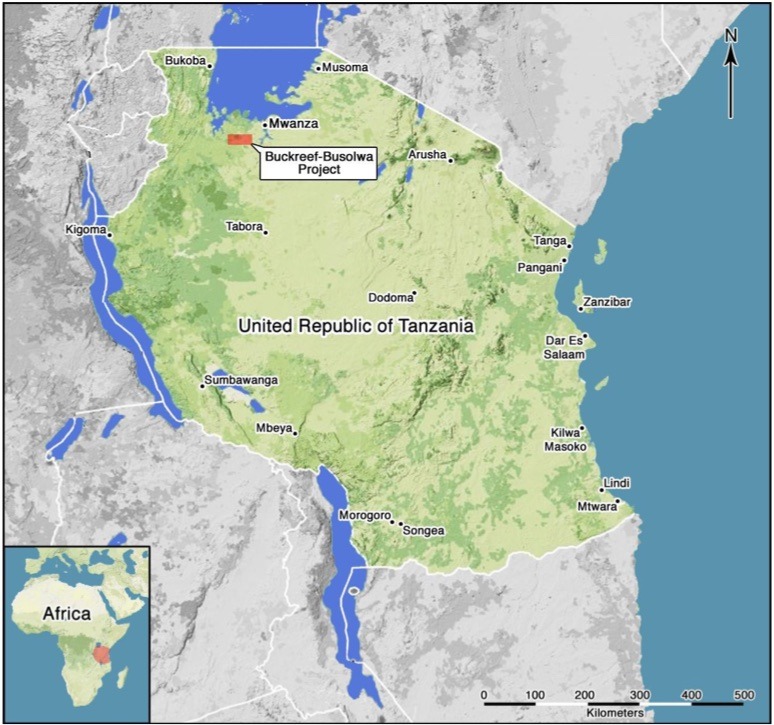
| Buckreef Gold Project | TRX Gold | Geita | Open pit |
*Buzwagi ceased large-scale mining operations and is now primarily undergoing closure and rehabilitation activities.
Where Are Tanzania’s Largest Gold Deposits?
The majority of Tanzania’s gold resources are concentrated within the Lake Victoria Goldfields (LVG), one of Africa’s richest gold-bearing geological provinces. The region surrounds the southern and western shores of Lake Victoria and contains numerous world-class deposits that have attracted international mining companies for decades.
Lake Victoria Goldfields
│
┌─────────────────────────────┼─────────────────────────────┐
│ │ │
▼ ▼ ▼
Musoma–Mara Belt Sukumaland Belt Nzega–Buckreef Belt
North Mara Mine Geita Mine Buckreef Project
High-grade deposits Bulyanhulu Mine Golden Pride Area
Historic Buzwagi Mine
Geological Setting of the Lake Victoria Goldfields
The Lake Victoria Goldfields are located within the ancient Tanzanian Craton, a stable block of Archean continental crust that is more than 2.5 billion years old. Gold mineralization occurs mainly within the Neoarchean greenstone belts of the Nyanzian Supergroup, where volcanic rocks, sedimentary formations, banded iron formations (BIFs), and granitic intrusions have been altered by extensive hydrothermal activity.
Over millions of years, tectonic deformation created major fault systems and regional shear zones that allowed gold-bearing fluids to circulate through the rocks. As these fluids cooled, gold was deposited in quartz veins and surrounding host rocks, forming the large deposits mined today.
Major Gold Belts in Tanzania
Sukumaland Greenstone Belt
The Sukumaland Greenstone Belt is Tanzania’s most productive gold district and hosts several of the country’s largest commercial mines.
Geita Gold Mine
Located in Geita Region, the Geita Gold Mine is one of Africa’s largest open-pit gold operations. Operated by AngloGold Ashanti, it has produced millions of ounces of gold and remains one of Tanzania’s highest-producing mines.
Bulyanhulu Gold Mine
Bulyanhulu is one of Tanzania’s premier underground mines. Operated by Barrick Gold, it is well known for its high-grade quartz vein deposits that also contain silver and copper.
Buzwagi Gold Mine
Although commercial mining has ended, the Buzwagi Mine played a significant role in Tanzania’s gold industry for many years and remains an important part of the country’s mining history.
Musoma–Mara Greenstone Belt
Located near the Kenyan border, the Musoma–Mara Belt contains several high-grade gold deposits.
North Mara Gold Mine
North Mara is one of Tanzania’s largest producing mines and combines both open-pit and underground mining methods. The operation extracts gold from several deposits, including Gokona and Nyabirama, and continues to be one of Barrick Gold’s key African assets.
Nzega and Buckreef Gold Belt
The southern portion of the Lake Victoria Goldfields includes the Nzega and Buckreef structural belts, which remain active exploration and mining districts.
Buckreef Gold Project
The Buckreef Gold Project, operated by TRX Gold, is one of Tanzania’s fastest-growing gold developments. Ongoing drilling continues to expand mineral resources, making it one of the country’s most closely watched exploration projects.
Golden Pride Mine
Golden Pride was one of Tanzania’s earliest modern gold mines. Although production has ceased, the surrounding geological structures continue to attract exploration companies searching for new deposits.
Geita Region — Tanzania’s Gold Mining Powerhouse
Located in northwestern Tanzania along the southern shores of Lake Victoria, the Geita Region is the country’s leading gold-producing area and one of the most important mining regions in East Africa. Situated within the mineral-rich Sukumaland Greenstone Belt of the Lake Victoria Goldfields, Geita hosts some of Tanzania’s largest and highest-producing gold mines. The region combines world-class industrial mining operations with a thriving artisanal and small-scale mining (ASM) sector, making it a cornerstone of Tanzania’s gold industry.
Gold mining has transformed Geita into a major economic hub, attracting billions of dollars in investment, creating thousands of jobs, and supporting businesses ranging from engineering and transport to equipment supply and mineral processing. The region also serves as an important center for gold trading, exploration, and mining services, with discoveries continuing to strengthen its long-term importance to Tanzania’s mining sector.
Geita Gold Mine (AngloGold Ashanti): Tanzania’s Largest Gold Mine
The Geita Gold Mine (GGM), owned and operated by AngloGold Ashanti, is Tanzania’s largest commercial gold mine and one of the company’s flagship operations worldwide. Since modern production resumed in 2000, the mine has become one of Africa’s most productive gold assets, producing hundreds of thousands of ounces of gold each year.
Mining takes place across several major deposits, including Nyankanga, Geita Hill, Star & Comet, Nyamulilwa, Kukuluma, and Matandani, where gold occurs within ancient Archean greenstone rocks, banded iron formations, and intrusive diorites. While the operation historically relied on large open pits, underground mining continues to expand to access deeper, higher-grade ore bodies and extend the mine’s operating life.
Ore extracted from the mine is processed through a modern Carbon-in-Leach (CIL) processing plant equipped with primary crushers, semi-autogenous grinding (SAG) mills, gravity recovery systems, and gold recovery circuits. The processing facility has a capacity of approximately 5.4 million tonnes of ore per year, enabling efficient recovery from multiple mining areas.
To improve operational efficiency and reduce greenhouse gas emissions, the mine is connected to Tanzania’s national electricity grid through dedicated transmission infrastructure, significantly reducing dependence on diesel-powered generation.
Gold Production, Employment, and Economic Impact in Geita
The Geita Gold Mine is one of Tanzania’s largest gold producers, typically producing approximately 450,000–500,000 troy ounces of gold annually (around 14–16 metric tonnes), although annual production varies depending on mining schedules and ore grades. The operation contains multi-million-ounce mineral reserves and remains one of AngloGold Ashanti’s most valuable producing assets.
Beyond gold production, the mine makes a substantial contribution to Tanzania’s economy through mineral royalties, corporate income taxes, employee income taxes, customs duties, and various local government levies. Gold produced in Geita also generates valuable foreign exchange earnings, helping strengthen the country’s export sector.
The operation directly and indirectly supports thousands of jobs, employing engineers, geologists, metallurgists, heavy equipment operators, environmental specialists, and contractors. Most employees are Tanzanian nationals, reflecting the industry’s growing investment in local skills development and workforce training.
The economic benefits extend well beyond the mine itself. Local businesses supply construction materials, fuel, transportation, maintenance services, engineering expertise, food, accommodation, and other essential services, creating a strong regional supply chain that supports communities throughout the Geita Region.
Other Gold Mining Operations and Exploration Activities in Geita
Although the Geita Gold Mine is the region’s largest operation, it is far from the only contributor to local gold production. The Geita Region hosts numerous exploration projects, licensed mining operations, and one of Tanzania’s largest concentrations of artisanal and small-scale gold miners.
The State Mining Corporation (STAMICO) works with government agencies and mining communities to support responsible mineral development, improve ore processing technologies, and strengthen formal participation in Tanzania’s mining industry. Government initiatives have also encouraged greater investment in local mineral processing and value addition.
Artisanal and small-scale mining (ASM) remains an essential part of Geita’s economy. Thousands of licensed miners operate in areas such as Lwamgasa, Katoro, Chato, and neighbouring mining communities, producing significant quantities of gold that are sold through licensed mineral markets and government-regulated gold buying centres. The ASM sector provides employment and income for many households while contributing meaningfully to regional gold production.
In addition, several junior exploration companies continue to explore the Geita Greenstone Belt using modern geological mapping, geophysical surveys, geochemical sampling, and diamond drilling. Ongoing exploration has identified new mineralized zones and continues to expand the region’s resource potential, reinforcing Geita’s position as Tanzania’s premier gold mining district and one of Africa’s most prospective areas for future gold discoveries.
Mwanza Region — Tanzania’s Historic Gold Trading and Logistics Hub
Located on the southern shores of Lake Victoria, the Mwanza Region has long played a central role in Tanzania’s gold industry. Although much of the country’s large-scale gold production now occurs in neighboring Geita Region, Mwanza remains one of the nation’s most important centers for gold trading, mining services, logistics, equipment supply, and mineral processing.
Its strategic location has made Mwanza the primary gateway connecting the Lake Victoria Goldfields with domestic refineries, international airports, ports, financial institutions, and export markets. Today, mining companies, exploration firms, contractors, assay laboratories, and government agencies continue to use Mwanza as a major operational base supporting gold production across northwestern Tanzania.
Mwanza’s Historical Connection to Geita
Before the creation of the Geita Region in 2012, many of Tanzania’s largest gold mining areas were administered from Mwanza.
Geita Was Originally Part of Mwanza Region
For decades, the Geita District formed part of the Mwanza Region. During the expansion of Tanzania’s modern gold industry in the late 1990s and early 2000s—including the reopening of the Geita Gold Mine—Mwanza served as the principal commercial and administrative center supporting mining operations throughout the area.
Businesses supplying mining equipment, engineering services, fuel, transport, accommodation, banking, and professional services were largely concentrated in Mwanza, making it the logistical backbone of the rapidly growing gold sector.
Formation of the Geita Region
In March 2012, the Government of Tanzania officially established the Geita Region, separating several districts from Mwanza while also incorporating areas from Shinyanga and Kagera Regions. The new administrative structure allowed government services and regional management to move closer to the country’s largest gold-producing district.
Although administrative responsibilities shifted to Geita, Mwanza continued to play a vital commercial role in supporting mining operations throughout the Lake Victoria Goldfields.
Mwanza’s Continuing Role Today
Today, Mwanza remains one of Tanzania’s leading mining service centres. The city hosts mining contractors, engineering firms, geological consultants, assay laboratories, equipment suppliers, logistics companies, financial institutions, and educational facilities that provide skilled workers for the mining industry.
Nyanzaga Gold Project: Mwanza’s Next Major Gold Mine
One of the region’s most significant mining developments is the Nyanzaga Gold Project, located in Sengerema District, Mwanza Region. Once operational, it is expected to become one of Tanzania’s largest new gold mines.
Nyanzaga Gold Project │ ┌────────────────┴────────────────┐ │ │ ▼ ▼ Open-Pit Mining Underground Mining Initial ore extraction Higher-grade deeper ore │ │ └────────────────┬────────────────┘ ▼ Carbon-in-Leach (CIL) Plant Gold recovery and processing
Ownership and Investment
The project is being developed by Perseus Mining Limited, together with the Government of Tanzania, which holds a 20% free-carried interest under Tanzania’s mining legislation. Nyanzaga represents one of the country’s largest recent mining investments and is expected to contribute significantly to national gold production once commercial operations begin.
Mineral Resources and Mine Life
Nyanzaga contains multi-million-ounce gold reserves and has been designed as a long-life mining operation with an estimated mine life of approximately 16 years. According to the latest development plans, annual production is expected to exceed 200,000 ounces of gold during much of the mine’s operating life.
Construction Progress
Construction is well advanced and includes development of open-pit infrastructure, underground mining access, waste facilities, and a modern Carbon-in-Leach (CIL) processing plant. Commercial gold production is currently targeted for 2027, subject to construction progress and regulatory approvals.
Artisanal and Small-Scale Gold Mining Around Mwanza
In addition to supporting large-scale mining, Mwanza is an important commercial centre for Tanzania’s artisanal and small-scale mining (ASM) sector. Thousands of miners working in districts such as Sengerema, Misungwi, Magu, and nearby areas transport gold to Mwanza for buying, assaying, refining, and export.
Artisanal Mining Sites │ ▼Licensed Processing Plants │ ▼Government Mineral Markets │ ▼Licensed Refiners and Exporters
Government Mineral Markets
Following Tanzania’s mining reforms, government-regulated mineral markets were established to encourage transparent gold trading and increase formal participation in the mining sector. Licensed dealers, brokers, and buyers purchase gold through these markets, where transactions are supervised by government authorities and supported by official weighing and assaying procedures.
Improved Gold Processing
Many artisanal miners have gradually adopted more efficient processing methods, including Carbon-in-Pulp (CIP) and Carbon-in-Leach (CIL) systems, alongside improved gravity recovery techniques. These technologies help increase gold recovery while reducing production losses compared with traditional methods.
Gold Refining and Export Services
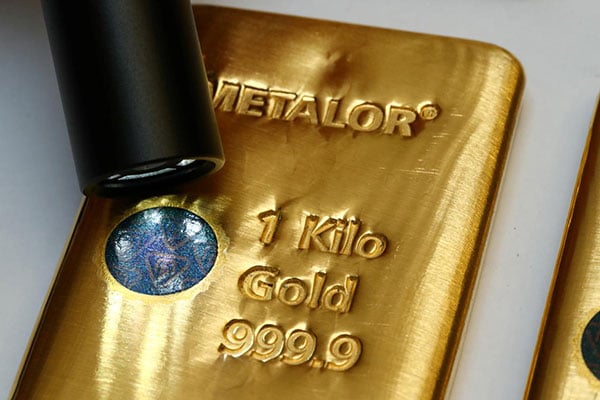
Mwanza is also home to licensed precious metals refining facilities that process gold from both large-scale and artisanal miners. These facilities assay, refine, and cast gold into commercial bullion that meets customer and export specifications before shipment to international markets.
Further Reading
For readers interested in the mine’s development, Perseus Mining regularly publishes construction updates on the Nyanzaga Gold Project, including videos showing site progress toward first gold production. This makes an excellent external reference for visitors who want to follow the project’s development.
Dodoma Region — Tanzania’s Administrative and Gold Refining Hub
Unlike the Lake Victoria Goldfields, where gold is extracted from some of Africa’s richest greenstone belts, the Dodoma Region plays a different but equally important role in Tanzania’s mining industry. As the country’s political capital, Dodoma serves as the national center for mineral policy, regulation, licensing, and value addition rather than large-scale gold extraction. Government institutions responsible for overseeing the mining sector are headquartered here, making Dodoma the administrative backbone of Tanzania’s mineral economy.
The region’s central location also makes it an important logistics hub, connecting gold-producing areas such as Geita, Mwanza, Shinyanga, Mara, and Singida with refineries, government agencies, transport corridors, and export infrastructure. As Tanzania continues implementing policies that encourage local mineral processing and value addition, Dodoma has become increasingly important in supporting the country’s long-term strategy of retaining more value from its mineral resources before export.
Why Dodoma Is Not a Major Gold-Mining Region
Unlike Geita, Mara, or Shinyanga, the Dodoma Region is not known for hosting large commercial gold mines. This is primarily due to its geological setting, which differs significantly from the mineral-rich Lake Victoria Goldfields where most of Tanzania’s economic gold deposits are located.
The region is dominated by the ancient Tanzanian Craton, consisting largely of granitic rocks and high-grade metamorphic formations that generally lack the extensive greenstone belts and major hydrothermal shear zones responsible for concentrating large gold deposits elsewhere in northern Tanzania. As a result, Dodoma has seen only limited exploration and small-scale gold occurrences compared with the country’s leading mining districts.
Rather than serving as a mining center, Dodoma has become the administrative headquarters of Tanzania’s mining industry. The city hosts the Ministry of Minerals, the Mining Commission, and the State Mining Corporation (STAMICO), institutions responsible for developing mining policies, issuing prospecting and mining licences, regulating mineral trading, promoting investment, collecting royalties, and overseeing compliance throughout the country’s mining sector. Decisions made in Dodoma influence every stage of Tanzania’s mineral value chain, from exploration permits to gold exports.
Dodoma’s Growing Role in Gold Refining and Value Addition
In recent years, Tanzania has placed increasing emphasis on refining more of its gold domestically rather than exporting semi-processed doré bars for refining overseas. This strategy aims to increase the value retained within the country, strengthen the local mining industry, create skilled employment, and support downstream industries.
As the national administrative capital, Dodoma has become an important location for government-supported initiatives that encourage investment in mineral processing, precious metals refining, secure bullion storage, and related infrastructure. Government agencies, together with STAMICO and private investors, continue to promote projects that expand Tanzania’s domestic refining capacity and reduce reliance on foreign refineries.
Gold Produced from Mines │ ▼Licensed Buying Centres │ ▼Refining and Value Addition │ ▼Commercial Bullion │ ▼Domestic Use and International Export
Historically, much of Tanzania’s gold was exported as doré bars, which typically require further refining before reaching investment-grade purity. By expanding refining capacity within Tanzania, more gold can undergo final purification domestically before export. This approach allows additional processing, assaying, certification, and value addition to take place within the country, generating greater economic benefits while strengthening Tanzania’s position in the global precious metals market.
The government’s broader value-addition strategy also supports improved mineral traceability, stronger regulatory oversight, and greater transparency throughout the gold supply chain. As domestic refining capacity continues to grow, Tanzania aims to increase exports of higher-value refined bullion while creating new opportunities for investors, refiners, logistics companies, and technical service providers.
Dodoma’s Strategic Location for Mineral Logistics
Dodoma’s position near the geographical center of Tanzania makes it an important transport and administrative hub for the mining industry. Major highways and expanding railway infrastructure connect the city with northern mining regions, ports on the Indian Ocean, neighboring countries, and industrial centers across East Africa.
This central location supports the movement of mining equipment, refined metals, government documentation, laboratory services, and regulatory inspections. It also enables government agencies to coordinate mining activities nationwide while providing a secure environment for licensing, compliance monitoring, mineral certification, and investment promotion.
As Tanzania continues investing in transport infrastructure, including improvements to the Standard Gauge Railway (SGR) and national road networks, Dodoma’s role in facilitating mineral logistics is expected to become even more significant.
Gemstones and Critical Minerals Around Dodoma
Although Dodoma is not a major gold-producing region, the surrounding areas are internationally recognized for valuable gemstones and critical minerals. These deposits differ significantly from the gold-bearing greenstone belts of northern Tanzania, both in their geological formation and commercial importance.
Winza Ruby and Sapphire Deposit
Located in Mpwapwa District, the Winza deposit gained international recognition after the discovery of exceptional rubies and sapphires in 2007. The area produces gemstones known for their rich colour, clarity, and rarity, attracting miners, gemstone traders, and collectors from around the world. Mining is generally carried out through small-scale underground workings and selective extraction rather than the large open-pit operations commonly associated with gold mining.
Haneti Nickel and Critical Minerals Project
North of Dodoma lies the Haneti Project, one of Tanzania’s most promising critical mineral prospects. Rather than gold, Haneti contains mineralization associated with nickel, cobalt, platinum group elements (PGEs), chromium, and other strategic minerals found within ultramafic rock formations. These commodities are increasingly important for electric vehicle batteries, renewable energy technologies, and advanced manufacturing, making Haneti a significant part of Tanzania’s future mining potential.
Together, Winza and Haneti demonstrate that while Dodoma is not a major gold mining district, the region remains an important contributor to Tanzania’s broader mineral sector through gemstones, critical minerals, government administration, and the country’s growing focus on mineral processing and value addition.
Other Important Gold-Producing Regions in Tanzania
Although Geita, Mwanza, and Dodoma receive much of the attention, several other regions make significant contributions to Tanzania’s gold industry. These areas host large-scale mines, support artisanal and small-scale mining, or contain highly prospective geological formations that continue to attract exploration investment.
Shinyanga
Shinyanga is one of Tanzania’s most important gold-producing regions and forms part of the Lake Victoria Goldfields, one of Africa’s richest gold-bearing belts. The region has a long history of both industrial and artisanal gold mining and hosts the Bulyanhulu Gold Mine, an underground operation recognized as one of the country’s largest and highest-grade gold mines. Ongoing exploration continues to identify additional mineral resources, making Shinyanga a key contributor to Tanzania’s gold production and mining employment.
Mara
The Mara Region is another major center of commercial gold mining. It is home to the North Mara Gold Mine, one of Tanzania’s largest producing mines. The region contributes substantially to national gold output and attracts continued investment in exploration, mine expansion, and environmental management. Gold mining remains an important source of employment, infrastructure development, and export revenue in northern Tanzania.
Singida
Singida has emerged as one of Tanzania’s fastest-growing gold-producing regions. The development of the Singida Gold Mine has strengthened the region’s role in the national mining sector and encouraged further exploration across central Tanzania. With favorable geology and increasing investment, Singida is becoming an important source of new gold production and a promising destination for future mining projects.
Kahama
Located within the Shinyanga Region, Kahama is one of Tanzania’s best-known mining districts rather than a separate administrative region. It has historically been associated with several major gold operations, including the Bulyanhulu and Buzwagi mines. Kahama also supports numerous mining contractors, suppliers, mineral processing facilities, and artisanal mining communities, making it one of the country’s most influential gold-producing districts.
Mbeya
The Mbeya Region is better known for its diverse mineral resources than for large-scale gold production. However, gold exploration and small-scale mining activities take place in several parts of the region, with exploration companies continuing to evaluate its mineral potential. While Mbeya currently contributes less gold than northern Tanzania, ongoing geological surveys and exploration programs suggest opportunities for future mineral development.
Together with Geita and Mwanza, these regions demonstrate the geographic diversity of Tanzania’s gold industry. While the majority of commercial production is concentrated within the Lake Victoria Goldfields, continued exploration across the country is expanding Tanzania’s long-term potential as one of Africa’s leading gold-producing nations.
Comparing Tanzania’s Three Key Gold Regions at a Glance
Although Geita, Mwanza, and Dodoma all play important roles in Tanzania’s mining industry, each region serves a distinct function within the country’s gold value chain. Geita is the center of large-scale gold production; Mwanza supports mining through trade, logistics, and refining services while hosting major development projects; and Dodoma provides the national leadership for mining policy, regulation, and mineral value addition. Together, these regions form the foundation of Tanzania’s modern gold industry, from extraction and processing to regulation and export.
Mining, Trading, and Administrative Roles
Geita Region – Tanzania’s Largest Gold-Producing Region
Geita is the country’s primary gold mining district and home to Tanzania’s largest commercial gold mine. Large-scale open-pit and underground mining operations dominate the region, supported by modern ore processing plants, engineering services, and exploration activities. Most of Tanzania’s industrial gold production originates from Geita, making it the upstream foundation of the national gold supply chain.
Mwanza Region – Commercial, Logistics, and Mining Services Hub
Mwanza serves as the commercial gateway for the Lake Victoria Goldfields. Although it has fewer large operating mines than neighboring Geita, it plays a critical role by providing transport services, mining equipment suppliers, assay laboratories, engineering contractors, licensed mineral markets, refining facilities, and financial services. Major projects such as the Nyanzaga Gold Project are also strengthening Mwanza’s position within Tanzania’s mining industry.
Dodoma Region – Policy, Regulation, and Value Addition
Dodoma is the administrative centre of Tanzania’s mining sector. It is home to the Ministry of Minerals, the Mining Commission, and STAMICO, which oversee mineral licensing, regulation, investment promotion, and sector development. The region also supports Tanzania’s strategy to expand domestic mineral processing and value addition before export.
Comparison of Geita, Mwanza, and Dodoma
| Category | Geita Region | Mwanza Region | Dodoma Region |
| Primary Role | Gold extraction and large-scale mining | Trade, logistics, mining services, exploration, and refining support | Mining administration, regulation, and value addition |
| Industry Focus | Commercial gold production | Mining support services and gold commerce | Policy development and sector oversight |
| Major Assets | Geita Gold Mine, exploration projects | Nyanzaga Gold Project, mineral markets, refining facilities | Ministry of Minerals, Mining Commission, STAMICO headquarters |
| Mining Activity | Extensive large-scale and artisanal gold mining | Limited large-scale mining with growing development projects and active ASM | Minimal commercial gold mining |
| Processing Role | Ore processing and doré production | Gold buying, assaying, refining, and logistics | Supports national value-addition initiatives |
| Economic Contribution | Tanzania’s leading gold-producing region and a major source of export earnings | Supports mining operations, regional trade, and investment | Guides national mining policy and regulatory administration |
| Key Workforce | Miners, geologists, engineers, metallurgists, heavy equipment operators | Logistics specialists, refinery staff, contractors, traders, exploration teams | Regulators, inspectors, policy specialists, licensing officers |
| Importance to Tanzania’s Gold Industry | Produces much of the country’s commercial gold | Connects producers with processing, services, and export markets | Provides governance, regulation, and long-term sector planning |
Regulations Governing Tanzania’s Gold Industry
Tanzania’s gold sector is governed by a legal framework designed to ensure responsible mineral development, maximize national economic benefits, and maintain transparency in mineral trading. Companies involved in exploration, mining, processing, refining, trading, or exporting gold must comply with licensing, taxation, environmental, and reporting requirements established under the Mining Act, 2010 (as amended) and related regulations. Understanding these rules is essential for mining companies, investors, and international buyers.
Mining Commission
The Mining Commission is Tanzania’s principal regulator for the mining industry. It administers mineral rights, issues and monitors mining-related licenses, inspects mining operations, oversees compliance with mining laws, and regulates mineral trading and exports. The Commission also works with other government agencies to promote responsible mining practices, improve transparency, and support investment in the sector.
Ministry of Minerals
The Ministry of Minerals develops national mining policy and provides strategic oversight of Tanzania’s mineral sector. It is responsible for promoting sustainable mineral development, attracting investment, coordinating geological research, and ensuring that mining contributes to national economic growth. The Ministry supervises key institutions, including the Mining Commission and the Geological Survey of Tanzania (GST).
State Reserve Requirements
Tanzania has introduced policies that allow the Bank of Tanzania (BoT) to purchase domestically refined gold as part of the country’s official reserve management strategy. Licensed miners and refiners may be required to make a portion of their refined gold production available for purchase by the central bank in accordance with applicable laws, regulations, and official directives. These requirements can change over time, so mining companies and exporters should monitor the latest guidance issued by the Bank of Tanzania and the Ministry of Minerals.
Export Permits
Gold exports are permitted only after the required regulatory procedures have been completed. Depending on the nature of the business, exporters must hold the appropriate licenses and obtain the necessary approvals before shipments leave the country. Exporters are generally required to complete official valuation and inspection procedures, pay applicable royalties, fees, and taxes, and submit supporting documentation such as commercial invoices, assay reports, customs declarations, and other export documents required by Tanzanian authorities. Importing countries may also impose additional customs or licensing requirements.
Local Content Requirements
Tanzania’s Local Content Regulations encourage mining companies to maximize participation by Tanzanian citizens and businesses. Operators are expected to prioritize local employment, procure goods and services from qualified Tanzanian suppliers where feasible, invest in workforce development, and support technology and skills transfer. Large mining projects may also be required to submit local content plans demonstrating how they will contribute to domestic economic development.
Due Diligence for International Buyers
International buyers should conduct thorough due diligence before purchasing gold from Tanzania. Best practices include verifying that the seller is properly licensed, confirming the origin of the gold, reviewing independent assay reports, and ensuring that all export documentation is genuine and complete. Buyers should also comply with applicable anti-money laundering (AML) and counter-terrorist financing (CTF) requirements, perform know-your-customer (KYC) checks, and assess supply chains against internationally recognized responsible sourcing standards, such as the OECD Due Diligence Guidance for Responsible Mineral Supply Chains. Working with reputable, licensed exporters helps reduce legal, financial, and reputational risks while supporting responsible mineral trade.
What This Means for Gold Buyers, Investors, and Researchers
Tanzania offers significant opportunities for international gold buyers, mining investors, refiners, and researchers. As one of Africa’s leading gold-producing countries, it combines world-class commercial mines, a growing artisanal mining sector, expanding mineral processing capacity, and a government committed to increasing value addition within the country.
However, success in Tanzania’s gold sector depends on working within the country’s legal and regulatory framework. Whether purchasing gold, investing in mining projects, or conducting geological research, individuals and companies should understand the licensing requirements, export procedures, taxation, environmental obligations, and due diligence standards that govern the industry.
Gold Sourcing, Certification, and Export Requirements
Gold exported from Tanzania should be sourced through legally authorized channels and supported by documentation that demonstrates its origin, ownership, and compliance with applicable laws. Buyers should verify that the seller is properly licensed and that all export requirements have been satisfied before making payment or arranging shipment.
Licensed Mine or Authorized Seller │ ▼ Gold Purchase and Verification │ ▼ Assay and Quality Testing │ ▼ Taxes, Royalties, and Regulatory Clearance │ ▼ Export Permit and Customs Processing │ ▼ International Shipment
Verify the Seller’s License
Before purchasing gold, confirm that the seller or exporter holds the appropriate licenses issued by the relevant Tanzanian authorities. Depending on the nature of the business, this may include mining licenses, mineral dealer licenses, broker licenses, or other authorizations required under Tanzanian mining legislation. Purchasing from licensed operators helps reduce legal and commercial risks.
Confirm the Gold’s Origin
Every shipment should be supported by documentation showing where the gold originated. Buyers should request records such as assay reports, certificates of origin where applicable, purchase records, and other documents that establish a clear chain of custody. These documents help demonstrate that the gold has been produced and traded through lawful channels.
Review Export Documentation
Before a shipment leaves Tanzania, exporters generally need to complete the required regulatory procedures, including payment of applicable taxes and royalties, customs processing, and obtaining export authorization from the relevant authorities. Buyers should ensure these requirements have been completed before funds are released.
Typical export documentation may include:
- Assay certificate
- Commercial invoice
- Certificate of origin (where required)
- Packing list
- Export permit
- Air waybill or bill of lading
- Insurance documentation
- Customs clearance documents
Understand Current Mining Regulations
Tanzania periodically updates its mining laws and regulations, including policies relating to mineral trading, local participation, value addition, taxation, and domestic gold purchases. Investors and exporters should review the latest legislation or obtain professional legal advice before entering into commercial agreements, as regulatory requirements may change over time.
Key Companies and Government Institutions
Understanding Tanzania’s gold industry also means becoming familiar with the organizations that regulate, support, and operate within the sector.
Government Authorities
Ministry of Minerals
The Ministry of Minerals develops Tanzania’s mining policies, oversees the implementation of mining legislation, promotes investment, and provides strategic direction for the country’s mineral sector.
Mining Commission
The Mining Commission regulates mining activities throughout Tanzania. Its responsibilities include licensing, compliance monitoring, mineral trading oversight, export administration, inspections, and supporting responsible mineral development.
Tanzania Revenue Authority (TRA)
The Tanzania Revenue Authority (TRA) administers customs procedures and collects taxes, royalties, fees, and other government revenues associated with mineral production and exports.
State Mining Corporation (STAMICO)
The State Mining Corporation (STAMICO) is Tanzania’s state-owned mining company. It participates in selected mining projects, supports mineral development, promotes investment, and works with both government and private-sector partners on initiatives that strengthen the country’s mining industry.
Bank of Tanzania (BoT)
The Bank of Tanzania (BoT) is the country’s central bank. In recent years, it has introduced programmes to purchase domestically produced gold as part of its reserve management strategy. The implementation of these programmes is governed by current regulations and official policy directives.
Major Gold Mining Companies Operating in Tanzania
Several internationally recognized mining companies operate some of Tanzania’s largest gold mines and development projects.
AngloGold Ashanti
AngloGold Ashanti owns and operates the Geita Gold Mine, Tanzania’s largest producing gold mine and one of the company’s flagship operations globally.
Barrick Gold (Twiga Minerals)
Barrick Gold operates the North Mara and Bulyanhulu gold mines through Twiga Minerals Corporation, a partnership established between Barrick and the Government of Tanzania to manage key mining assets in the country.
Perseus Mining
Perseus Mining is developing the Nyanzaga Gold Project in the Mwanza Region, one of Tanzania’s most significant new gold mine developments and an important future source of national gold production.
Licensed Gold Refiners
Tanzania is also expanding its refining and mineral processing capacity through licensed precious metals refiners that assay, refine, and prepare gold for domestic use and international export. These facilities support the country’s broader strategy of increasing value addition before minerals enter global markets.
Opportunities and Challenges Across Tanzania’s Gold Regions
Tanzania’s gold industry continues to attract domestic and international investment due to its rich geological resources, expanding mining sector, and supportive government initiatives. At the same time, mining companies, investors, and local communities must navigate challenges related to infrastructure, environmental stewardship, regulatory compliance, and sustainable development. Understanding these factors helps buyers, investors, and researchers evaluate the long-term potential of Tanzania’s gold-producing regions.
Infrastructure
The country’s major gold-producing regions, particularly Geita, Shinyanga, Mwanza, and Mara, benefit from improving transport networks, power supply, telecommunications, and access to regional airports and border crossings. These developments have strengthened the movement of mining equipment, refined gold, and other supplies throughout the supply chain. However, infrastructure quality can vary significantly between large industrial mining areas and remote exploration sites, where road access, electricity, and logistics remain ongoing challenges that can increase project costs.
Investment Climate
Tanzania remains one of Africa’s most attractive destinations for gold exploration and mining investment because of its extensive mineral potential and long mining history. Government reforms aimed at improving regulatory oversight, encouraging responsible mining, and increasing value addition have strengthened the sector’s long-term outlook. Investors should nevertheless conduct careful due diligence, monitor changes to mining legislation and tax policies, and understand licensing requirements before committing capital to exploration or production projects.
Environmental Responsibility
Environmental management is an essential part of modern gold mining in Tanzania. Licensed mining companies are expected to comply with environmental regulations governing land rehabilitation, waste management, water quality, biodiversity protection, and mine closure planning. Many large-scale operators also implement environmental monitoring programs and adopt international best practices to reduce the environmental impact of mining while supporting sustainable resource development.
Community Development
Mining contributes to local economies by creating employment opportunities, supporting local businesses, and generating government revenue through taxes and royalties. Many mining companies invest in community development initiatives such as schools, healthcare facilities, clean water projects, vocational training, and road improvements as part of their corporate social responsibility (CSR) programs. Strong engagement with local communities helps promote inclusive economic growth and supports the long-term success of mining projects.
Future Exploration
Tanzania continues to offer significant exploration potential. While the Lake Victoria Goldfields remain the country’s most productive gold belt, exploration is expanding into other prospective regions as companies apply advanced geological mapping, geophysical surveys, and drilling technologies to identify new mineral deposits. Continued investment in exploration, combined with improvements in infrastructure and regulatory oversight, is expected to support future discoveries and reinforce Tanzania’s position as one of Africa’s leading gold-producing nations.
How Buyers Can Verify Gold Origin from Tanzania
Verifying the origin of gold is one of the most important steps before completing an international purchase. Whether you are buying refined gold bars, gold doré, nuggets, or other legally traded gold products, you should confirm that the seller can demonstrate a documented chain of custody and compliance with Tanzanian export requirements. Reputable exporters should be able to provide supporting documentation that establishes the gold’s origin, confirms its purity, and shows that it has been exported through the appropriate legal channels. Conducting thorough due diligence helps reduce the risk of fraud, financial loss, and regulatory issues.
Export License
Begin by confirming that the exporter is authorized to conduct gold trading and exports under Tanzanian law. Request copies of the company’s relevant licenses or permits and verify their validity with the appropriate government authority where possible. The exporter should also be able to provide company registration details and explain its role in the gold supply chain.
Certificate of Origin
A Certificate of Origin identifies the declared country from which the gold originated and may be required by customs authorities or buyers, depending on the destination country and the nature of the transaction. Buyers should ensure that the information on the certificate is consistent with other transaction documents, including invoices, export paperwork, and shipping records.
Assay Report
An assay report provides an independent assessment of the gold’s purity and composition. The report should identify the tested sample, state the purity or fineness (such as 99.99% for refined bullion or the measured purity of doré), and include details of the laboratory or refinery that performed the analysis. Reviewing an assay report allows buyers to verify that the product matches the seller’s specifications before payment or shipment.
Chain of Custody Documentation
A documented chain of custody helps demonstrate how the gold moved from its source through processing, storage, and export. Depending on the transaction, this may include purchase records, refinery or processing documentation, inventory records, transport logs, and compliance documentation maintained by licensed businesses. A complete chain of custody improves traceability and supports responsible sourcing practices.
Shipping Documents
Before the shipment leaves Tanzania, buyers should review the commercial and logistics documents associated with the transaction. These commonly include the commercial invoice, packing list, air waybill (AWB) or bill of lading, insurance certificate, customs documentation, and any required export approvals. Buyers should ensure that names, weights, quantities, serial numbers (where applicable), and shipment details are consistent across all documents. If using secure logistics providers, shipment tracking information should also be available once the cargo has been dispatched.
Best Practices for International Buyers
In addition to reviewing documentation, buyers should:
- Verify the seller’s business registration and licensing.
- Confirm the gold’s purity through an independent assay where practical.
- Ensure all transaction documents are complete and internally consistent.
- Use secure payment methods such as escrow, documentary letters of credit (LCs), or other protected commercial arrangements where appropriate.
- Comply with applicable import regulations, customs requirements, and AML/KYC obligations in the destination country.
- Avoid transactions where the seller cannot provide verifiable documentation or pressures buyers to make advance payments without adequate safeguards.
Following these due diligence steps helps buyers verify the declared origin of Tanzanian gold, supports responsible sourcing, and reduces the risk of fraud or non-compliant international transactions.
People Also Ask
How much is 1 kg of gold in Tanzania?
The price of 1 kilogram of gold in Tanzania is based on the current international spot price of gold, plus refining, transportation, insurance, export, and dealer premiums. Since gold prices fluctuate throughout the trading day, the value changes constantly. To estimate the current value, multiply the live 24K gold price per gram by 1,000 grams, then add any applicable fees. Buyers should always request an assay certificate and a detailed quotation before purchasing.
Which country in Africa has the highest gold production?
Ghana is currently Africa’s largest gold producer, consistently ranking ahead of South Africa, Mali, Burkina Faso, and Tanzania in annual mine production. The country has a long-established mining industry, large-scale international mining companies, and significant artisanal gold production, making it one of the world’s leading gold-producing nations.
Which region in Uganda is rich in gold?
Several regions in Uganda are known for gold mining and exploration. The most active areas include Karamoja, Busia, Buhweju, Kassanda, Mubende, and Namayingo, where both artisanal and licensed mining activities take place. Uganda also serves as an important regional trading and refining hub for gold sourced from within the country and neighboring states.
What are the top three countries that mine the most gold?
Based on recent global mine production, the top three gold-producing countries are:
- China
- Russia
- Australia
These countries collectively account for a substantial share of the world’s annual gold output. Other major producers include Canada, the United States, Ghana, Mexico, Uzbekistan, Kazakhstan, Peru, and South Africa.
Which country has the largest undeveloped or untapped gold resources?
There is no definitive ranking for which country has the most “untouched” gold because undiscovered mineral resources cannot be measured precisely. However, countries such as Russia, Australia, Canada, Brazil, the Democratic Republic of the Congo (DRC), and parts of West Africa are considered to have significant exploration potential due to large areas that remain underexplored or contain known undeveloped deposits.
Who is the richest gold miner in the world?
If referring to an individual, Nicky Oppenheimer—whose family built the De Beers diamond business and has held mining investments—is among the wealthiest people associated with mining. Among entrepreneurs primarily known for building major gold mining companies, Pierre Lassonde (Franco-Nevada) and Ross Beaty (Pan American Silver and mining investments) are notable figures. Wealth rankings change over time with market conditions and business holdings.
Who owns most of the gold on Earth?
No single person or company owns most of the world’s gold. Gold ownership is distributed among:
- Central banks, which collectively hold more than 35,000 tonnes of official gold reserves.
- Private investors, including individuals and institutions.
- Jewelry owners, who collectively hold the largest share of above-ground gold.
- Mining companies, which own gold before it is sold into the market.
Among central banks, the United States holds the largest official gold reserves, with more than 8,000 tonnes, followed by Germany, Italy, France, Russia, and China.